Priceline Faces Possible FTC Action Over Affiliate Hotel Advertising
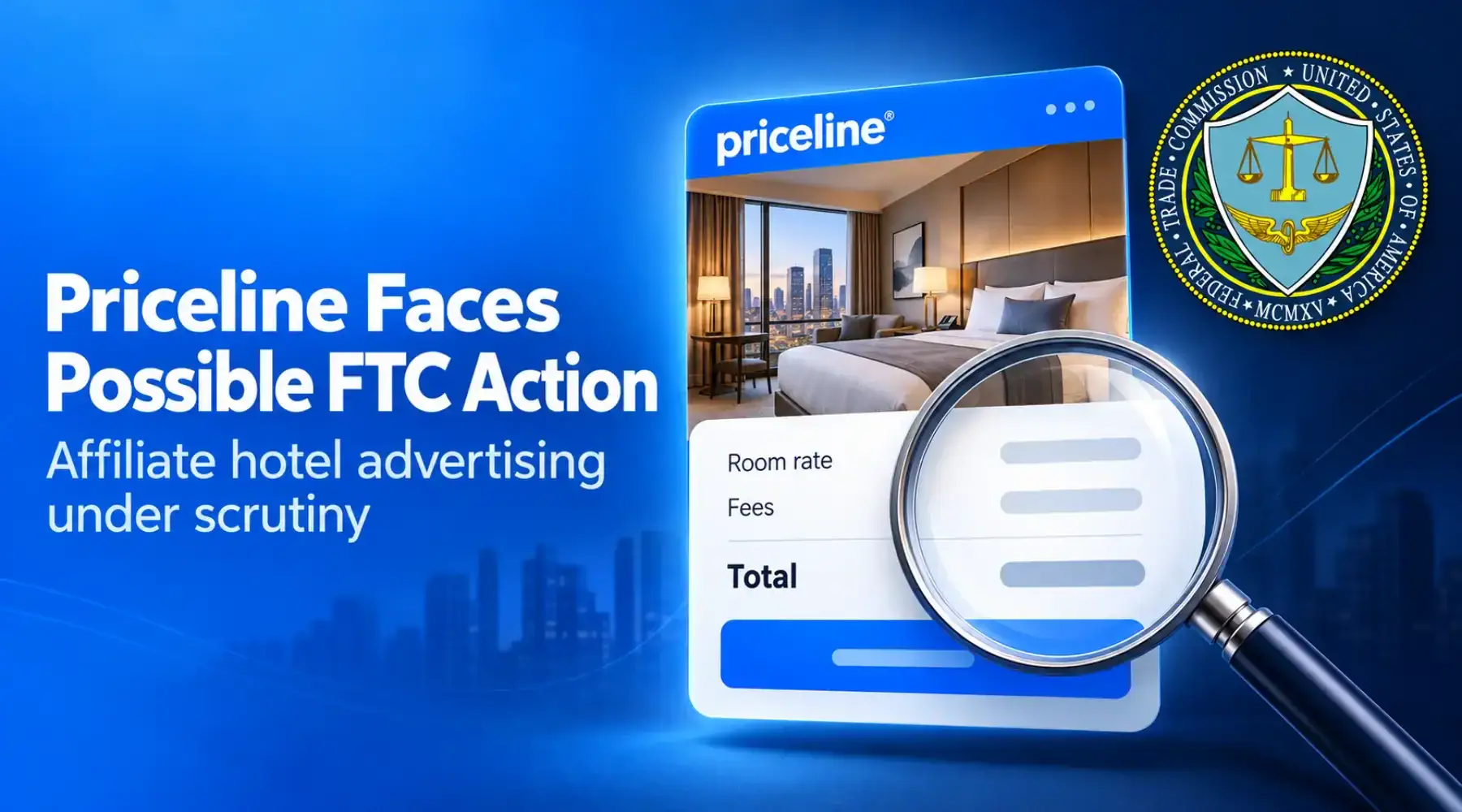
Priceline faces possible Federal Trade Commission action over alleged practices involving a B2B affiliate, according to a disclosure by parent company Booking Holdings. The concerns cover disclosures, fees, customer support and billing. Reuters has connected the investigation with hotel-booking site Guest Reservations, raising questions for affiliate managers about how partner oversight extends from advertising to the customer experience after a booking.
Key Takeaways From the Priceline FTC Investigation
- FTC staff told Priceline they intended to recommend a complaint against it and an unnamed B2B affiliate.
- Reuters connected the investigation to Guest Reservations and reported concerns about ads appearing to lead to official hotel websites.
- Priceline disagrees with the FTC’s position and remains in discussions, according to Booking’s filing.
- Affiliate teams can assess partner activity across advertising, checkout, billing and customer support.
What Booking Holdings Has Disclosed
Booking’s filing says FTC staff notified Priceline in July 2026 about the intended recommendation, which concerns alleged unfair or deceptive business practices. It does not name the affiliate or describe individual advertisements. The filing also says Priceline disagrees with the FTC’s position and remains in discussions to resolve the matter.
In its October 7 report, Reuters connected the investigation with Guest Reservations, citing sources familiar with the matter. Reuters also reported that Booking supplies hotel inventory to the site through Priceline Partner Solutions, citing a separate San Francisco lawsuit.
That relationship is relevant to the affiliate analysis. The reported arrangement involves a third-party seller accessing hotel inventory through Priceline’s B2B distribution business. Oversight questions therefore extend to how that inventory is presented and sold.
The San Francisco lawsuit is separate from the reported FTC investigation. The allegations should not be treated as findings of wrongdoing.
Where Hotel Ads Can Create Customer Confusion
Reuters reported concerns about advertisements that appear to take customers to a hotel’s own website but instead lead to a third-party booking site, where customers may face higher prices and fees.
For program managers reviewing paid-search campaigns, the useful question is whether the advertising and landing page make the seller’s identity clear. A customer searching for a particular hotel should be able to understand who is taking the reservation and which business they need to contact afterward.
Affiverse’s coverage of the FTC’s scrutiny of impersonation advertising examines similar questions about website identity and advertising controls. That platform inquiry is a separate development; it does not establish the outcome of the Priceline investigation.
Affiliate Monitoring Needs to Cover the Booking Journey
The practical lesson for affiliate teams is to review the experience delivered through a partner relationship, including what happens after the conversion.
An approval process can establish which entities, domains, and advertising accounts a partner uses. Teams can also clarify whether the agreement permits further distribution and how new websites or campaigns are reviewed.
Useful questions include:
- Advertising: Do the ad and landing page clearly identify the third-party seller?
- Checkout: When are the payable amount, applicable fees and cancellation terms presented?
- Billing: Which business takes payment, and can customers identify the charge?
- Support: Who handles changes, cancellations and refunds?
- Monitoring: Can recurring complaints be traced to a partner and investigated?
These are suggested review questions, not new affiliate requirements announced by the FTC.
Booking totals also need context. Affiverse’s analysis of measuring travel affiliate bookings discusses cancellations, refunds and confirmed revenue. Those measures can help teams assess what remains after an initial conversion.
Customer-service information adds another layer: did travelers understand who they booked with, and could they resolve a problem? A partner generating sales may still warrant investigation if complaints repeatedly point to confusing identity disclosures or unexpected charges.
For teams building a hotel affiliate marketing program, these checks can sit alongside commercial reporting and partner reviews.
What Happens Next
Booking’s filing says the investigation and possible litigation could lead to changes in Priceline’s business practices, damages or penalties. The outcome remains uncertain.
As of publication, Affiverse has not identified a public FTC complaint or settlement announcement for this matter. A staff recommendation does not establish liability.
For advertisers and affiliate managers, the immediate question is how clearly they can see the customer experience delivered by their partners—and how quickly they can investigate when that experience generates complaints.
Everflow
Connect
Tradedoubler
Connect
1win Partners
Connect
PIN-UP Partners
Connect
Shopnomix, a Nomix Group Company
Connect
V.Partners
Connect
Huffson Group
Connect
Kawaii Partners
Connect
Share your expertise and expand your reach and become a content contributor with us today!
Contact Us To Find Out More