Travel Brands Want Trackable Bookings, Not Just Creator Reach
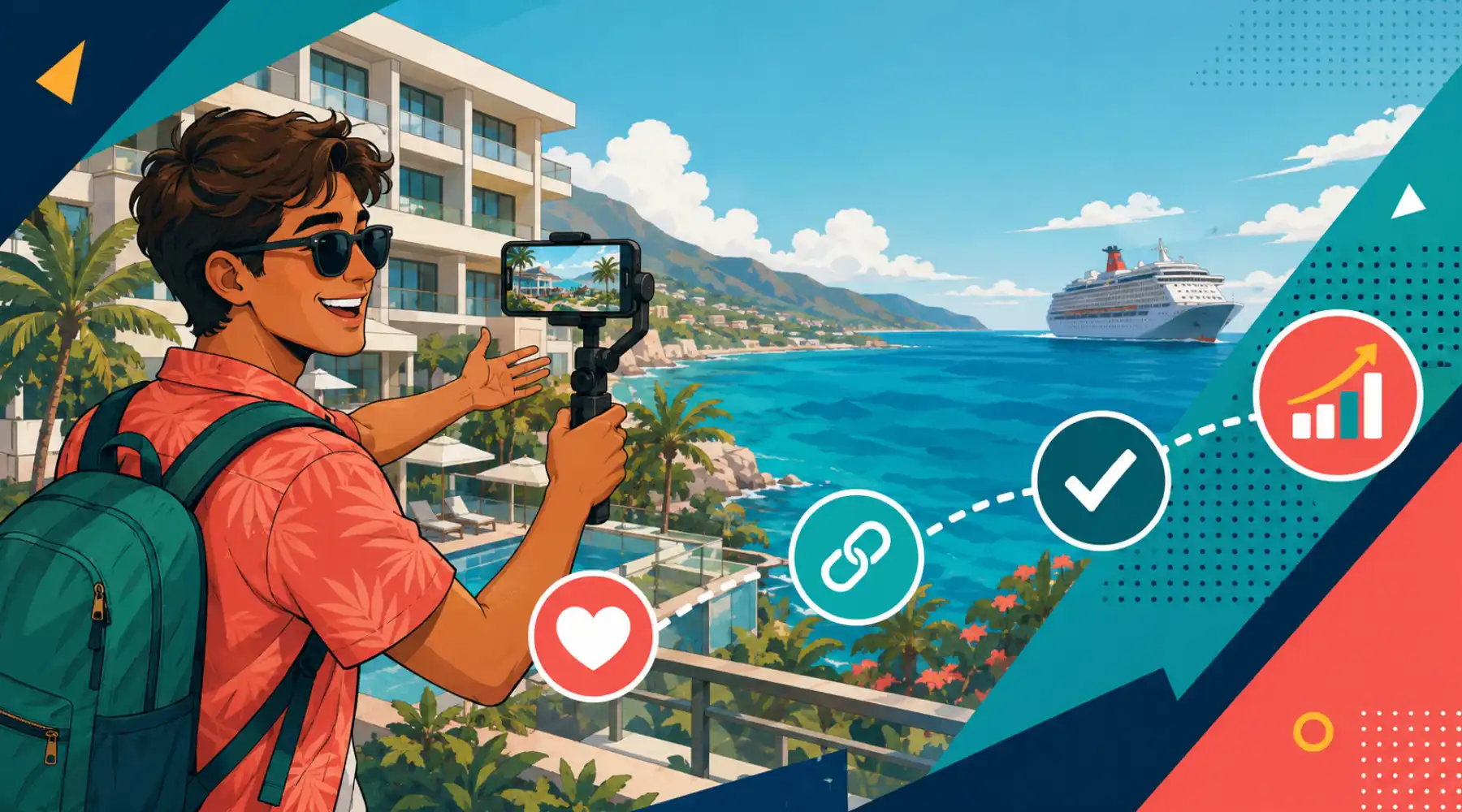
Travel influencer marketing is moving from reach towards measurable bookings. As creator fees rise, travel brands are using affiliate links, promotional codes, and shoppable content to determine whether videos, livestreams, and destination posts generate searches and sales. The shift creates new performance-based opportunities for creators and affiliate managers, but it also exposes attribution gaps caused by long booking journeys, multiple devices, and delayed purchases.
Key Takeaway: Travel Influencer Marketing Is Moving From Reach to Revenue
- Rising creator fees mean travel brands increasingly need to connect views and engagement with searches, referrals, and completed bookings.
- The Financial Times reported increased searches for destinations featured in Expedia’s IShowSpeed campaign, but no confirmed booking value was published.
- Virgin Voyages reported working with 1,103 creators and generating more than 20,000 pieces of content, 236 million views, and a 696% increase in TikTok-referred traffic.
- Despite those results, Virgin Voyages published no attributed booking volume or revenue, illustrating the measurement gap facing creator campaigns.
- Affiliate links, creator codes, and booking integrations provide stronger commercial signals, although short cookie windows, cancellations, and last-click attribution can distort performance.
- Hybrid deals combining a production fee with commission or booking bonuses can share risk more fairly between brands and creators.
- Affiliate managers should measure booking conversion, average booking value, cancellations, confirmed revenue, and the long-term performance of creator content.
Why Creator Reach Is Becoming Harder to Justify
Creators increasingly shape where consumers want to travel, which hotels they consider, and which activities make it onto an itinerary. A recent Financial Times analysis found that travel companies are increasing their investment in creators as social platforms become a more important source of inspiration.
The commercial problem is that creator partnerships are becoming more expensive. Brands that once focused on follower totals and content reach now face pressure to demonstrate what happened after someone watched a video.
Engagement can show that content attracted attention. It cannot prove that a viewer searched for a destination, compared hotels, or completed a booking.
That gap is pushing travel creator marketing closer to affiliate marketing. Trackable links, creator codes, and booking data give brands a clearer route from content to revenue while allowing creators to earn beyond an initial production fee.
Expedia Tests Creator-Led Demand With IShowSpeed
Expedia’s partnership with livestreaming creator IShowSpeed illustrates both the appeal and the risk of large creator campaigns.
Livestreaming gives brands access to an engaged audience in real time but offers less control than a scripted advertisement. The Financial Times reported that Expedia executives initially had concerns about the unpredictability of working with IShowSpeed, whose streams can move rapidly between travel, entertainment, and unscripted audience interaction.
Expedia ultimately decided that the opportunity to reach younger travelers outweighed that risk. The company created a dedicated Exspeedia.com campaign hub where viewers could explore and book flights, accommodations, and activities connected to his travels.

The campaign reportedly generated increases in searches for destinations featured in the content. That is valuable evidence of influence, but search activity is still different from confirmed revenue. The bigger commercial question is how much of that interest became completed bookings and whether Expedia could attribute those bookings accurately to the creator partnership.
This is where creator campaigns increasingly need affiliate infrastructure behind the entertainment.
Virgin Voyages Shows Scale and the Measurement Gap
Virgin Voyages took a different approach by bringing 1,103 TikTok creators onto a three-night Bahamas sailing.
According to results published by Virgin Voyages, the campaign produced more than 20,000 pieces of content and 236 million views. The company also reported a 696% increase in TikTok-referred traffic, 396% growth in brand engagements, and a 21% lift in organic search.
The campaign also demonstrates why TikTok creator income extends beyond direct platform payments. As explained in Affiverse’s TikTok creator monetization guide, creators can combine brand partnerships, affiliate commissions, social commerce, and other revenue streams rather than relying on a single earning model.
Those figures demonstrate how quickly a large creator activation can increase awareness and site visits. However, Virgin did not publish the number or value of bookings attributed to the campaign.
That distinction matters. Referral traffic may indicate intent, but travel purchases often involve extended research, multiple devices, and several comparison sites. Someone may discover a cruise on TikTok, search for reviews on Google, discuss it with another traveler, and return days later through a direct visit or different affiliate.
A last-click report could therefore undervalue the creator who generated the initial interest. At the same time, reach and referral statistics alone could overstate a campaign that attracted attention without producing enough revenue.
How Affiliate Links Connect Travel Creators With Bookings
Affiliate tracking cannot solve every attribution problem, but it gives travel brands a more meaningful signal than views alone.
Creators can connect destination guides, hotel reviews, packing videos, and itineraries to bookable products. When a viewer follows a tracked link and completes a qualifying purchase, the creator earns a commission, and the brand gains a clearer measure of performance.
TikTok is already reducing the distance between inspiration and transaction. As Affiverse reported in our coverage of TikTok GO, users can move from watching a destination video to exploring hotels, attractions, and experiences through participating travel partners.
The same commercial logic applies beyond TikTok. YouTube descriptions, creator websites, newsletters, travel guides, and social profiles can all carry trackable booking links. Promotional codes can provide another attribution signal, particularly when platform restrictions or cross-device behavior make link tracking unreliable.
Affiliate managers should still examine the underlying terms. Travel commissions may not become payable until the customer completes the stay, flight, or activity. Cancellations, refunds, and amended bookings can reduce confirmed revenue months after the original content appeared.
Cookie duration also matters. A short attribution window may work for an attraction booked during a trip but perform poorly for a vacation that requires weeks of research.
Why Hybrid Creator Deals May Become More Common
As brands demand measurable outcomes, creators may face greater pressure to accept performance-only arrangements. That would transfer much of the commercial risk onto the person producing the content.
Travel content can be expensive. Creators may need to pay for equipment, editing, transport, and production time, even when accommodations or flights are provided. Commission alone does not guarantee that those costs will be recovered.
A hybrid model can provide a better balance. The creator receives a production fee for producing the agreed content, with affiliate commissions or performance bonuses added when that content generates bookings.
This reflects a wider change in creator compensation. Affiverse’s analysis of why influencer programs fail found that pure performance deals can create the wrong incentives when creators must invest substantial time and money before earning anything. Hybrid structures can protect the creator’s downside while preserving commercial accountability for the brand.
This structure gives brands an incentive to measure sales while recognizing that content has a cost and may contribute value beyond the final tracked conversion. It can also support longer-term partnerships, where brands and creators learn which destinations, formats, and audience segments perform best over time.
What Affiliate Managers Should Measure
Travel affiliate teams working with creators should look beyond follower totals and immediate sales.
Useful measures may include tracked searches, landing-page visits, booking conversion rate, average booking value, cancellation rate, and confirmed revenue after the trip is completed. Affiverse’s guide to essential affiliate performance metrics explains why measures such as conversion rate need to be assessed alongside traffic quality, customer value, and the merchant’s own conversion infrastructure.
Managers should also consider assisted conversions and changes in branded search where the available data allows it.
Content lifespan matters as well. A destination guide or hotel review can continue generating bookings long after a campaign ends. Measuring only the first few days may understate its commercial contribution.
Brands also need reliable operational support. Outdated availability, broken links, changed commission rates, and expired offers can quickly reduce the value of content that continues attracting viewers. The risk became particularly clear when Booking.com ended affiliate relationships with numerous travel publishers, leaving creators to replace links across established content before those pages could generate additional commissions.
Travel Influencer Marketing Moves Closer to Performance
Creator marketing is not becoming purely transactional. Travel content still builds aspiration, trust, and destination awareness long before someone is ready to book.
However, rising creator costs mean brands will find it harder to justify campaigns solely through reach and engagement. Affiliate links, booking codes, and commerce integrations provide a clearer connection between influence and revenue—even if they do not capture the complete customer journey.
Travel companies are already experimenting with this combination. The Agoda Ambassador Program combines booking commissions with sponsored experiences and opportunities for wider campaign exposure, demonstrating how performance incentives can sit alongside creator support and brand-building benefits.
For affiliate managers, the opportunity is to build partnerships that measure purchasing influence without pretending every booking has a single cause. For creators, it means demonstrating not only that audiences watch their journeys, but also that their recommendations help people plan and purchase journeys of their own.
Everflow
Connect
Tradedoubler
Connect
1win Partners
Connect
PIN-UP Partners
Connect
Shopnomix, a Nomix Group Company
Connect
V.Partners
Connect
Huffson Group
Connect
Kawaii Partners
Connect
Share your expertise and expand your reach and become a content contributor with us today!
Contact Us To Find Out More