Paf and Meta Plan License Checks for Gambling Ads and Affiliates
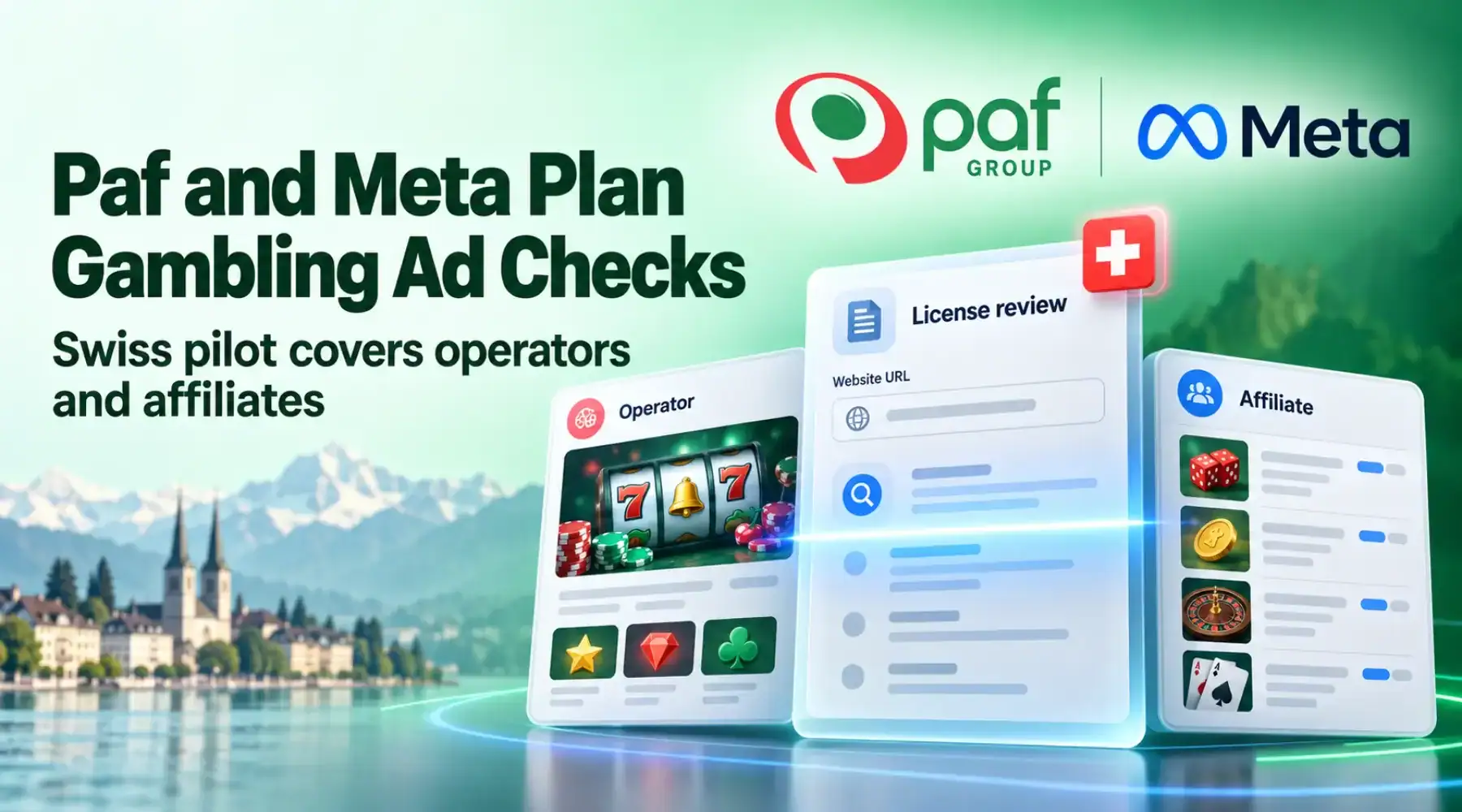
Paf says it has agreed a Swiss pilot with Meta to help identify unlicensed gambling businesses, using license documents and website URLs covering operators and affiliates. The initiative, announced on October 5, is intended to create a model for other markets. For affiliate teams, it raises a practical question: how can platforms connect promotional websites with the operators they advertise?
Key Takeaways: The Paf–Meta Gambling Ad Pilot
- The material Paf plans to share covers operators and affiliates.
- Local authorization matters when assessing gambling businesses targeting a particular market.
- The announcement describes a pilot, with no published performance results.
- Expansion beyond Switzerland remains a stated ambition.
What Paf Plans to Share With Meta
Jesper Eliasson, Paf’s chief business development officer, presented the initiative at SBC Summit in Lisbon. Paf is the technology and knowledge partner of mycasino.ch, operated by Grand Casino Luzern.
Matching licensing evidence with websites could help reviewers understand which businesses sit behind gambling promotions. Including affiliate URLs could also give them visibility into destinations beyond an operator’s own website.
However, Paf’s announcement does not explain whether Meta will use the material for pre-publication checks, later investigations or both. It does not describe an automated verification system.
Why the Target Market Matters
For Swiss online casino activity, the Federal Gaming Board explains that casinos need an extension to their license to operate online, alongside permits for individual games.
The relevant question is therefore whether an operator is authorized for the market being targeted. A website displaying a license should still be assessed against the jurisdiction, business entity and gambling activity it covers.
That distinction also matters across advertising platforms. Affiverse’s coverage of YouTube’s gambling Masthead changes explains why operator certification and affiliate eligibility need separate checks. Those Google rules should not be assumed to apply to Meta’s pilot.
What the Affiliate Inclusion Means
An affiliate website may promote several brands, use comparison pages and send visitors through redirects. A useful verification process would need to understand which operators those journeys lead to, alongside who controls the promotional site.
The reference to affiliates does not establish a new requirement for every publisher to hold an operator license. It makes the relationship between promotional content and the underlying gambling service relevant to the proposed checks.
Affiliate teams can prepare by reviewing:
- Partner identity: Which business controls the website and advertising accounts?
- Destinations: Which operators appear on each landing page, and where do links ultimately lead?
- Market records: What evidence supports an operator’s authorization for the intended audience?
- Changes: Who updates the records when domains, partners or licensing details change?
These are practical review questions, not requirements announced through the pilot.
Affiverse’s podcast on affiliate compliance checks also discusses jurisdictional rules and partners’ traffic sources. Knowing where a partner promotes an operator helps teams assess the full customer journey.
What Would Show That the Pilot Works?
Success would require more than collecting documents. Useful measures could include how accurately the process identifies unauthorized promotions, whether legitimate advertisers are mistakenly flagged and how quickly changed information reaches reviewers.
Checks against official licensing records would help assess the information supplied. A process for correcting mistakes would also matter if operators and affiliates face decisions based on incomplete or outdated data.
Jesper Eliasson, Chief Business Development Officer at Paf:
I don’t know whether we will succeed, but we have taken the first steps.
Affiverse has not located a separate Meta announcement or published results. The international opportunity remains conditional: a Swiss model would need to account for each additional market’s licensing rules before expansion.
Everflow
Connect
Tradedoubler
Connect
1win Partners
Connect
PIN-UP Partners
Connect
Shopnomix, a Nomix Group Company
Connect
V.Partners
Connect
Huffson Group
Connect
Kawaii Partners
Connect
Share your expertise and expand your reach and become a content contributor with us today!
Contact Us To Find Out More