Creator Video Ad Spend Rose 17% During World Cup as Sporting Goods Purchases Climbed 26%
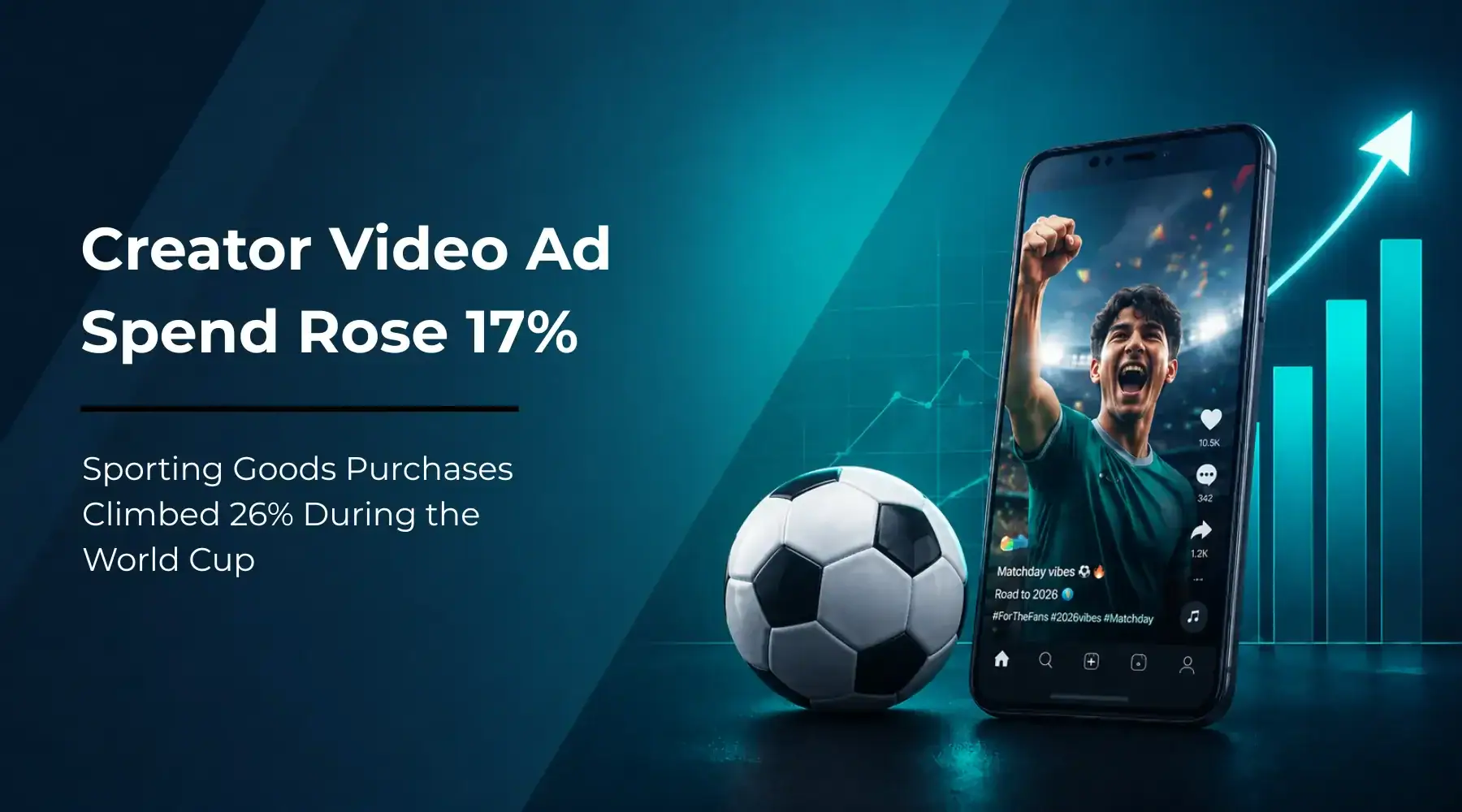
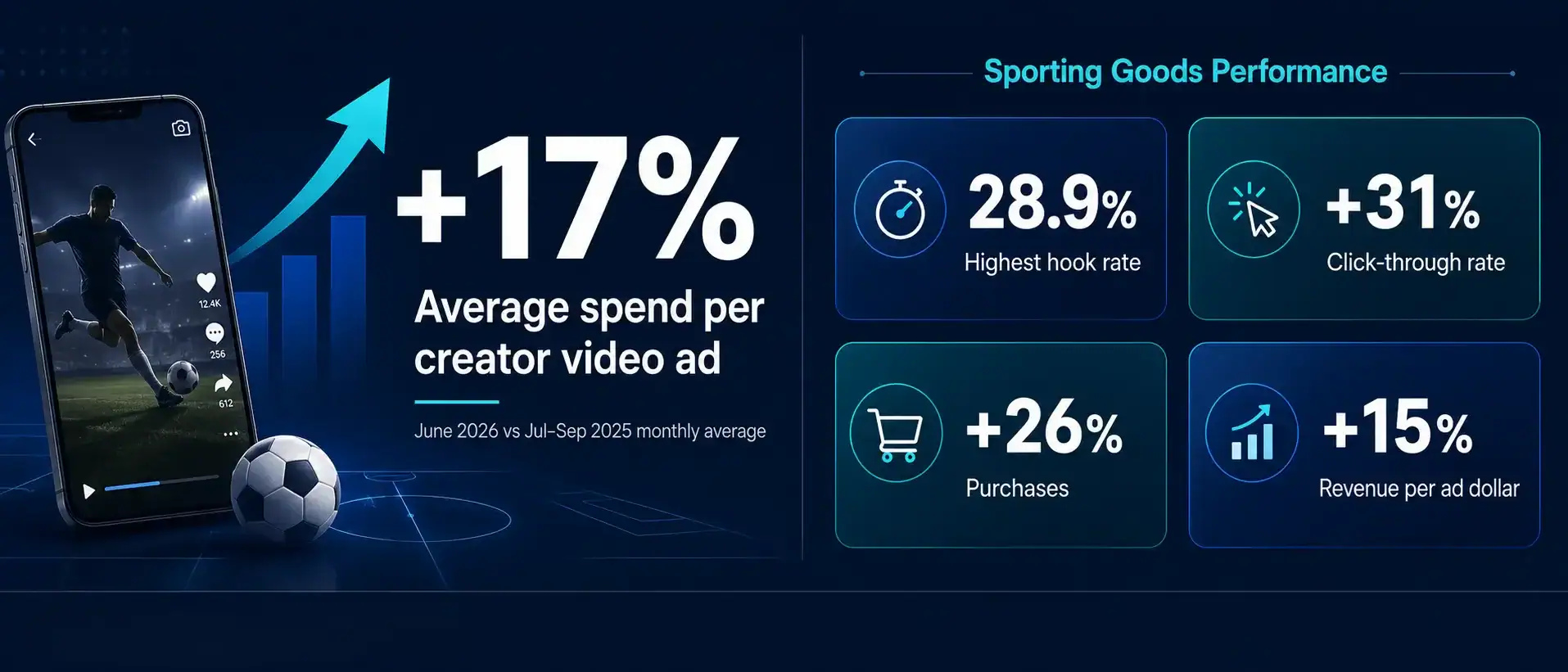
Average spend per creator-made video ad increased by 17% during the first month of the 2026 World Cup as advertisers competed for attention across Meta, TikTok, and YouTube Shorts.
Higher spending did not prevent the most relevant campaigns from delivering stronger results. Sporting goods ads recorded a 26% increase in purchases and an approximately 31% improvement in click-through rates, suggesting that a clear connection between the product, creator, and cultural moment helped offset some of the pressure created by higher media costs.
Key Takeaways: Creator Ad Spend Increased, but Relevance Still Performed
- Average spend per creator-made video ad increased by 17% in June 2026.
- Spending increased across 13 of the 15 ecommerce categories included in the analysis.
- Sporting goods ads achieved the highest hook rate at 28.9%.
- Purchases attributed to sporting goods ads increased by 26%.
- Click-through rates for the category climbed by approximately 31%.
- The analysis combines Meta, TikTok and YouTube Shorts rather than reporting results for each platform separately.
What the 17% Increase Actually Measures
Data supplied by creator marketing platform Billo and published by Advanced Television examined more than 13,000 creator-made video ads across 15 ecommerce categories running on Meta, TikTok, and YouTube Shorts. It found that average spend per ad increased by 17% in June 2026 compared with the monthly average recorded between July and September 2025.
The distinction between spending per ad and platform advertising prices is important. The analysis does not show that CPMs, CPCs, or other auction prices increased by exactly 17% for every advertiser. Instead, it indicates that advertisers placed more media budget behind each creator video included in the dataset.
The results also combine three separate advertising platforms. No platform-level breakdown was provided, so the figures do not show whether Meta, TikTok, or YouTube Shorts experienced the largest increase. There is also a limitation in the comparison period. June 2026 was measured against a three-month average from July to September 2025 rather than the same month a year earlier. The results provide a useful view of campaign activity during the World Cup, but they should not be treated as a complete measure of advertising inflation across paid social.
Sporting Goods Campaigns Converted World Cup Attention
Sporting goods produced the strongest connection between tournament interest and campaign performance. Ads in the category achieved a 28.9% hook rate, the highest of the 15 categories included in the analysis. The hook rate measures the percentage of viewers who continued watching beyond the opening seconds rather than immediately scrolling away.
Purchases attributed to sporting goods ads increased by 26% compared with the category’s 2025 monthly average, while click-through rates rose by approximately 31%. Advertisers in the category also generated around 15% more revenue per dollar than the overall June average.
These results did not come from lower year-over-year spending. Average spend per sporting goods ad remained approximately 37% above the category’s 2025 benchmark. It was, however, around 16% lower than the June average across the other categories.
The performance therefore appears to have been driven by relevance rather than sporting goods advertisers avoiding the more competitive media environment. Their products had a natural connection to what audiences were already watching, discussing, and preparing for during the tournament. This also reflects the wider World Cup soccer discovery funnel, in which matchday attention moves through creator content, search, streaming, merchandise, and other forms of digital commerce.
That does not mean every advertiser could improve performance by adding football references to its creative. A campaign still needs a credible connection between the event, the product and the audience. Without that connection, tournament-themed content can appear forced while competing against brands with much larger media budgets.
Higher Spending Places More Pressure on Creative Testing
When spend per ad increases, weak creative can consume a campaign budget more quickly. Affiliates, brands and agencies may therefore need to test different hooks, formats, and creator concepts before directing substantial paid media behind one asset. Organic publishing can provide an initial signal of which ideas attract attention, although organic engagement should not be treated as a guaranteed predictor of paid performance. Smaller paid tests can then be used to compare watch time, click-through rates, conversion rates, and acquisition costs before budgets are increased.
Higher media costs also make accurate tracking and faster feedback between advertisers and partners more important. The 2026 World Cup affiliate manager playbook highlighted the need for clear campaign data when paid traffic becomes more expensive, helping teams identify which creators, placements, and channels are producing profitable activity rather than simply generating more traffic. This reflects a wider shift identified in Affiverse’s Cannes Lions 2026 takeaways for affiliate marketers. Creator content now supports paid social, affiliate campaigns, product discovery, and platform-native commerce, placing creators much closer to measurable performance activity.
For smaller advertisers, the advantage is unlikely to come from matching the spending of global sponsors. It comes from testing quickly, targeting a more defined audience, and identifying creative that already demonstrates a clear performance signal.
Creator Content Is Becoming a Paid Media Asset
Creator marketing and conventional paid advertising are no longer completely separate campaign activities. A creator may produce and publish the original content, while a brand later distributes the same asset through paid social to reach a larger or more targeted audience.
YouTube is moving further in this direction through its Creator Partnerships API and creator partnerships boost. The system allows advertisers to convert organic creator videos into paid Shorts or in-stream ads through Google Ads while bringing paid and organic performance data into the same workflow.
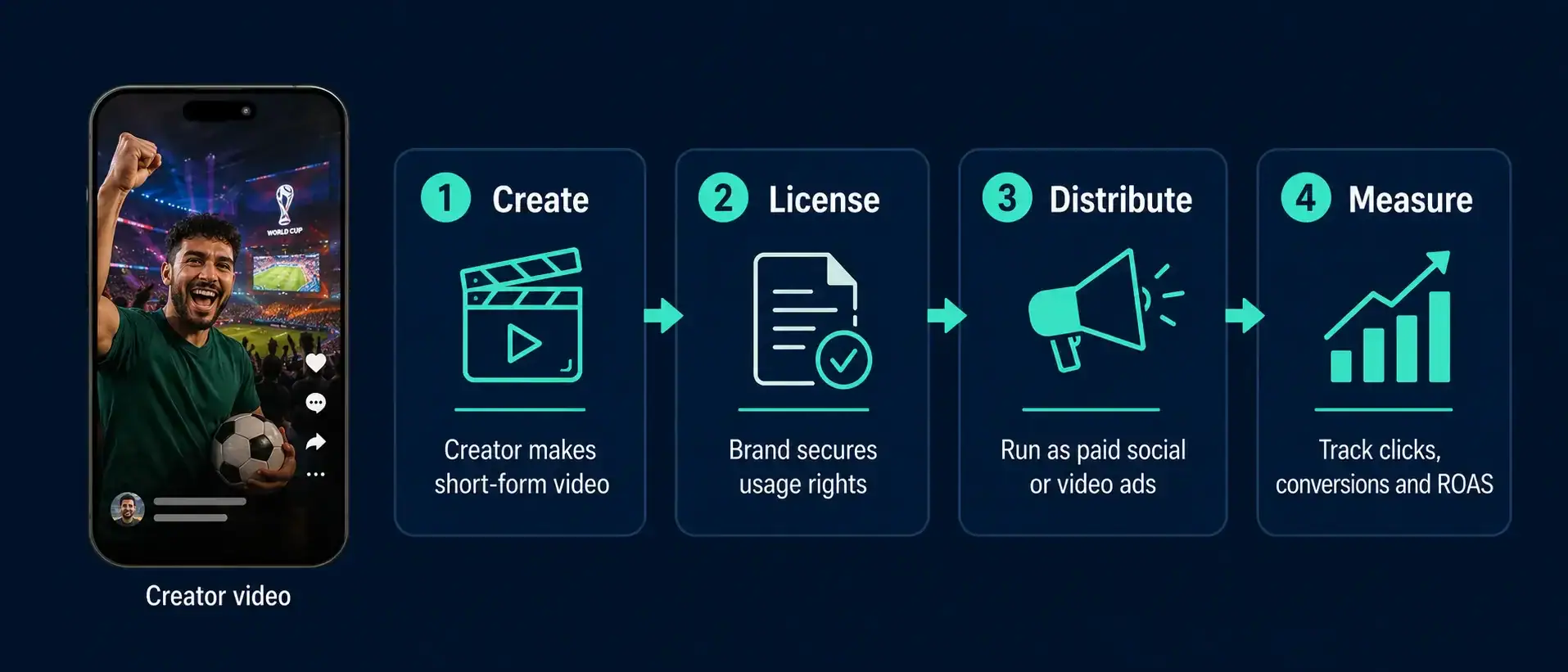
This model gives advertisers more ways to extend the commercial value of creator content. It also means creator campaigns become exposed to the same auction pressure, targeting costs, and media competition as other forms of paid advertising.
Affiliate and partner teams should consequently separate the different costs involved. Creator fees, production costs, content usage rights, paid media spend, and affiliate commissions may all contribute to the same campaign, but they represent different expenses and should be measured independently.
A campaign can appear efficient when only the creator fee is considered and much less efficient after paid distribution is added. Equally, an expensive creator asset may produce stronger long-term value if it can be reused across several placements, markets, or campaign stages.
Views Alone Do Not Show Whether Creator Ads Worked
The sporting goods results also demonstrate why creator campaigns should not be evaluated through views or engagement alone. The category achieved a strong opening hook, but it also produced increases in clicks and purchases.
Each campaign metric answers a different question. Hook rate indicates whether the opening seconds stopped users from scrolling. Watch time shows whether the content maintained attention. Click-through rate measures whether viewers took the next step, while conversion rate and customer acquisition cost show whether that attention produced commercially useful activity.
The appropriate measurement also depends on the arrangement with the creator. As explained in the TikTok Creator Monetization Guide, a brand deal may cover content production, publication to the creator’s audience, or permission for an advertiser to reuse the video. These deliverables should not be judged using the same metrics.
Content commissioned primarily for paid advertising may be valuable because of its conversion performance rather than the creator’s organic audience size. A campaign published to the creator’s own followers may need to be assessed through a broader combination of reach, engagement, traffic and attributed sales.
Will Creator Advertising Become Cheaper After the World Cup?
Probably, but it is too early to confirm. The end of the tournament should reduce some competition for paid social inventory, although the available data only covers June and does not show post-World Cup pricing. Any decline will vary by platform, audience and campaign. Advertisers should monitor CPM, CPC, conversion rate and acquisition cost in their own accounts rather than assume prices will fall evenly across Meta, TikTok and YouTube.
Major Events Reward Relevance, Not Participation
The 17% increase shows how quickly creator campaigns can become more expensive during major events. Smaller brands and affiliates are unlikely to compete with major sponsors on budget, but they can still perform through relevant products, credible creators and focused content. Not every brand needs to join every cultural moment. The World Cup results suggest that relevance, rather than participation alone, helped sporting goods campaigns turn attention into clicks and purchases despite higher media spend.
Everflow
Connect
Tradedoubler
Connect
1win Partners
Connect
Shopnomix, a Nomix Group Company
Connect
Huffson Group
Connect
Kawaii Partners
Connect
Trackdesk
Connect
Share your expertise and expand your reach and become a content contributor with us today!
Contact Us To Find Out More