Nearly Half of Parents Use AI for Back-to-School Shopping
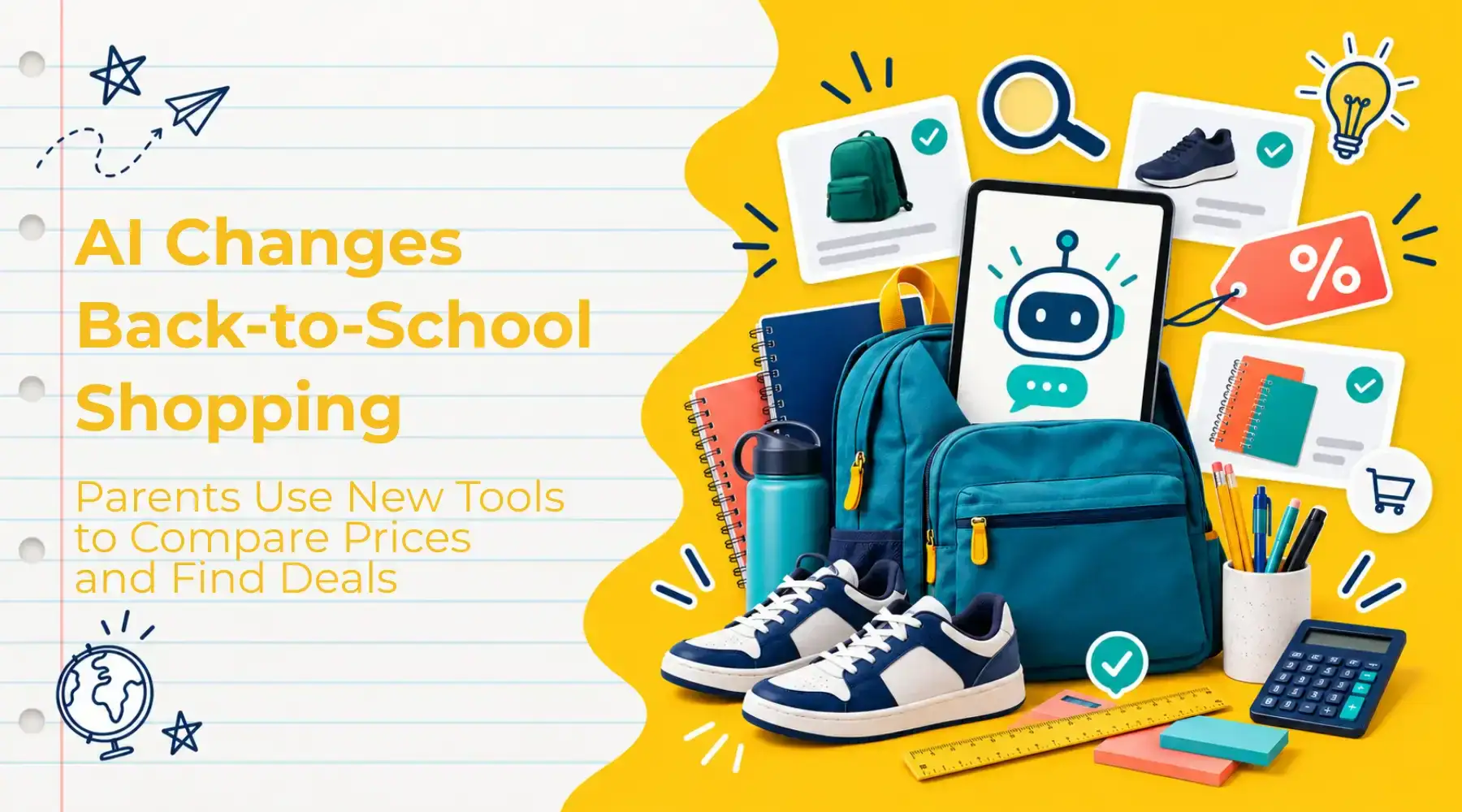
Nearly half of surveyed parents are using AI tools to compare prices, find discounts and research products during the 2026 back-to-school season. The findings show AI becoming part of the deal-discovery journey traditionally served by search engines, review sites, coupon publishers and affiliate content. However, the available surveys measure reported behavior and planned spending rather than transactions directly attributed to AI recommendations.
Key Takeaways: AI Enters Back-to-School Deal Discovery
- 46% of parents surveyed by Epsilon said they use AI for back-to-school shopping.
- Price comparisons, deal searches and initial product research are the leading use cases.
- 31% use AI-generated summaries to read reviews and ratings.
- Deloitte found that parents using search, social media and generative AI planned to spend $737 per child, compared with the overall average of $557.
- Loyalty rewards, coupons, cashback and delivery options remain important alongside AI-assisted research.
- The surveys do not establish whether AI recommendations generated incremental purchases or attributable affiliate sales.
Parents Use AI to Compare Prices and Find Deals
Epsilon’s 2026 back-to-school spending research found that 46% of surveyed parents used AI during the shopping process. Among those AI users, price comparisons and discount searches were the most common activities.
| How Parents Use AI for Back-to-School Shopping | Share of AI Users |
|---|---|
| Comparing prices | 53% |
| Searching for deals and discounts | 47% |
| Conducting initial research | 37% |
| Creating a shopping list | 33% |
| Comparing product types and brands | 32% |
| Reading AI-generated summaries of reviews and ratings | 31% |
| Deciding where to purchase a product | 30% |
ChatGPT was the most frequently used AI platform, selected by 64% of respondents who incorporated AI into their back-to-school shopping.
The results indicate that parents are using conversational tools across several stages of product discovery, from assembling an initial shopping list to evaluating prices, reviews and retailers.
Percentages in the table refer to surveyed parents who reported using AI for back-to-school shopping, rather than the complete survey sample.
Digitally Engaged Parents Report Higher Budgets
Deloitte’s 19th annual Back-to-School Survey found that parents planned to spend an average of $557 per child, unchanged from the previous year.
Planned spending increased as respondents added more digital tools to their shopping journeys:
| Digital Tools Used | Average Planned Spending per Child |
|---|---|
| No digital tools | $381 |
| Search engines | $494 |
| Search engines and social media | $531 |
| Search engines, social media and generative AI | $737 |
| Overall survey average | $557 |
The findings show an association between digital engagement and larger shopping budgets. They do not establish that using AI caused parents to spend more.
People with more complicated shopping lists, greater digital confidence or larger existing budgets may simply be more likely to research purchases through several channels.
Value Remains Central to Purchase Decisions
AI adoption is developing alongside familiar cost-saving behavior. Epsilon identified several factors influencing how parents choose products and retailers:
- 80% planned to look for sales and discounts.
- 45% expected to use coupons.
- 39% planned to use cashback offers or rebates.
- 46% intended to use loyalty rewards to reduce costs, up seven percentage points year over year.
- 59% agreed that earning rewards influenced where they shopped.
- 64% considered free delivery important when deciding whether to complete a purchase.
For affiliates, the findings suggest that product information alone may not satisfy value-conscious shoppers. Current prices, discount conditions, delivery costs, reward eligibility and offer expiration dates can all determine whether a recommendation remains useful.
The Surveys Do Not Establish AI-Driven Sales
Both studies are based on reported intentions and behavior.
Epsilon surveyed 1,234 parents between May 18 and May 29, while Deloitte questioned 1,207 parents of school-aged children during a similar period. Deloitte reported a margin of error of plus or minus three percentage points.
Neither study tracked shoppers from an AI recommendation to a completed transaction. They therefore cannot show how frequently AI-generated answers produced a retailer visit, affiliate click or sale.
This distinction reflects the wider gap between AI citations and affiliate attribution. A shopper may use an AI platform to identify a product or deal before reaching the merchant through search, an app, a marketplace or a direct visit.
What AI-Assisted Deal Discovery Means for Affiliates
Back-to-school shopping provides current evidence that consumers are using AI for commercially important tasks, particularly price comparisons, deal searches and product research.
Affiliate publishers can respond by keeping prices, availability, specifications and discount conditions clearly structured and updated. Following Google’s guidance for affiliate content in AI Search may make that information easier for search and AI systems to interpret, although it cannot guarantee inclusion or referral traffic.
The commercial outcome still needs separate measurement. AI visibility shows whether content is being surfaced, referral data shows whether shoppers reach the publisher, and affiliate reporting records whether those visits produce trackable actions.
AI may be becoming another deal-discovery layer, but the surveys do not yet show whether affiliates are being rewarded when their information helps shape the final purchase.
Everflow
Connect
Tradedoubler
Connect
1win Partners
Connect
Shopnomix, a Nomix Group Company
Connect
Huffson Group
Connect
Kawaii Partners
Connect
Trackdesk
Connect
Share your expertise and expand your reach and become a content contributor with us today!
Contact Us To Find Out More