World Cup 2026 Marketing Turns Soccer Discovery Into a Digital Funnel
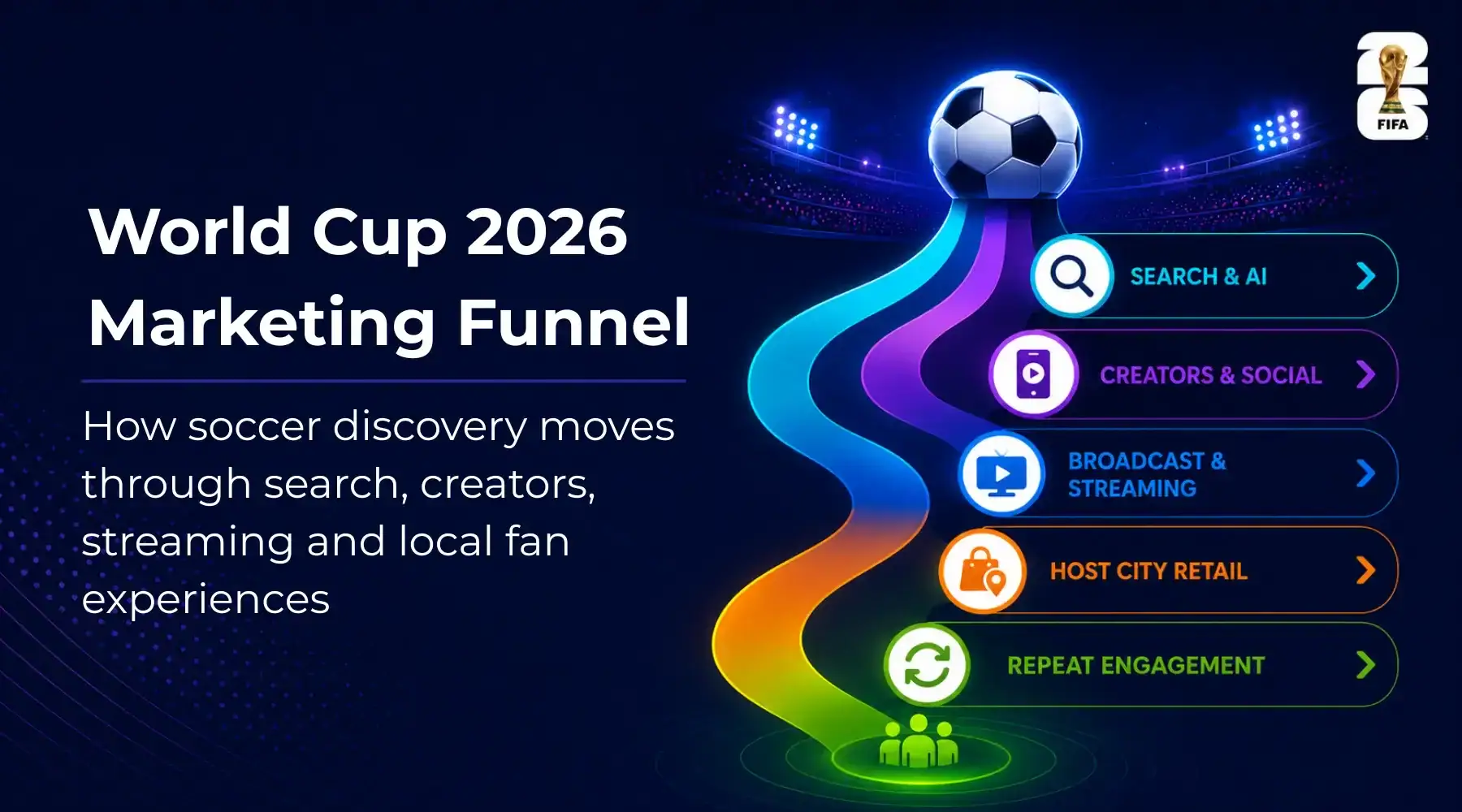
World Cup 2026 marketing will not stop at the final whistle. Fans will search for rules, watch clips, follow creators, open streaming platforms, buy local merchandise and discover clubs long after the match ends. This article maps the soccer discovery funnel forming around the tournament, from AI-powered search and creator content to broadcast personalities, host-city retail and local fan experiences.
Key Takeaways: How World Cup 2026 Marketing Is Building a Discovery Funnel
- U.S. soccer bodies, leagues and media partners are building more digital entry points around the World Cup.
- Search and AI results are becoming part of the official fan discovery journey.
- Apple’s MLS shift reduces one layer of streaming friction for existing Apple TV subscribers.
- Creators, players and short-form clips can introduce fans to soccer before they watch a full match.
- Host-city retail and fan events turn tournament attention into local culture and commerce.
- World Cup demand may not follow the tournament bracket, which makes the wider funnel less predictable.
Search Is Becoming the First Touchpoint
Many fans will not start with a full match. They will start with a question. Who plays today? Where can I watch the U.S. team? What is offside? Who is on the roster? How does MLS work? Where can I buy that jersey?
That behavior now sits inside the tournament build-up. Earlier this year, U.S. Soccer and Google partnered to modernize fan discovery, with Search, AI in Search, athlete content, social content and fan experiences linked to U.S. Soccer House. The partnership frames Google Search as a starting point for fans exploring the game. With AI in Search, supporters can ask simple questions, such as scores, or broader questions about soccer rules, moments and player stories. This turns search into more than a utility. It becomes an entry point into the wider soccer funnel.
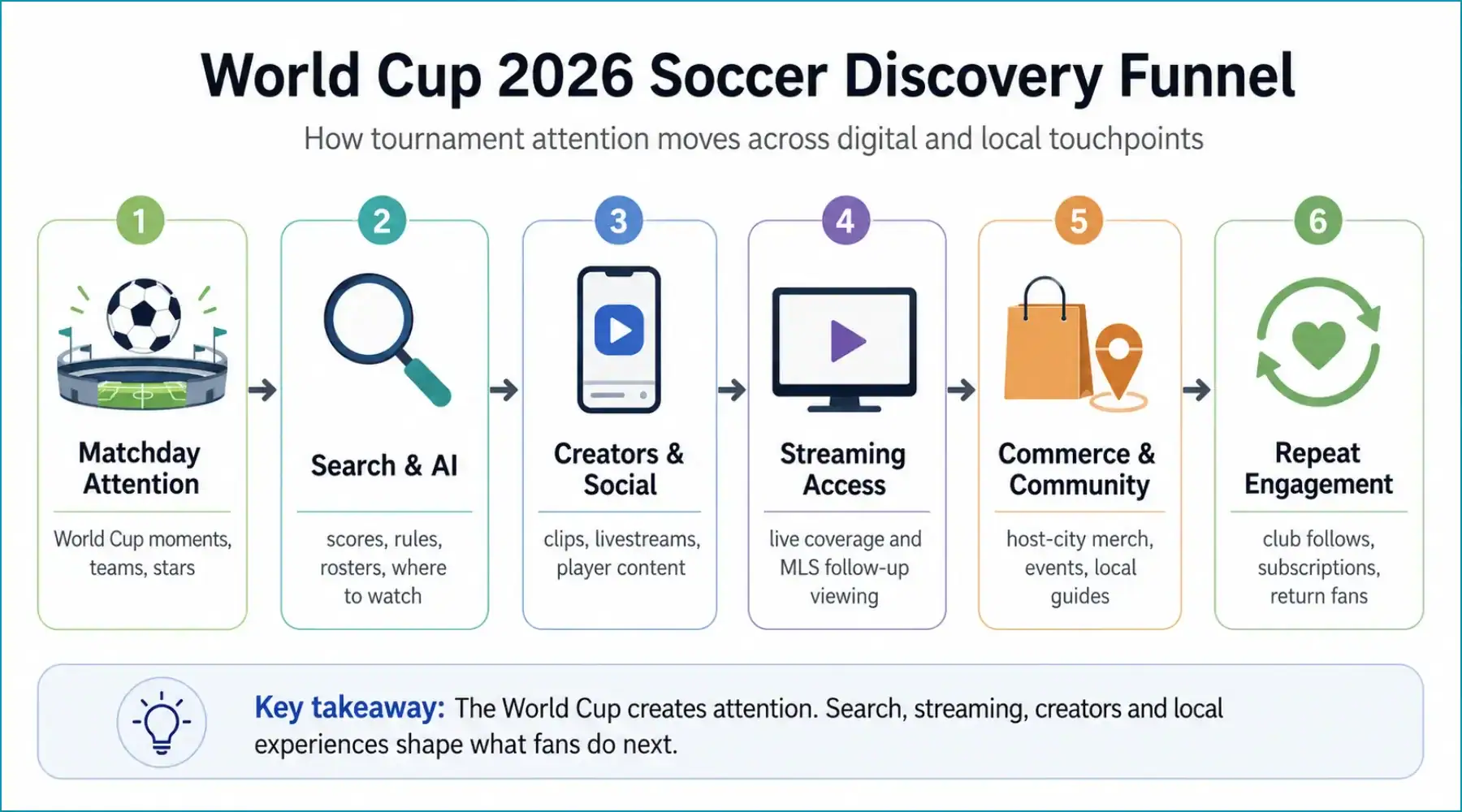
For publishers, creators and partners watching the World Cup audience, search intent can reveal what kind of fan is entering the ecosystem. Some users want fixtures. Some want rules. Some want player content. Others want streaming information, merchandise, travel ideas or local events. That range matters. It shows how one tournament can create several different discovery paths at once.
Broadcast Talent Turns Match Coverage Into Social Content
World Cup coverage no longer ends with the live match. Studio panels, post-game reactions and expert clips now form part of the wider discovery funnel, especially when broadcasters use former stars as on-air personalities.
FOX Sports has built its 2026 FIFA World Cup studio team around recognizable football names, including Thierry Henry, Zlatan Ibrahimović, Clarence Seedorf, Javier “Chicharito” Hernández, John Obi Mikel, Thiago Alcântara, Juan Pablo Ángel and Peter Schmeichel. The network has also paired international voices with U.S. names such as Carli Lloyd, Clint Dempsey, Landon Donovan and Alexi Lalas.
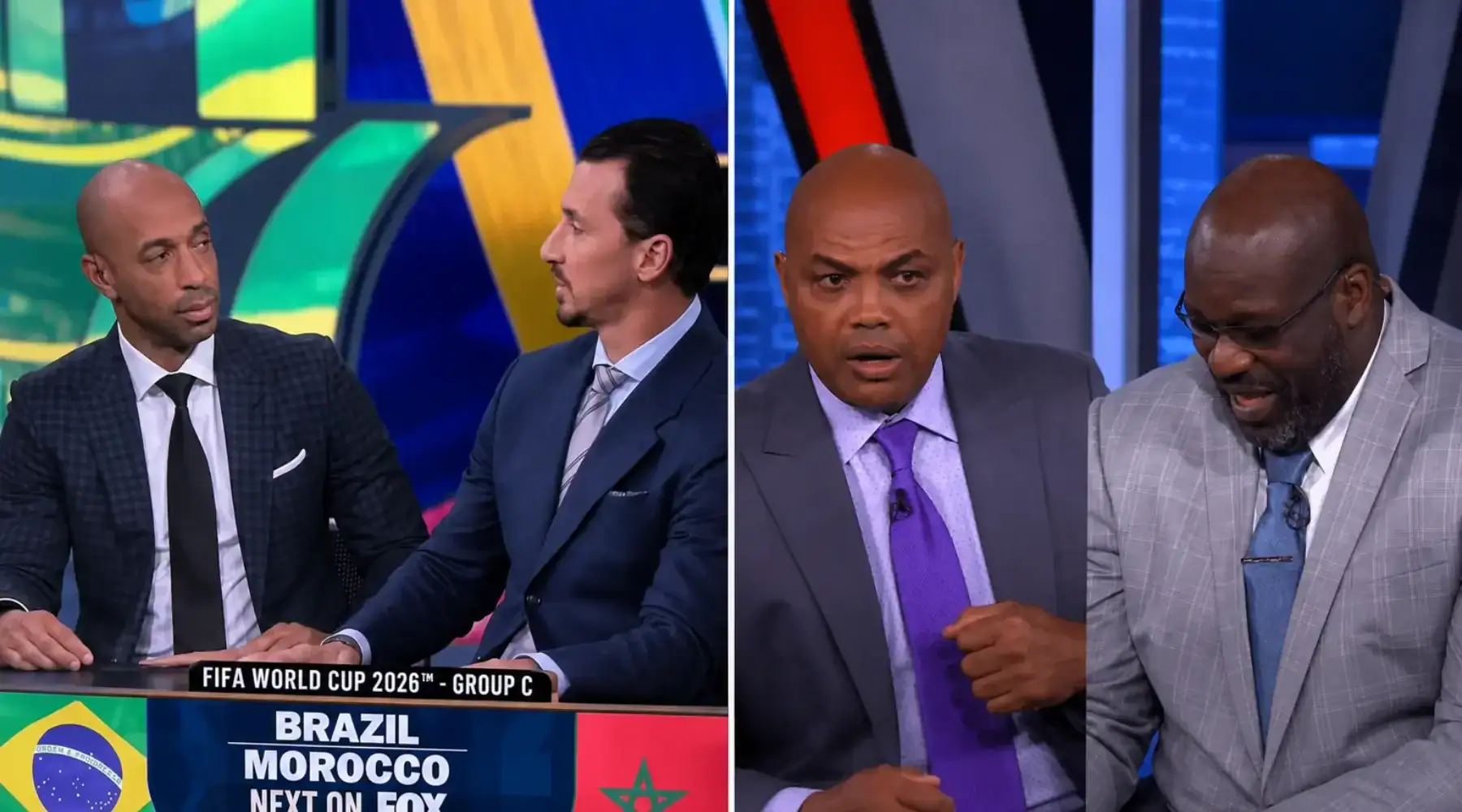
The format follows a playbook that U.S. sports audiences already know from NBA coverage, where personalities such as Shaquille O’Neal and Charles Barkley turn post-game analysis into entertainment, debate and short-form clips. Football coverage is moving in the same direction. Former players are not only there to explain tactics. They create moments that can travel across YouTube, TikTok, Instagram and connected TV interfaces.
MLS Is Building Around Club-Level Discovery
MLS has spent nearly two decades using global stars to raise club visibility. David Beckham’s move to LA Galaxy in 2007 gave the league one of its first modern crossover moments. Zlatan Ibrahimović brought another wave of international attention to Los Angeles in 2018. Beckham then moved from star signing to Inter Miami co-owner, before Lionel Messi’s arrival in 2023 turned the club into one of MLS’s most visible global brands.
That history helps explain why club-level discovery matters in 2026. The league’s 2026 marketing campaign connects “national marketing, global storytelling, and local fan engagement across the season,” with clubs, players and communities forming part of the wider World Cup build-up.
MLS CMO, Radhika Duggal, has framed the same idea in simple terms:
When the World Cup leaves, we’re still here.
Many World Cup viewers arrive through countries first. A fan may watch Argentina, Mexico, Brazil, the U.S. or England, then move toward Inter Miami, LAFC, Atlanta United, Seattle Sounders, New York City FC or a nearby club. That shift depends on more than match results. It needs player visibility, local media, social clips, ticketing, fixtures and streaming access. As Affiverse has covered before, World Cup marketing does not always turn attention into performance. The MLS setup points to the same issue: attention needs a clear next step if it is going to become repeat behavior.
Creators Turn Match Interest Into Social Discovery
Soccer discovery now moves through creators, players and short-form formats as much as through live broadcasts. A younger fan may meet the sport through a livestream reaction, a YouTube watch-along, a TikTok edit, a player training clip or a matchday vlog before watching a full game.
IShowSpeed gives one visible example of that shift. His football content turns reactions, travel, player fandom and livestream moments into entertainment for younger audiences. But the wider point is about format, not one creator. Short clips make players easier to follow. Livestreams make matches feel social. Team accounts package moments for casual fans. Player-led content can turn a national-team moment into a club-level follow.
That also connects with a wider trend Affiverse has covered before: creators and affiliates are becoming part of the same performance marketing conversation. In soccer, the journey can split quickly. A creator may drive awareness, a search result may answer the next question, a streaming platform may capture the viewing action, and a retail product or local event may turn that attention into something measurable. The fan sees one experience. The market sees several channels.
Host Cities Add Retail and Local Culture
The World Cup funnel also runs through places. U.S. Soccer has turned the 11 U.S. host cities into a retail layer through its 11×11 Collab, a series of apparel collections created with one fashion collaborator from each city.
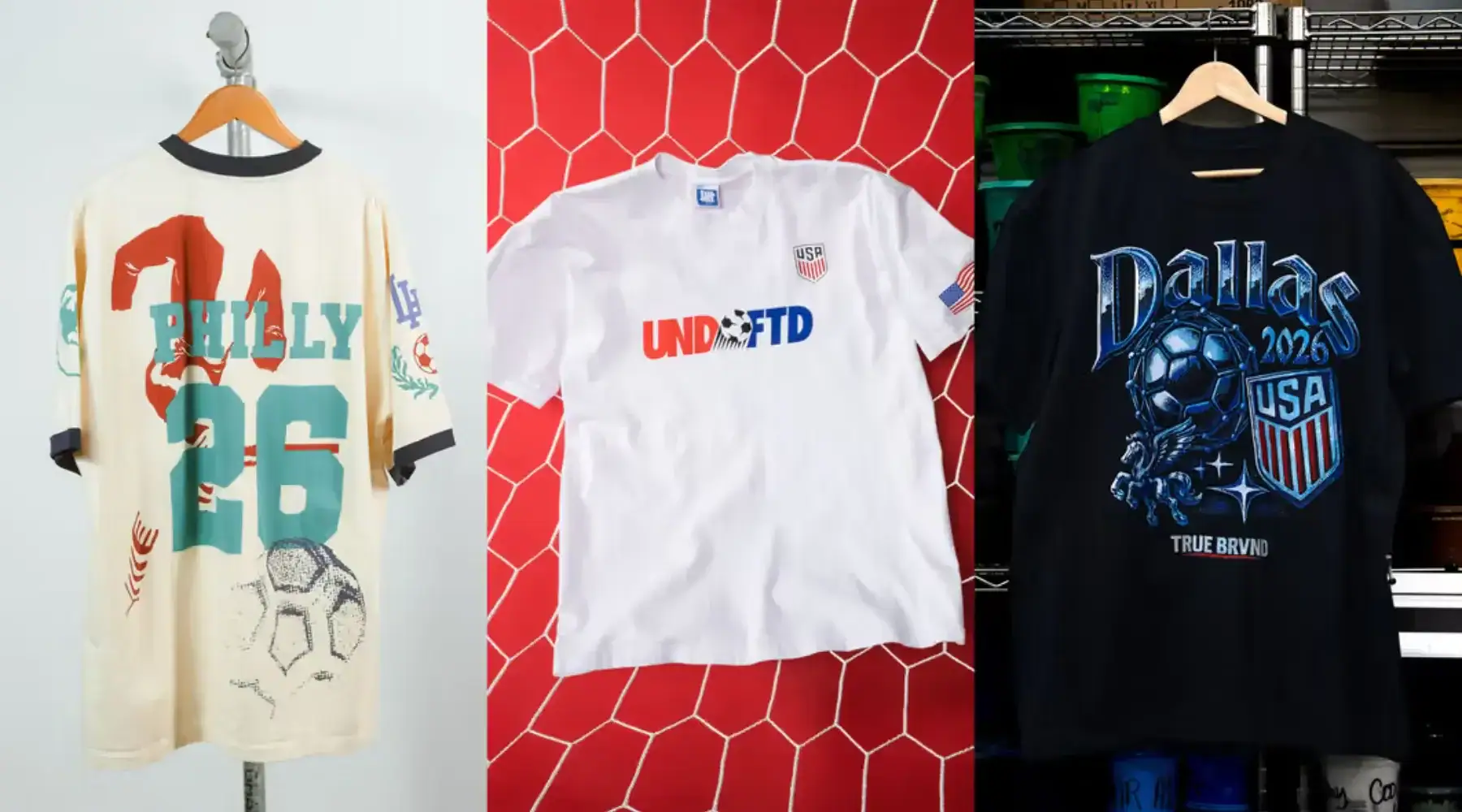
Source: USA Soccer
The project gives Atlanta, Boston, Dallas, Houston, Kansas City, Los Angeles, Miami, New York City, Philadelphia, San Francisco and Seattle their own city-specific merchandise. It also shows how tournament attention can move beyond teams and fixtures into local design, creator content, retail drops, fan guides, watch parties and city events.
That local layer matters in a U.S. World Cup. The tournament needs to meet fans across large, different cities, each with its own sports culture, media habits and local commerce opportunities.
NWSL Builds Around the Same Attention Window
The men’s World Cup window is also creating space for adjacent soccer properties. NWSL has launched a “Summer of Soccer” initiative around the global men’s tournament, with fan activations, events, broadcast programming, creator integrations and community activity tied to the wider soccer moment.
This widens the picture. World Cup attention does not only flow toward FIFA, national teams or MLS. It can move into women’s soccer, local clubs, player content, youth participation, merchandise and community events. For the wider marketing ecosystem, it shows how adjacent brands and properties can build around the same audience window without owning the main tournament. The World Cup creates the top layer of attention. Other soccer properties can still shape where some of that attention goes next.
Demand May Not Follow the Football Story
The final piece of the funnel is uncertainty. World Cup campaigns often follow the football narrative: favorite teams, star players, expected finalists and viral matches. That makes sense for editorial planning. It does not always explain where demand will move.
The Blask x Ace Alliance World Cup iGaming Index offers a useful reminder. The report found that Brazil entered November 2022 with a Blask Index of 181M, while eventual winner Argentina stood at 4M. In 2018, England led the sample in June with 39.6M, while champion France recorded 6.3M. The report focuses on iGaming demand, but the broader signal applies to World Cup marketing as a whole. Commercial interest does not always follow the winner. Search behavior, streaming demand, creator engagement, retail interest and local activity may move in different directions.
That also matters for affiliate teams planning around the tournament window. Affiverse has covered the campaign-planning side of this in its 2026 World Cup affiliate manager playbook, which looks at how affiliate programs can prepare for traffic shifts, market timing and partner activity before demand peaks. The World Cup will create matchday attention across North America. Search, streaming, creators, retail and local fan experiences will decide where that attention travels next.
Affiverse Take: Discovery Is the Real World Cup Marketing Story
World Cup 2026 will create matchday attention across North America, but the more useful story is how that attention moves. Fans will enter through search, AI answers, creator clips, broadcast personalities, host-city retail, local events and adjacent soccer properties before they settle into any one channel. That makes the funnel more important than the moment itself. The brands, publishers and partners watching this space will need to look beyond fixtures and favorites, because the next search, stream, follow, or purchase may say more about fan behavior than the final score.
Everflow
Connect
Tradedoubler
Connect
1win Partners
Connect
PIN-UP Partners
Connect
Shopnomix, a Nomix Group Company
Connect
V.Partners
Connect
Huffson Group
Connect
Kawaii Partners
Connect
Share your expertise and expand your reach and become a content contributor with us today!
Contact Us To Find Out More