TikTok Shop Affiliates Move Beyond Impulse Purchases
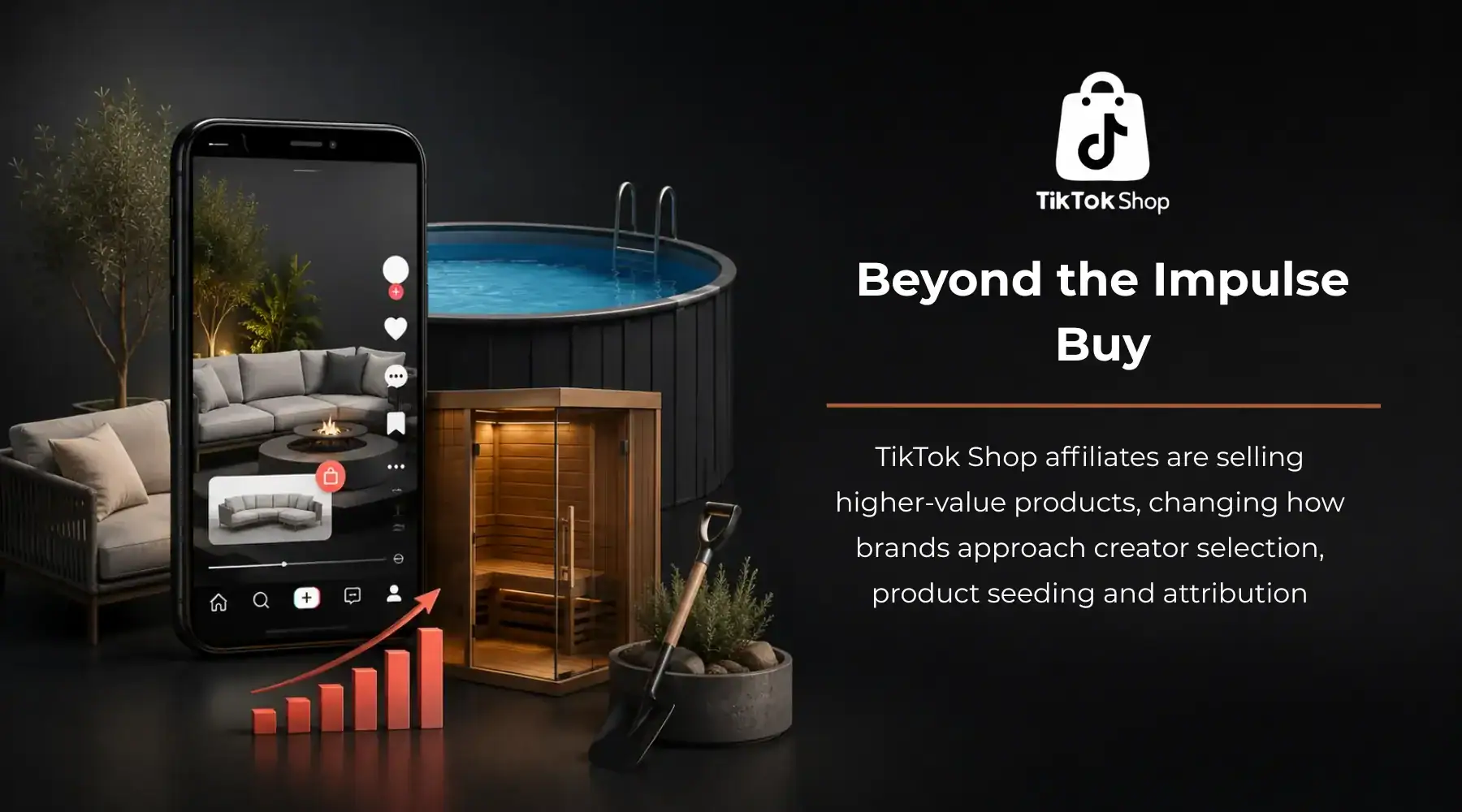
TikTok Shop is becoming a sales channel for products that require more thought than a low-cost beauty item or viral gadget. Pools starting at around $150, outdoor furniture, and even $2,000 saunas are now part of the platform’s creator-commerce mix, according to new reporting published on 11 August. The shift creates an opportunity for creator affiliates, but it changes the economics for sellers. When samples cost hundreds of dollars, broad recruitment and seeding become expensive quickly.
Key Takeaways: What Higher-Value Products Change for TikTok Shop Affiliates
- Reported TikTok Shop sales rose 125% for pools and spas, 275% for outdoor furniture, and almost 150% for lawn and garden products.
- With some products priced at around $2,000, targeted creator selection becomes more important—particularly when only 5% to 10% of an affiliate roster may produce meaningful results.
- Reducing delivery times from five days to two can strengthen conversion, but returns, basket size, and fulfilment costs still shape the commercial outcome.
- At $500 per sample, seeding 100 creators puts $50,000 of stock at risk. Sellers therefore need to track settled commission and contribution margin—not only creator GMV or estimated orders.
Higher Prices Change the TikTok Shop Model
According to the report, TikTok Shop sales of above-ground pools and spas rose 125% year over year, while outdoor furniture grew by 275% and lawn and garden products by almost 150%. These figures reflect individual commercial results rather than platform-wide performance, but they suggest that higher-consideration categories can find demand through short-form video.
The products also sit well above typical social-commerce price points. The report notes that some participating brands sell products priced at four to five times the TikTok Shop average, including saunas costing approximately $2,000.
That does not mean TikTok has become a replacement for marketplaces or direct-to-consumer sites. It suggests the platform can now support a wider part of the buying journey. Affiverse’s TikTok creator monetization guide explains how Shop Affiliate connects product content to attributed sales. Higher-ticket categories test whether that connection can survive longer consideration and greater financial risk.
Creator Content Can Carry More of the Product Page
Higher-priced products often need explanation. A buyer may want to see a pool assembled or understand the scale of an outdoor sofa before committing. Video gives creator affiliates a chance to answer those questions more naturally than static marketplace images.
This makes creator relevance more valuable than reach alone. A home renovation or gardening creator can demonstrate installation, scale and real-world use. The useful content is not simply an endorsement; it reduces uncertainty around ownership and setup.
Choosing creators with a genuine connection to the product is therefore essential when working with content creators in affiliate programs. Product fit and audience trust are far more persuasive than forcing an unrelated promotion into an established feed.
Product Seeding Becomes a Portfolio Decision
Sending a $500 product to 100 creators would put $50,000 of stock at risk before shipping. Higher prices make open-ended seeding much harder to justify.
Sellers can reduce that risk by reviewing category experience, previous partnerships, content quality and sample fulfilment history. TikTok Shop’s Creator Sample Score gives US sellers another signal by assessing creator reliability, effort, sales ability and content quality.
The platform also separates open and targeted affiliate collaborations. Open collaboration can help sellers discover new partners, while targeted invitations allow higher commissions or valuable samples to be reserved for selected creators. For expensive products, that combination is more defensible than treating every applicant equally.
Commission Rates Need to Reflect the Full Order Economics
A higher selling price can create a larger cash commission even at a modest percentage. It can also hide expensive fulfillment, returns, platform fees and sampling costs. The best rate is not necessarily the one that attracts the most creators.
Program managers should work backward from contribution margin, accounting for product cost, shipping, returns, platform charges, creator commission and any content fee. TikTok also supports flat-fee targeted collaborations alongside performance commission in the US, which may suit detailed demonstrations from selected creators.
Gross merchandise value is not enough to assess the outcome. Under TikTok Shop’s US affiliate order guidance, refunds reduce commission and canceled or fully refunded orders earn none. Settled orders, net revenue, returns and margin by creator provide a clearer view than estimated commission or video views.
Fulfillment Is Part of Affiliate Performance
An affiliate may create the demand, but delivery determines whether the order survives. This is particularly important for bulky products, where shipping costs more and delays are more noticeable.
Spreetail says it worked with TikTok to reduce its delivery window from five days to two. TikTok’s current US fulfillment policy requires regular orders to be dispatched within two business days and delivered within six. Sellers must decide whether their own operation, a third-party partner, or Fulfilled by TikTok can meet those standards for large products.
This expands the affiliate manager’s role. Creator recruitment cannot be separated from inventory, shipping coverage, and customer service. A viral video can create a sudden order spike; if the seller cannot dispatch on time or handle questions about assembly and returns, strong top-of-funnel performance may produce weak settled revenue.
TikTok May Start the Purchase Without Capturing All of It
TikTok Shop may still function partly as a discovery channel. The report says one participating brand typically sells single pillows through TikTok Shop, while customers buying from its own website tend to order multiple items. TikTok Shop also represents only a minor share of the brand’s overall sales.
That difference matters for attribution. A creator video may introduce the product before the customer visits the brand’s website to compare options or purchase a bundle. Native Shop reporting may not capture that wider influence.
The growing connection between TikTok commerce and traditional performance marketing gives publishers more ways to promote Shop products. However, brands selling considered items will need joined-up reporting to distinguish incremental customers from purchases that move between channels.
What Affiliate Managers Should Do Differently
Higher-ticket TikTok Shop programs should be built around selectivity rather than volume:
- Start with products that demonstrate well. The creator should be able to remove a real buying objection through video.
- Use targeted sampling. Reserve expensive free products for creators with relevant audiences and a reliable posting record.
- Match incentives to the task. Consider a flat fee for production, commission for sales, or a hybrid when the content requires more work.
- Include fulfillment in the launch plan. Test delivery times, packaging, stock capacity, and return handling before creator content scales demand.
- Measure the settled result. Compare net revenue, returns, contribution margin, and repeat creator performance rather than ranking partners by GMV alone.
TikTok Shop’s move into pools, furniture, and saunas does not eliminate the friction of a considered purchase. It shows that creator content can overcome some of it. The strongest programs will be the ones that treat a high-ticket affiliate partnership as a managed commercial investment—from the first sample sent to the final order delivered.
Everflow
Connect
Tradedoubler
Connect
1win Partners
Connect
PIN-UP Partners
Connect
Shopnomix, a Nomix Group Company
Connect
V.Partners
Connect
Huffson Group
Connect
Kawaii Partners
Connect
Share your expertise and expand your reach and become a content contributor with us today!
Contact Us To Find Out More