Why Affiliate Program Managers Should Build Enablement Guides for Their Partners
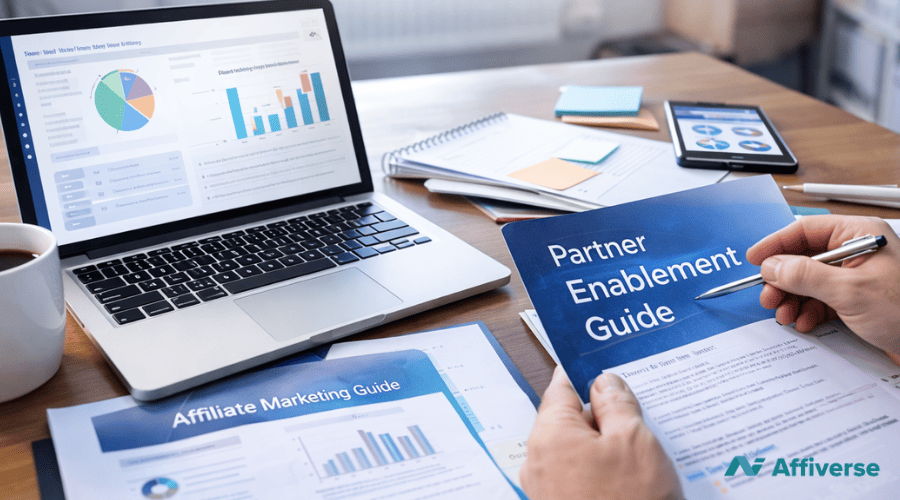
Most affiliate programs fail not because they lack competitive commissions or quality products. They fail because they leave partners to figure things out on their own.
Shopify recently published a comprehensive resource hub for their affiliates, covering everything from post-store-creation content strategies to scaling guidance and product updates. The approach treats affiliates not as transactional referral sources, but as partners whose success directly determines program success. It’s a masterclass in affiliate enablement that most program managers haven’t considered—let alone implemented.
The opportunity cost of neglecting partner education is substantial. When affiliates struggle to promote effectively, they either produce low-quality content that damages your brand, generate minimal conversions before abandoning your program, or move to competitors who make their job easier. All three outcomes cost you revenue you’ll never see.
The Business Case for Affiliate Enablement Content
Research from Zippia indicates that positive onboarding processes increase retention by 82% and boost productivity by 70%. While that data comes from employee contexts, the principle transfers directly to affiliate relationships. Partners who feel supported, informed, and equipped perform better and stay longer.
The maths work out clearly. Consider a program with 100 active affiliates generating an average of £500 monthly in commissions each. If improved enablement content increases average performance by just 20%, that’s £10,000 in additional monthly revenue. If it also reduces churn by 30%, the compounding effect over 12 months becomes significant.
Yet most programs invest heavily in recruitment while starving activation and retention. They’ll spend thousands on affiliate discovery tools and outreach campaigns, then wonder why new partners never produce meaningful results. The missing piece is almost always enablement—giving partners the knowledge and resources they need to succeed.
What Effective Affiliate Enablement Looks Like
Our approach may provide a useful framework. Our typical affiliate resources cover several distinct categories that progressive program managers should consider replicating:
Pre-conversion content helps affiliates understand how to position products and address prospect objections. This includes talking points, comparison frameworks, and audience-specific messaging guidance. Affiliates promoting software products, for instance, benefit enormously from understanding common use cases, implementation requirements, and ROI justifications their audiences will need.
Post-conversion content extends the affiliate’s value beyond the initial referral. When affiliates can help their referred customers succeed with your product, several things happen: customer satisfaction improves, retention increases, and affiliates build deeper relationships with their audiences. This creates a virtuous cycle where affiliates become genuine advocates rather than promotional channels.
Scaling resources help successful affiliates grow their operations. This might include advanced marketing strategies, access to higher-tier creative assets, or coaching on expanding into new traffic sources. Partners who’ve proven themselves deserve investment in their continued development.
Product updates and roadmap content keep affiliates informed about what’s coming. Nothing undermines affiliate credibility faster than promoting outdated information or missing major feature launches. Regular communications about product developments enable affiliates to create timely, relevant content.
Building Your Affiliate Resource Hub
The most effective programs centralise their enablement content in dedicated resource centres. This approach offers several advantages over scattered communications: affiliates can self-serve when they need information, content remains accessible for new partners joining later, and program managers can track which resources get used most frequently.
Your resource hub should address different affiliate segments and experience levels. A comprehensive onboarding program for new partners looks different from advanced optimisation content for established performers. Consider structuring resources around the affiliate journey:
Getting started covers program basics, tracking setup, brand guidelines, and initial promotional strategies. The goal is reducing time-to-first-conversion by removing friction and confusion from the activation process.
Growing your performance addresses intermediate concerns: content optimisation, audience development, channel diversification, and performance analysis. Partners at this stage need tactical guidance on improving results rather than foundational education.
Scaling and partnership development targets top performers ready for deeper collaboration. This might include exclusive promotional opportunities, co-marketing initiatives, or access to product teams for content development support.
Content Types That Drive Partner Performance
Different content formats serve different purposes in affiliate enablement. The most effective programs offer variety to accommodate different learning preferences and use cases:
Actionable strategy guides provide step-by-step frameworks affiliates can implement immediately. Rather than generic advice about “creating great content,” these guides offer specific templates, examples, and processes. A guide on reviewing your software product, for instance, might include a suggested structure, key features to highlight, common questions to address, and sample language for different audience segments.
Video tutorials and webinars work particularly well for technical topics or complex promotional strategies. Showing affiliates how to implement tracking correctly, use creative assets effectively, or optimise their conversion funnels through video reduces support burden while improving outcomes.
Case studies and success stories demonstrate what’s possible and provide social proof that motivates effort. Feature affiliates who’ve achieved significant results, explaining their strategies and learnings. These stories inspire while offering practical insights other partners can adapt.
Regular updates and newsletters maintain engagement and keep affiliates informed. A monthly digest covering product updates, promotional opportunities, performance tips, and program news prevents partners from feeling disconnected. As we’ve explored in our guidance on nurturing affiliate relationships, consistent communication builds trust and engagement over time.
The Role of Coaching and Direct Support
Content resources alone don’t constitute complete enablement. The best programs complement self-serve materials with access to direct support and coaching opportunities.
Consider offering structured coaching for partners showing potential. A new affiliate who’s created solid content but struggles with conversion optimisation might benefit enormously from a 30-minute call with your team. The investment of your time yields dividends through improved partner performance and strengthened relationships.
Community elements also contribute to enablement. When affiliates can connect with each other, share experiences, and learn from peers, the collective knowledge exceeds what any program manager could provide alone. Private Slack channels, Discord servers, or community forums create spaces for this organic knowledge exchange.
The five-step flywheel approach to partnership development emphasises meeting affiliates where they are. Different generations communicate differently, different business models require different support, and different experience levels need different resources. One-size-fits-all enablement fails because partners aren’t uniform.
Leveraging Your Existing Resources
You likely have more enablement content available than you realise. Product documentation, marketing collateral, customer success stories, and training materials created for other purposes can often be adapted for affiliate use.
Your customer success team probably fields the same questions repeatedly—those questions represent content opportunities. Your marketing team creates positioning documents and competitive analyses—affiliates need similar information. Your product team develops feature explanations and use case documentation—partners promoting your product need access to that knowledge.
The work involves curation and adaptation rather than creation from scratch. Review existing resources through an affiliate lens: What would a partner need to understand to promote this effectively? What context might they lack? What questions would their audiences ask?
External resources also play a role. Shopify points affiliates toward their blog, YouTube channel, and educational academy—resources that benefit both affiliates and their referred customers. If your company produces educational content for customers, that same content often serves affiliate enablement purposes.
Measuring Enablement Effectiveness
Like any program investment, enablement content should demonstrate measurable impact. Track metrics that indicate whether resources are being used and whether they’re improving outcomes:
Resource engagement shows which content resonates. Page views, video completions, and download rates reveal what affiliates find valuable. Low engagement might indicate content quality issues, discoverability problems, or misalignment with actual partner needs.
Time-to-first-conversion measures how quickly new affiliates generate results. If improved onboarding content reduces this timeframe, you’ve demonstrated clear ROI from enablement investment.
Affiliate retention tracks whether partners stay active over time. Programs with comprehensive enablement typically see higher retention because partners feel supported and see clearer paths to success.
Performance improvement rates examine whether affiliates grow over time. Partners accessing advanced optimisation content should show performance gains that justify continued content development.
Survey your affiliates periodically about their resource needs. Ask what information would help them perform better, what questions they frequently encounter from their audiences, and what aspects of your product or program remain unclear. This direct feedback shapes enablement priorities.
Implementing an Enablement Strategy
Building comprehensive affiliate enablement doesn’t happen overnight. Start with the highest-impact opportunities and expand systematically:
Phase one addresses immediate gaps. Audit your current onboarding process and identify where new affiliates struggle or drop off. Create resources targeting those specific friction points. This foundation enables everything that follows.
Phase two develops growth-stage content. Once partners can get started successfully, build resources that help them improve. Performance optimisation guides, advanced promotional strategies, and case studies support partners ready to scale.
Phase three establishes ongoing communication rhythms. Regular newsletters, product updates, and promotional opportunity announcements maintain engagement and prevent partners from feeling forgotten between performance reviews.
Phase four introduces community and coaching elements. As your program matures, adding direct support options and peer connection opportunities differentiates your program and deepens partner relationships.
Throughout this progression, maintain feedback loops. Resources that don’t get used need improvement or removal. Content that generates positive results deserves expansion. Partner requests should shape development priorities.
The Competitive Advantage of Partner Investment
The affiliate marketing landscape grows more competitive annually. Affiliates can choose from thousands of programs across virtually every product category. Competitive commissions and quality products represent table stakes—they’re necessary but insufficient for attracting and retaining top partners.
Programs that invest in affiliate success create genuine differentiation. When partners know you’re committed to their development, they reciprocate with loyalty and effort. When they have resources competitors don’t provide, they produce better content and generate more conversions for you.
This partnership approach to affiliate management treats affiliates as strategic allies rather than promotional vendors. It requires different skills, different resource allocation, and different success metrics than transactional program management. But programs making this transition consistently outperform those clinging to outdated approaches.
The question isn’t whether you can afford to invest in affiliate enablement. It’s whether you can afford not to—while competitors build the resources and relationships that will determine who wins the partners who matter most.
Getting Started Today
If your program lacks comprehensive enablement resources, start with these immediate actions:
Audit your current state. What resources do affiliates currently have access to? Where do support requests cluster, indicating gaps in available information? What do top performers know that struggling partners don’t?
Interview your affiliates. Ask what would make their job easier, what questions their audiences ask that they can’t answer well, and what resources from other programs they find valuable. Direct input shapes effective enablement better than assumptions.
Create your first guide. Pick the highest-impact opportunity from your audit and interviews, then develop a comprehensive resource addressing it. One excellent guide demonstrates what’s possible and builds momentum for continued development.
Establish communication rhythms. Even before your resource hub is complete, begin regular partner communications. Monthly newsletters, promotional opportunity announcements, and product updates maintain engagement while you build comprehensive resources.
The programs winning affiliate partnerships in 2025 and beyond will be those that recognise a fundamental truth: affiliate success and program success are inseparable. Investing in partner enablement isn’t charity—it’s strategy. The returns compound as partners perform better, stay longer, and advocate for your program to other affiliates.
Your competitors are either building these capabilities or they aren’t. Either way, the opportunity exists for programs willing to make the investment.
Looking to build your affiliate management capabilities? Explore the Affiliate Management Performance Program (AMPP) for structured training on launching, scaling, and growing successful affiliate programs.
Everflow
Connect
Tradedoubler
Connect
1win Partners
Connect
PIN-UP Partners
Connect
Shopnomix, a Nomix Group Company
Connect
V.Partners
Connect
Huffson Group
Connect
Kawaii Partners
Connect
Share your expertise and expand your reach and become a content contributor with us today!
Contact Us To Find Out More