Meta Expands AI Labels for Facebook and Instagram Ads
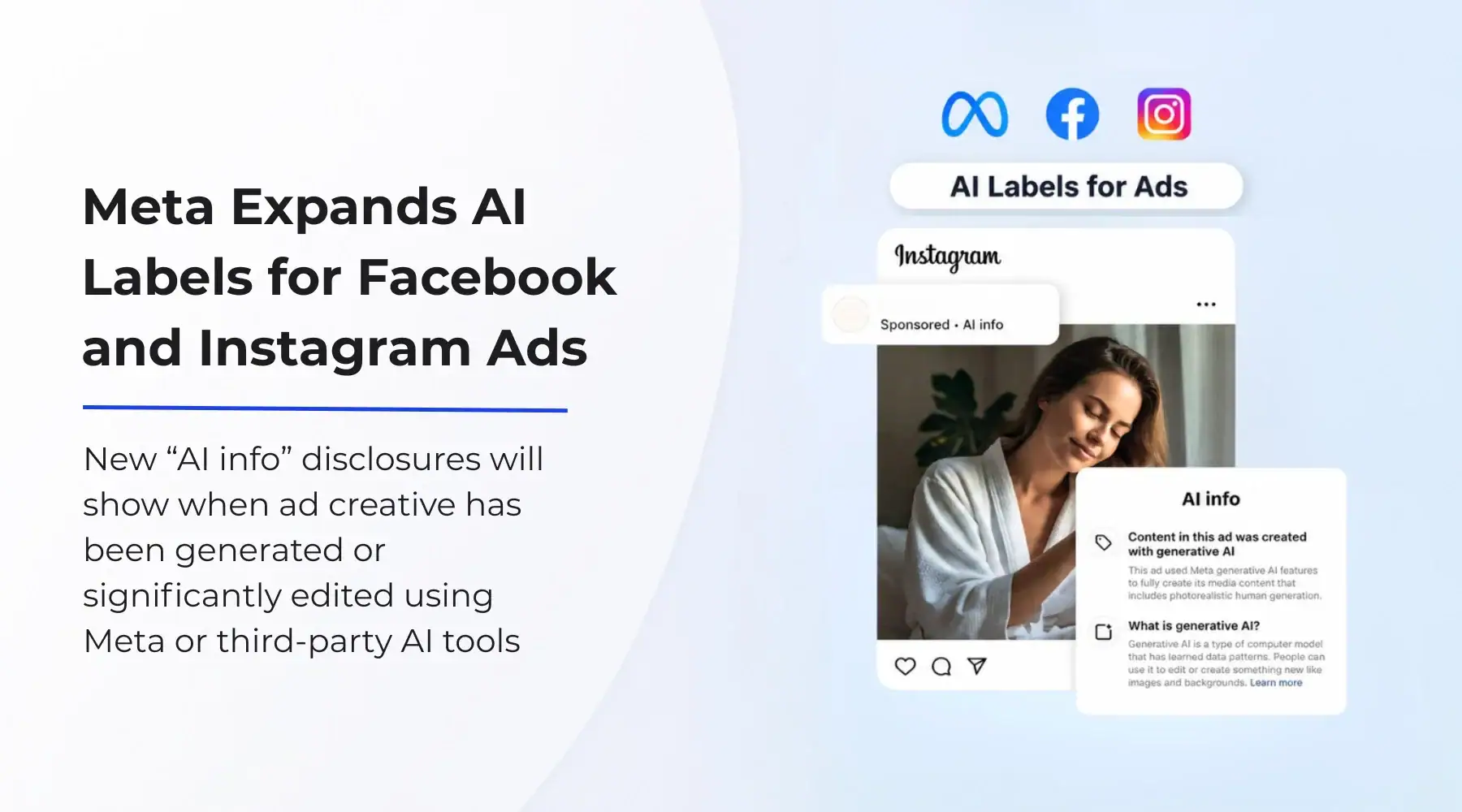
Meta updated its advertising transparency announcement on June 1, 2026, outlining changes to how it labels ads created or edited with generative AI tools across Facebook and Instagram.
The company is beginning to roll out “About this ad,” a unified section within the three-dot menu attached to advertisements. It will bring together AI labels and other transparency information, including details about who paid for or benefits from an ad when that information is available.
For affiliates, creators and media buyers, the update adds another consideration to AI-assisted creative production. Teams using AI to generate images, alter backgrounds, localize assets or produce campaign variations may need clearer records of how each advertisement was made.
Key Takeaways: Meta’s Updated AI Ad Labels
- Meta updated its announcement on June 1, 2026.
- “About this ad” will provide a central place for advertising transparency information.
- Existing AI labels for ads created or significantly edited with Meta’s tools will appear there.
- Meta will detect some ads created or edited with third-party AI tools.
- AI labels remain separate from disclosures identifying paid or affiliate relationships.
How Meta Will Label AI-Generated Ads
Meta’s original announcement was published in February 2025, when the company explained how labels would apply to ads made with its own generative AI creative features. The June 1, 2026 update expands that approach to third-party AI tools and introduces the “About this ad” section.
According to Facebook’s Business Help Center guidance, the company will use industry-standard signals to identify some advertisements created or edited using external AI tools. When those signals are detected, an “AI info” label will be included within “About this ad.”
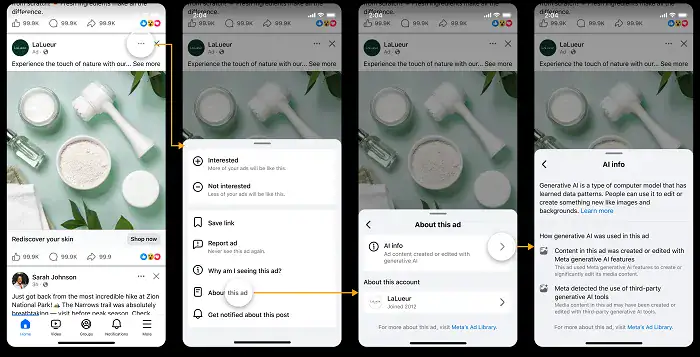
Source: Facebook Business Help Center
Meta already labels ads created or significantly edited using its own generative AI features. Limited edits that do not significantly change an image or video may not receive a label. When an advertisement includes an AI-generated photorealistic person, the label may appear beside the “Sponsored” label rather than only within the three-dot menu.
The section will also bring together existing information such as advertiser payer, or beneficiary details and “Paid for by” disclosures for social issue, election and political campaigns. The experience may differ in some regions due to local legal requirements.
What Meta’s AI Ad Labels Mean for Affiliates and Creators
AI tools are becoming part of everyday campaign production. They can help teams create visual variations, translate advertising content, adjust product backgrounds and turn approved assets into different formats. Platforms are also integrating AI more closely with campaign planning and creative development. This can be seen in TikTok’s Symphony Agent tools and Meta’s wider AI search and live commerce updates.
The Meta update means affiliate programs and agencies may need greater visibility into how partners produce and modify campaign materials. A creator might use AI to adapt an image for a new market, while a media buyer might generate several versions of an advertisement for testing.
These workflows are not automatically an issue. The main consideration is whether brands know when approved materials have been changed, which tools were used and whether those changes could trigger an automatic Meta label.
AI Labels Do Not Replace Commercial Disclosures
Meta’s “AI info” label explains how an advertisement was created or edited. It does not identify the commercial relationship behind the promotion. That distinction matters as Facebook Affiliate Partnerships and other platform-native commerce tools bring creators, advertisers and affiliate activity closer together.
Content featuring affiliate links may still require a paid partnership, branded-content or affiliate disclosure, even when the creative also carries an AI label. Marketers may therefore want to review their creative guidelines, clarify disclosure responsibilities and ask partners to report significant AI edits before campaigns go live. As AI-assisted advertising becomes easier to produce, approval processes will need to keep pace.
Everflow
Connect
Tradedoubler
Connect
1win Partners
Connect
PIN-UP Partners
Connect
Shopnomix, a Nomix Group Company
Connect
V.Partners
Connect
Huffson Group
Connect
Kawaii Partners
Connect
Share your expertise and expand your reach and become a content contributor with us today!
Contact Us To Find Out More