UK CMA Pushes Google to Give Businesses More Search Ranking Clarity
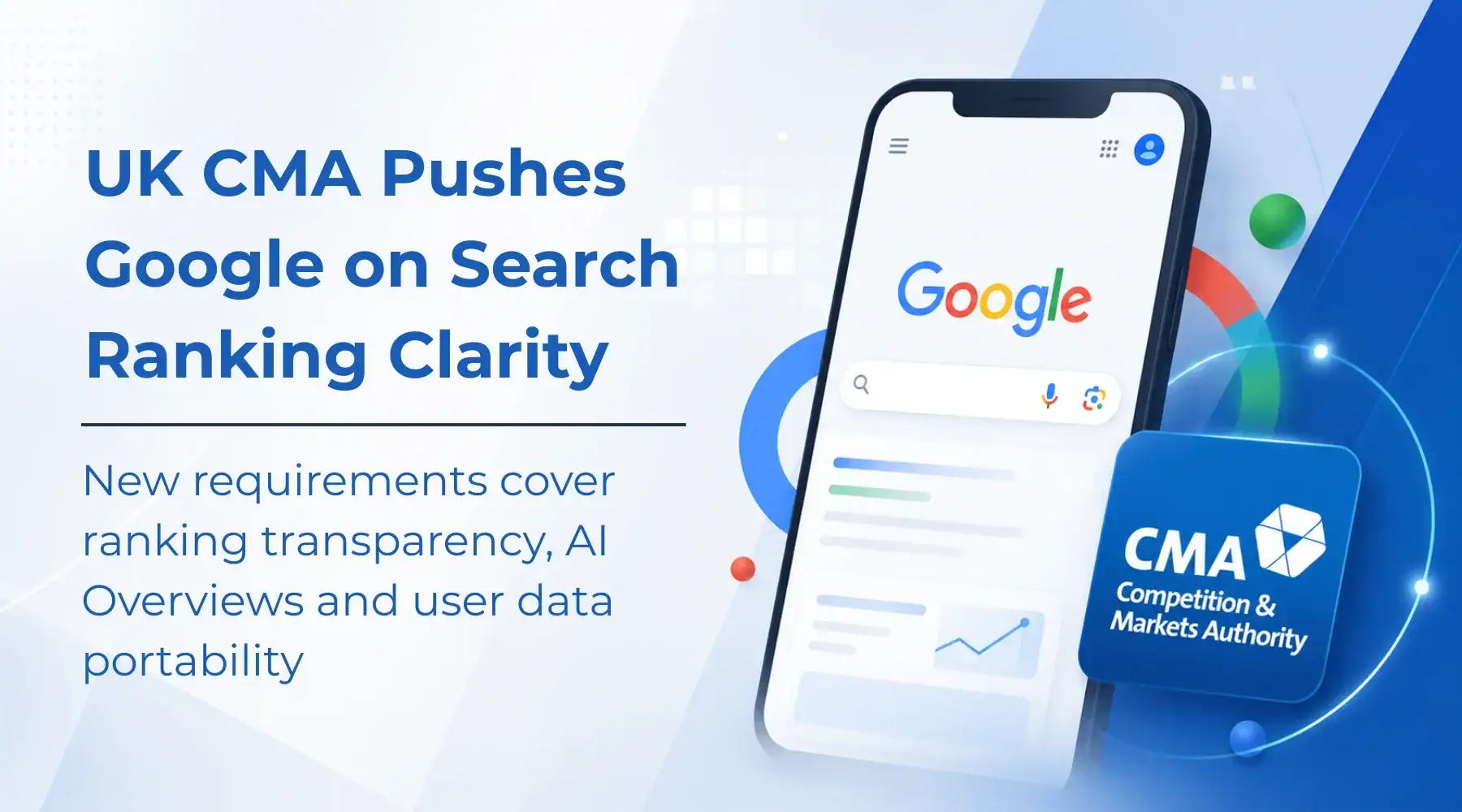
The UK CMA has introduced new conduct requirements for Google Search, putting fresh pressure on the company to provide more clarity around search rankings, AI Overviews and user data portability.
The measures were announced on 17 June 2026 and apply to Google’s general search services in the UK. According to the CMA announcement, the first requirement focuses on fair ranking and transparency for businesses that rely on Google Search. The second covers how users can share their search data with authorized third parties.
For affiliates, publishers and comparison platforms, this touches a long-running problem: Google ranking changes can affect traffic, revenue and commercial planning with little notice.
Key Takeaways From the UK CMA’s Google Search Requirements
- The UK CMA has introduced new conduct requirements for Google Search, covering ranking transparency and user data portability.
- The fair ranking requirement applies to organic search results and AI Overviews, but not sponsored search results.
- Google will need to give businesses advance notice of significant ranking changes where possible.
- The data portability requirement could become relevant for rewards, cashback, shopping deals and personalized offer platforms.
- Affiliate publishers should watch how the rules affect search visibility, AI-assisted discovery and traffic measurement.
CMA Introduces Fair Ranking Requirement
The CMA said Google must show that its approach to ranking search results works fairly for businesses. This includes organic search results and AI Overviews, but does not cover sponsored search results.
Will Hayter, Executive Director for Digital Markets at the CMA, said:
Step by step, we’re ensuring that Google’s search services work better for businesses and consumers across the UK. Search is a vital gateway for businesses in the UK to reach customers, and clearer, predictable and more transparent ranking systems could give them greater scope to expand and invest. These new measures will ensure search results are ranked fairly and objectively, with clearer information about changes and effective routes to raise concerns. At the same time, innovative businesses will have the confidence that they can access search data in practice, unlocking investment and innovation in new products and services for users.
The requirement also asks Google to give businesses advance notice of significant ranking changes where possible. That point needs careful wording. It doesn’t mean Google has to announce every algorithm update in advance or explain exactly how its ranking systems work. The CMA’s focus sits on meaningful changes that affect businesses using Google Search as a route to customers. Google must also provide a process for businesses to raise concerns and have ranking issues investigated.
AI Overviews Included in the Requirement
The inclusion of AI Overviews gives the update wider relevance for affiliate and publisher teams. Google’s AI search features can answer queries directly in search results, pull from multiple sources and affect how visible commercial pages become.
For affiliates, that makes Google’s AI search guidelines harder to separate from day-to-day SEO work. Pages still need to give Google clear reasons to crawl, understand and surface them, especially as AI Overviews and AI Mode draw from indexed content. Crawlability, structured content, usefulness and trust signals all become part of the same visibility question.
The pressure doesn’t stop at visibility. If users find answers inside search results, fewer searches may turn into measurable clicks. That creates a wider issue around AI, influence and attribution in affiliate marketing, particularly when AI tools shape product discovery before the final tracked visit.
Data Portability Also Added
The CMA has also introduced a data portability requirement. This aims to give users more control over their Google Search data and make it easier to share that data with authorized third parties.
The regulator pointed to possible use cases such as personalized offers, shopping deals, cashback and discounts. That makes the requirement relevant to partner marketing, rewards platforms and commerce services that depend on permission-based user data. The details will matter. Data access, user consent and third-party use will need clear rules before marketers can judge how useful the change becomes in practice.
Why the CMA Rules Matter for Affiliate Publishers
For affiliate publishers, the CMA decision adds another regulatory layer to the search conversation. It won’t remove ranking volatility. It won’t guarantee traffic recovery after an update. But it may give businesses more visibility into major ranking changes and a clearer route to raise concerns.
The AI element deserves close attention. Affiliates already need better ways to separate search traffic, AI-assisted discovery and direct referrals. That makes tracking AI traffic in GA4 a practical part of the same discussion, especially as AI Overviews and AI Mode change how users move from search results to publisher pages.
Google has six months to implement the fair ranking requirement and three months to implement the data portability requirement. For now, the main takeaway stays simple: UK search regulation now covers ranking transparency, AI Overviews and search data portability in the same frame.
Everflow
Connect
Tradedoubler
Connect
1win Partners
Connect
PIN-UP Partners
Connect
Shopnomix, a Nomix Group Company
Connect
V.Partners
Connect
Huffson Group
Connect
Kawaii Partners
Connect
Share your expertise and expand your reach and become a content contributor with us today!
Contact Us To Find Out More