AI Overviews Reach 88% of Tracked Commercial Keywords in Semrush Study
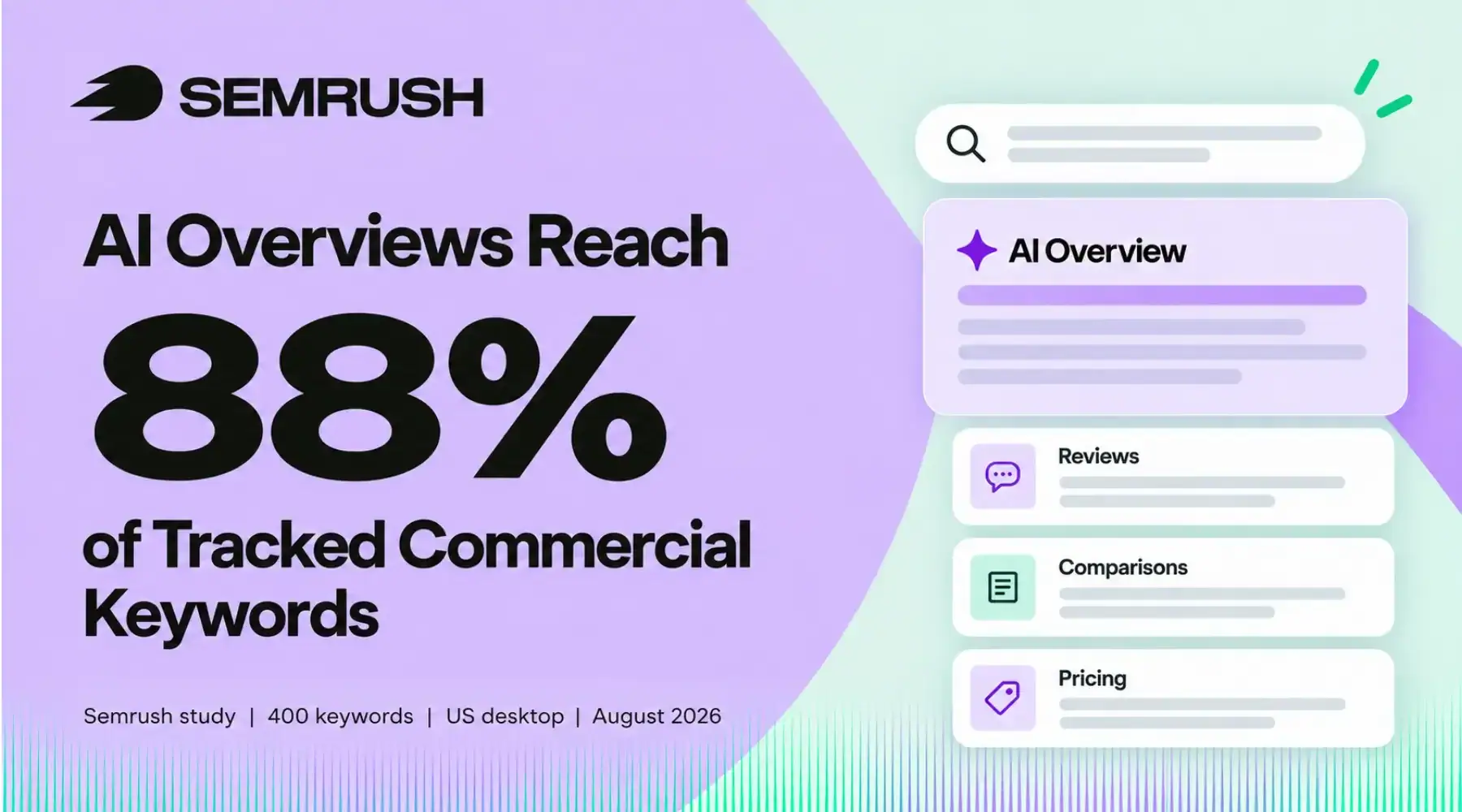
Google AI Overviews appeared for 88% of the commercial keywords tracked in a new Semrush study, covering searches for reviews, comparisons and other purchase research. Published on October 21, the findings concern a fixed US desktop sample rather than all Google searches. For affiliate publishers, they raise questions about how readers encounter product advice before visiting a website.
Key Findings From Semrush’s AI Overviews Study
- AI Overviews appeared for 88% of the 400 tracked commercial keywords in August 2026, up from 45.75% in September 2025, using US desktop data.
- Review searches saw coverage rise from roughly 30% to around 90% over the study period.
- Ecommerce keywords recorded the largest increase among the industries studied, with coverage climbing from 32.62% to 85.11%.
AI Overviews Expand Across Commercial Search
Semrush’s research followed 400 keywords in banking, software and ecommerce from September 2025 to August 2026. The groups covered reviews, alternatives, brand comparisons, best-product searches and pricing. Overall coverage started at 45.75%; review coverage rose from about 30% to 90%, while ecommerce coverage increased from 32.62% to 85.11%.
The main result weights keywords equally. It describes the selected panel rather than all shoppers. The final observation month was August, although the study was published in October. It does not measure resulting changes in affiliate clicks or sales.
Why the Results Matter for Affiliate Publishers
Reviews and comparisons often give publishers an opportunity to help a reader choose between products. An AI answer introduces another place where that decision can develop. A reader might find a useful explanation in the summary, follow a supporting link for more detail, or continue researching elsewhere.
Those journeys have different commercial implications. A citation can make a publisher’s work visible, but it does not demonstrate that the reader visited the page or generated a tracked purchase. Equally, a change in referral traffic needs investigation before it can be attributed to an AI feature.
Affiverse’s reporting on the gap between AI search visibility and affiliate attribution explores the measurement problem. In our podcast on AI search and the affiliate bypass, Finder’s Jon Ostler discusses how AI recommendations can draw on affiliate publishers’ work while directing consumers toward providers.
Consider a comparison page that retains its organic position but receives fewer visits. Checking whether its results now include an AI answer could help investigate the change. Seasonality, demand and competitors also need consideration before the publisher assigns a cause or changes its commercial expectations.
Affiliate managers can use partner discussions to identify which review pages influence valuable product categories and whether merchants provide accurate information. A publisher refreshing a comparison needs current specifications and offer terms, particularly when those details could appear in a summarized answer.
Google Says Existing SEO Practices Still Apply
Google’s documentation says pages need to be indexed and eligible for a search snippet to appear as supporting links in AI Overviews or AI Mode. It does not prescribe special AI markup or an additional technical requirement for inclusion.
Its guidance continues to emphasize accessible, useful content, internal links and structured data that matches the visible page. Meeting those requirements does not guarantee that Google will select a page.
For publishers reviewing their approach, Affiverse’s Google AI search guidelines for affiliates explain how those principles apply to reviews and commerce content. Clear evidence, current offer details and original analysis give readers something useful to assess when they reach the site.
Tracking AI Overview Visibility and Affiliate Conversions
A practical response is to examine the searches and pages that matter most to the business. Teams can record where an AI Overview appears, which sources it cites and whether their own content answers the purchasing question accurately. These observations should sit alongside referral and conversion reporting.
Our webinar on zero-click search and open attribution explores this measurement challenge. Alex Springer and Leanna Klyne discuss why last-click reporting can miss publisher influence and how open attribution aims to address that gap.
Google includes traffic from its AI features within Search Console’s Web performance reporting. Analytics and affiliate-platform records can then help teams assess what visitors did after reaching the site, although those records alone cannot prove the influence of an earlier AI citation.
Before changing a content strategy, publishers should establish their own baseline across important topics and markets. The useful next question is whether changes in visibility coincide with changes in visits, engagement or approved sales on their own pages.
Everflow
Connect
Tradedoubler
Connect
1win Partners
Connect
Shopnomix, a Nomix Group Company
Connect
Huffson Group
Connect
Kawaii Partners
Connect
Trackdesk
Connect
Share your expertise and expand your reach and become a content contributor with us today!
Contact Us To Find Out More