Google Rolls Out Universal Cart Across Search and Gemini in the US
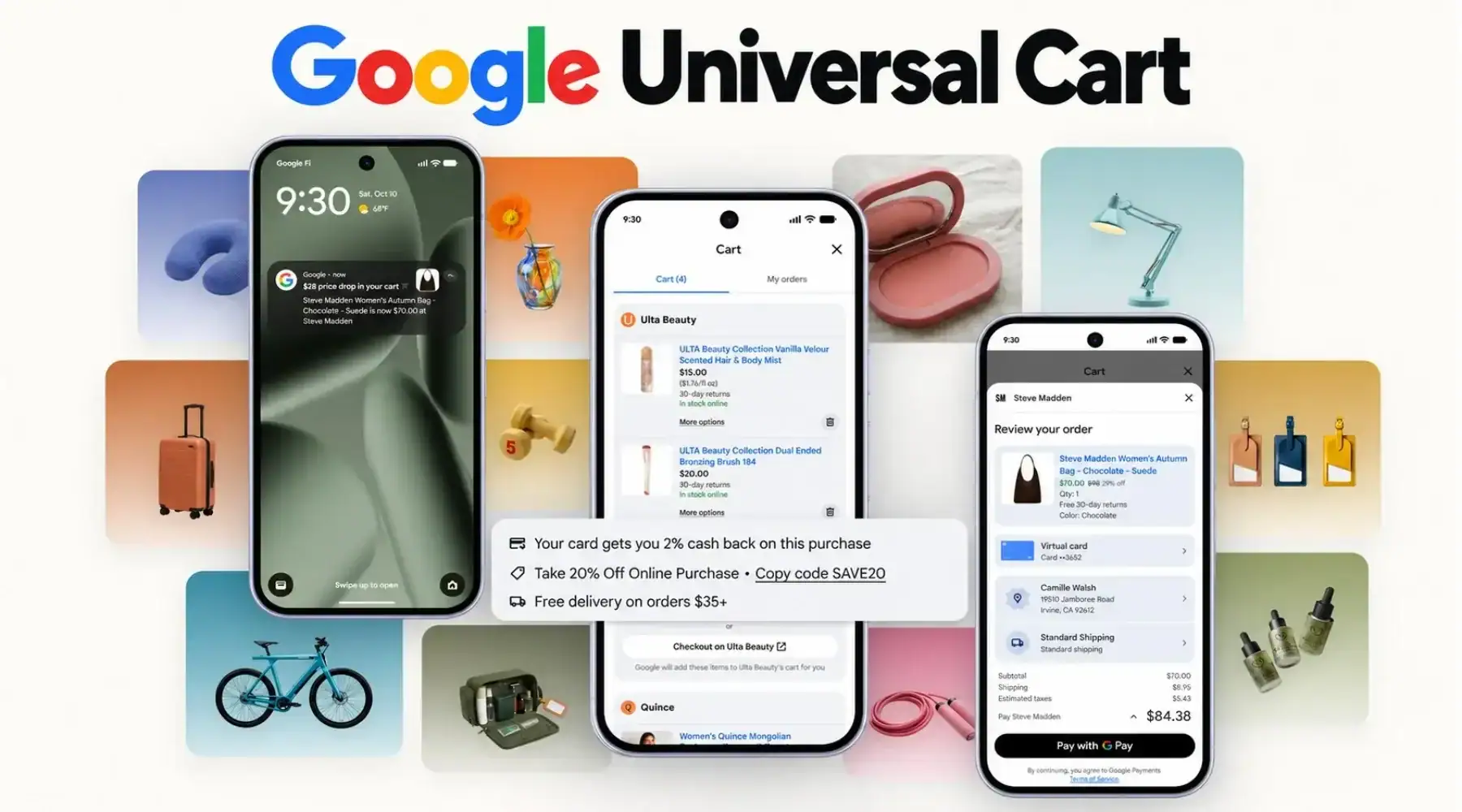
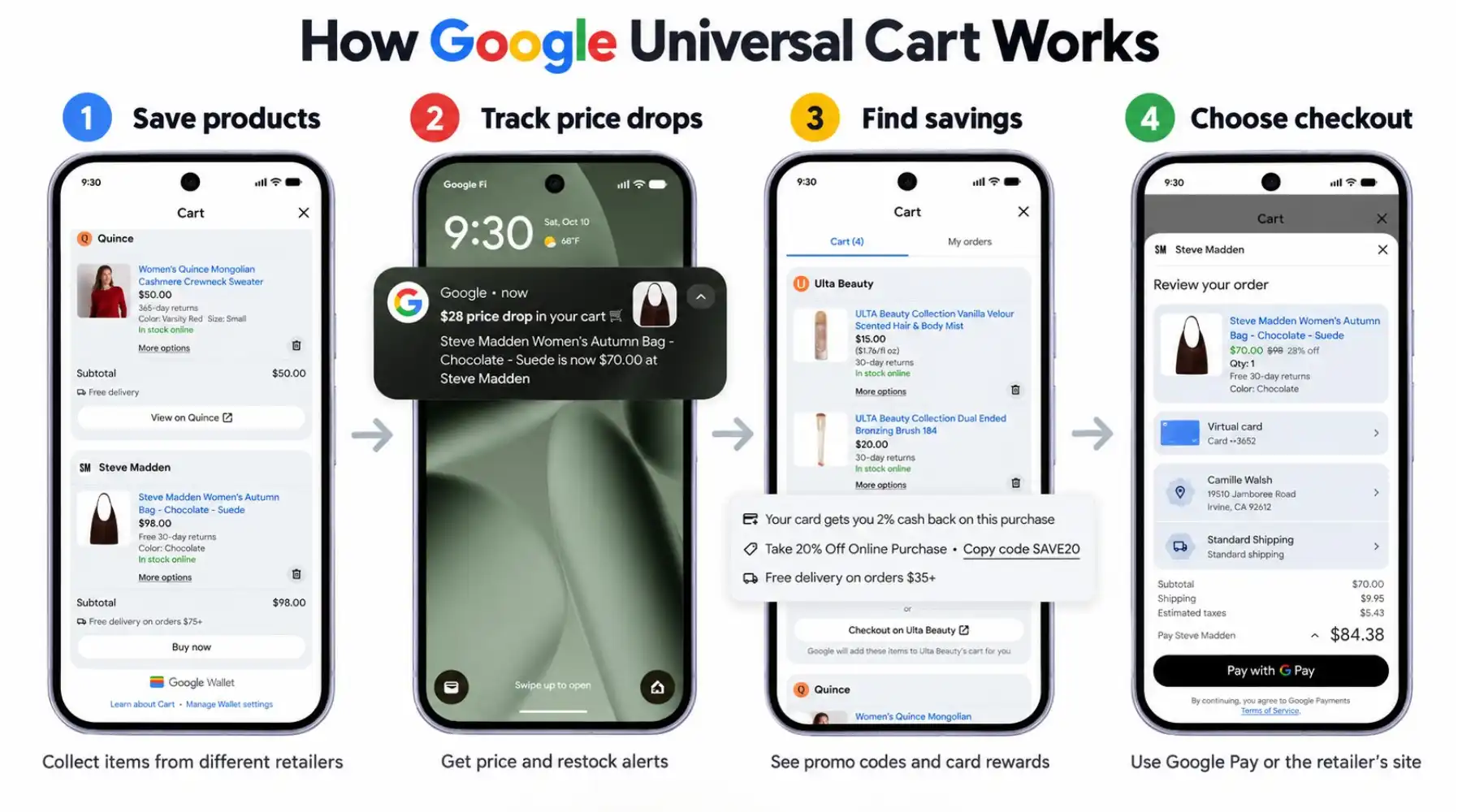
Google has begun rolling out Universal Cart in the United States, bringing a shared shopping cart to Search and the Gemini app. Announced on October 15, 2026, the feature lets shoppers save products from different retailers, track price and stock changes, find promo codes, and choose between checkout through Google Pay or on a retailer’s website, according to Google’s official announcement.
Key Takeaways: Google Universal Cart
- US availability: The rollout covers Google Search and the Gemini app.
- One place for saved products: Shoppers can collect items from multiple retailers and return to them later.
- Price and stock alerts: The cart can notify users about price drops and restocked items.
- Savings features: Relevant promo codes and eligible credit card rewards appear alongside saved products.
- Two checkout routes: Users can pay through Google with participating merchants or complete purchases on the retailer’s website.
A Shared Cart Across Google Search and Gemini
Universal Cart keeps products saved across Google’s shopping services in one place. Google’s help documentation lists Search and Shopping, AI Mode, and Gemini Apps as supported places to discover and save items.
Inside the cart, products are grouped by merchant. Shoppers can review product details, remove items, and decide when to purchase.
Google first previewed Universal Cart at its I/O event on May 19, as part of its broader AI search and shopping developments.
The preview outlined plans for YouTube and Gmail to follow Search and Gemini. The October announcement covers the US rollout across Search and the Gemini app.
Price Drops and Restock Alerts Follow Saved Products
Once an item is saved, the cart can monitor it for deals and changes in availability. Google says the feature draws on more than 60 billion product listings in its Shopping Graph.
The company’s May preview also described price-history insights, allowing shoppers to see how a product’s price has changed over time.
Notifications can arrive by email or through the Google app. Users can manage cart emails through their Google Account communication preferences and control push alerts through the app’s Shopping notification settings.
The feature adds ongoing monitoring to Google’s existing price-comparison and local availability tools, helping shoppers follow items they have already selected.
Promo Codes and Card Rewards Appear in the Cart
Google says Universal Cart surfaces relevant promo codes alongside saved products. Built on Google Wallet, the cart can also use payment benefits, loyalty information, and merchant offers to help shoppers choose a payment method.
According to Google’s cart help documentation, credit card reward insights require at least two credit cards saved in Wallet and Wallet personalization enabled.
An insight appears when a saved card offers a reward for the relevant merchant. Shoppers choose which card to use, while payment providers determine the offers and their terms. Users can disable these insights through their Wallet personalization settings.
Checkout Supports Google Pay and Retailer Websites
Universal Cart provides two routes to purchase. Participating merchants can offer checkout within Google using saved payment methods. For other merchants, Google helps transfer items to the retailer’s cart so shoppers can finish buying on its website.
Checkout uses the Universal Commerce Protocol, or UCP, which connects Google’s shopping services with participating retailers.
Google names Nike, Sephora, Target, Ulta Beauty, Walmart, Wayfair, and Shopify merchants among the businesses supporting the checkout experiences.
Whichever route a shopper chooses, the retailer remains the seller of record. Purchase confirmations and customer support come directly from the merchant.
For merchants that share order information with Google, the cart’s My Orders tab can show recent purchases and shipping updates. Orders from merchants that do not share that information will not appear there.
Everflow
Connect
Tradedoubler
Connect
1win Partners
Connect
Shopnomix, a Nomix Group Company
Connect
Huffson Group
Connect
Kawaii Partners
Connect
Trackdesk
Connect
Share your expertise and expand your reach and become a content contributor with us today!
Contact Us To Find Out More