PIN-UP Partners: New Promising Regions in iGaming
The iGaming landscape continues its relentless expansion, but experienced affiliates recognise that tomorrow's biggest opportunities aren't necessarily found in today's saturated markets. As traditional strongholds face increasing regulation and competition intensity, a new generation of emerging markets presents both unprecedented potential and complex challenges that demand strategic navigation.
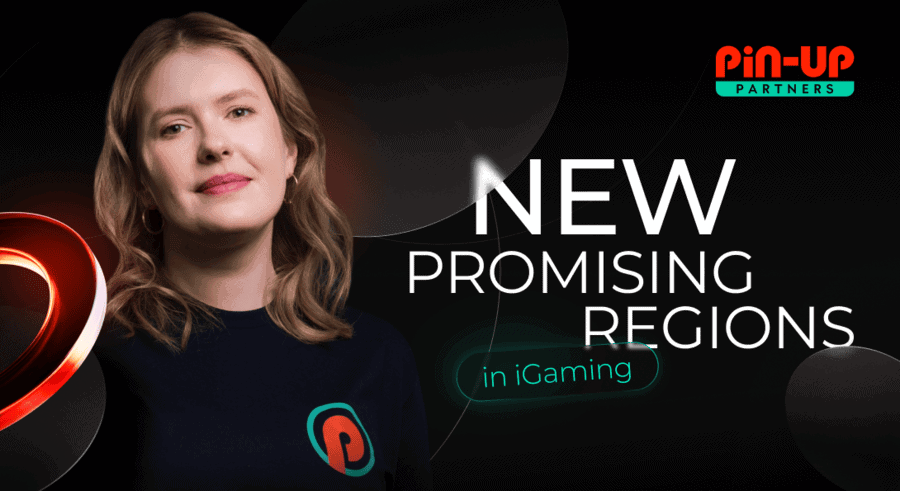
Margarita Ershova, Affiliate Team Lead at PIN-UP Partners, brings frontline intelligence from one of the industry's most aggressive expansion strategies. Her perspective offers affiliates a rare glimpse into how operators evaluate emerging markets—intelligence that could prove invaluable for those looking to position themselves ahead of the curve.
Here, we share the exclusive interview…
Q. Which emerging markets are showing the most potential for iGaming growth, and what specific indicators are you using to evaluate these opportunities?
A. Latin America is one of the most obvious candidates for large-scale growth: online payments are becoming increasingly accessible, audiences are highly engaged in sports and betting, and the market itself is gradually legalising and becoming more transparent. We closely monitor how local regulations evolve and how consistently the legal framework takes shape.
Africa is another powerful growth vector. Here, demographics come to the forefront: the audience is predominantly young and active, while affordable mobile traffic is widely available. The rapid development of local fintech also plays a significant role, opening opportunities for the swift adaptation of payment solutions. These very factors — payment maturity, digital engagement, and regulatory shifts — form the key indicators of investment attractiveness.
Q. How do you assess the regulatory landscape when entering new regions – what's your framework for balancing market potential against compliance complexity and potential policy changes?
A. Before launching in a new region, we start with an in-depth review of the legal framework: analysing local laws regulating iGaming, all KYC requirements, and responsible gambling obligations. At the same time, we examine the real market situation — how the segment has developed historically, what approaches have already been applied, and how the current competition operates.
It’s important for us to understand not only what is allowed, but also how it actually works in practice. This approach enables us to accurately assess where growth potential truly outweighs regulatory risks.
Q. What mistakes do you see other gambling operators making when entering new regions, and how does PIN-UP's approach to market entry differ from typical expansion strategies?
A. We won’t dwell on others’ mistakes — what matters far more is focusing on what we do differently. For us, it’s not just about “entering the market,” but truly embedding ourselves into the local context. We take localisation seriously — and that goes beyond language. It encompasses internal mechanics, user habits, visual codes, and adapting every element to the preferences of the local audience.
In addition, from day one we build a retention strategy tailored to the region. This approach allows us not only to attract users but also to establish strong retention and return metrics from the very first weeks.
Q. What role does payment infrastructure play in determining market viability, and which regions are becoming more accessible due to improvements in local payment methods and banking relationships?
A. Payment infrastructure is a critical factor. If users cannot make deposits using local methods, traffic simply cannot be monetised.
There are plenty of examples of successful progress: in Brazil, the Pix system has literally transformed the market — instant deposits have become the standard. In India, the mass adoption of UPI payments had dramatically simplified conversion and lowered the entry barrier. In CIS countries — for example, Uzbekistan and Kazakhstan — the development of local gateways supporting national currencies is accelerating. All of this makes these markets more mature and attractive for a systematic entry.
Conclusion
Understanding these evolving opportunities requires more than surface-level market research. It demands insights from operators who are actively testing waters, building infrastructure, and learning hard lessons in real-time. The strategic decisions being made today by major operators will shape affiliate opportunities for years to come.
Take a look at our previous interviews with Margarita:
The information provided herein reflects our strategic analysis of global iGaming market trends and is intended solely for informational and professional purposes. PIN-UP operates strictly within the jurisdictions where online gaming is permitted by law and does not engage in anygambling-related activities in countries where such operations are restricted or prohibited. All market assessments are made in accordance with applicable legal and regulatory frameworks.
Everflow
Connect
Tradedoubler
Connect
1win Partners
Connect
PIN-UP Partners
Connect
Shopnomix, a Nomix Group Company
Connect
V.Partners
Connect
Share your expertise and expand your reach and become a content contributor with us today!
Contact Us To Find Out More