UK Government Opens Consultation on Unlicensed Gambling Sponsorship and Advertising Ban
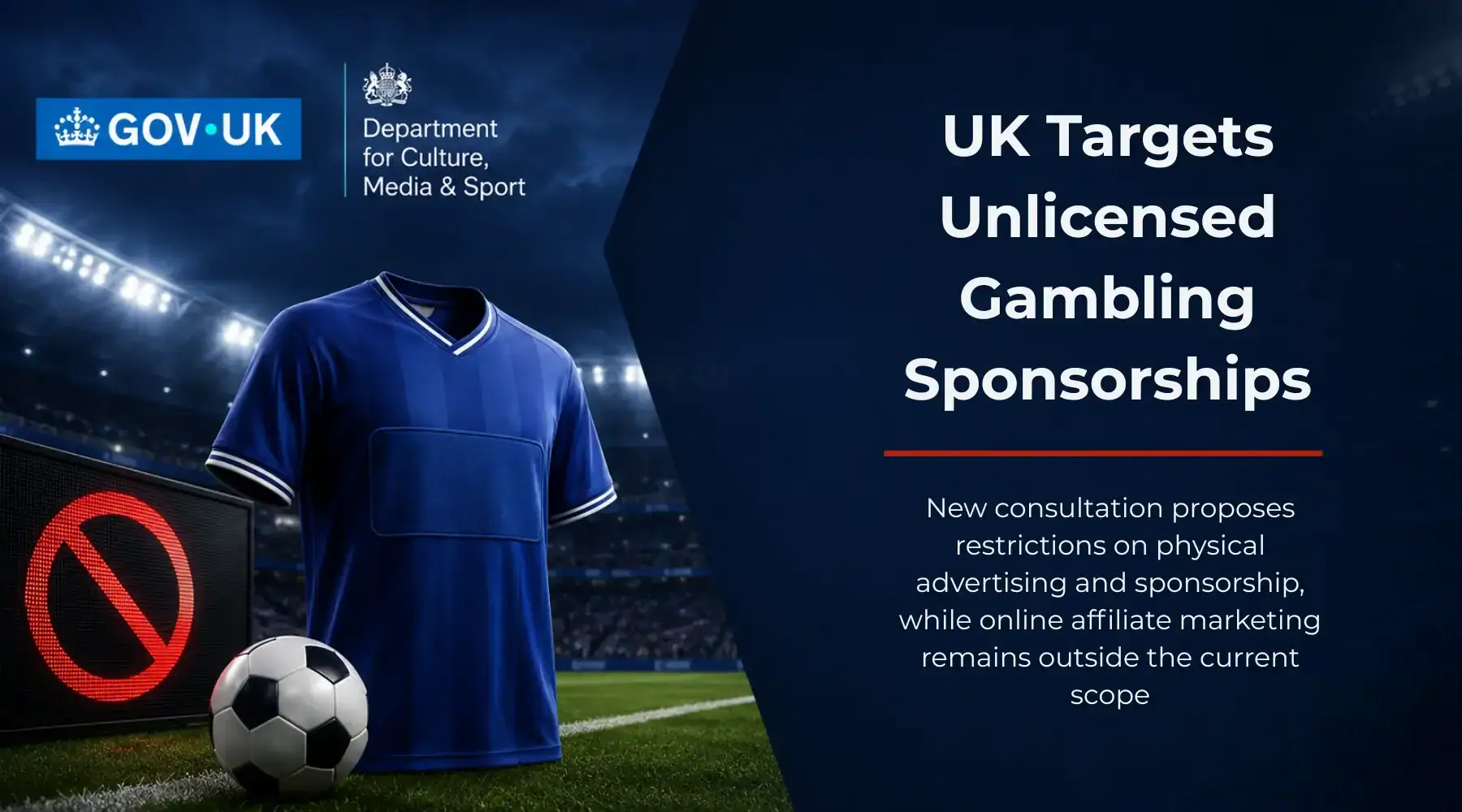
The UK government has opened a consultation on plans to stop gambling operators that are not licensed by the Gambling Commission from entering into sponsorship and advertising arrangements in Great Britain. Published by the Department for Culture, Media and Sport on July 15, 2026, the consultation proposes restrictions across all sectors, although the government says the issue has become particularly visible in football. Responses are open until 11:59 p.m. on September 9, 2026.
Under current rules, businesses may accept sponsorship or advertising from operators without a British license if their services cannot be accessed in Great Britain. The issue became more visible after TGP Europe surrendered its Gambling Commission license in May 2025, following findings that it had failed to carry out sufficient checks on business partners and had breached anti-money-laundering rules. Its departure left several overseas white-label partners unlicensed in Great Britain and their partnered football clubs at risk of advertising unlawful gambling. However, the clubs could maintain those arrangements if the operators’ services remained inaccessible to British consumers.
Key Takeaways: Physical Sponsorship Is the Immediate Target
- The proposal would ban physical sponsorship and advertising by operators without a Gambling Commission license.
- Online advertising and sponsorship are not included in the current scope.
- August 2027 is the government’s preferred start date, although an alternative transition period is also being considered.
What the Proposed Ban Would Cover
The proposal would make it a criminal offense to participate in or facilitate advertising for an unlicensed gambling operator, including advertising delivered through sponsorship.
Its scope would extend beyond professional football and cover all sectors and levels, including grassroots sport. Examples listed in the consultation include kit and equipment sponsorships, stadium and pitch-side advertising, event programs, venue infrastructure, and the naming of leagues, events and venues. Cultural and non-sporting events would also be covered, even though the government says it is not currently aware of any unlicensed gambling sponsorship or advertising at non-sporting events or venues in Great Britain.
The government estimates that approximately 40% of Premier League clubs had advertising or sponsorship arrangements with operators that were not licensed in Great Britain during the 2025/26 season. It says the proposed change is intended to improve consumer protection, support licensed operators and address potential money-laundering vulnerabilities connected to football sponsorship arrangements.
The consultation follows wider concern about unlicensed gambling ads appearing through high-reach consumer channels, while licensed operators and their affiliate partners face more extensive compliance requirements. Related Affiverse analysis has also considered the reported growth of the UK’s unlicensed gambling market and the pressure this places on the regulated sector.
Online Affiliate Advertising Is Not Included
Despite the wider language around advertising, the current proposal would not apply to online advertising or online sponsorship. The government says extending the ban to digital platforms would require primary legislation, whereas the physical advertising restrictions can be introduced more quickly through secondary legislation.
Because the proposal excludes online advertising and sponsorship, conventional affiliate websites, comparison content, digital display placements, and online creator partnerships would generally appear to fall outside its current scope. However, this would not create a general exemption from existing gambling advertising law, which already prohibits the advertising of unlawful gambling in Great Britain. The consultation does, however, ask whether the ban should be extended to online and digital advertising platforms immediately, considered through future primary legislation or remain limited to physical assets.
The distinction is important. The proposal should therefore not be described as an immediate ban on online affiliate marketing. However, the question on digital advertising shows that the government is gathering evidence on whether the scope should later be widened, making the consultation relevant to affiliates and program managers.
Proposed Start Date and Next Steps
The government’s preferred option is for the ban to take effect on a fixed date in August 2027, before the start of the 2027/28 football season. This would require all covered sport sponsorship and advertising at sporting events to end before that date.
An alternative option would apply the ban to new contracts once the legislation is introduced, while allowing existing agreements to continue until no later than the beginning of August 2028. The government currently favors the fixed 2027 deadline because it would provide clarity to clubs and consumers and avoid a period in which some clubs could retain unlicensed partners while others could not.
The government does not anticipate extending the ban to gambling operators operating through white-label agreements. It will, however, work with the Gambling Commission to determine whether additional monitoring or enforcement action is required.
Following the eight-week consultation, responses will be reviewed before any possible legislation is laid before Parliament. The government plans to publish its formal response later in 2026. Until then, the measure should be described as a proposal under consultation rather than a finalized advertising ban.
Everflow
Connect
Tradedoubler
Connect
1win Partners
Connect
Shopnomix, a Nomix Group Company
Connect
Huffson Group
Connect
Kawaii Partners
Connect
Trackdesk
Connect
Share your expertise and expand your reach and become a content contributor with us today!
Contact Us To Find Out More