How Affiliate Marketers Can Use Google Trends’ New Search Interest Comparisons
Google Trends has added a faster way to compare changes in search interest across different time periods, giving marketers a more direct view of how demand is moving over time.
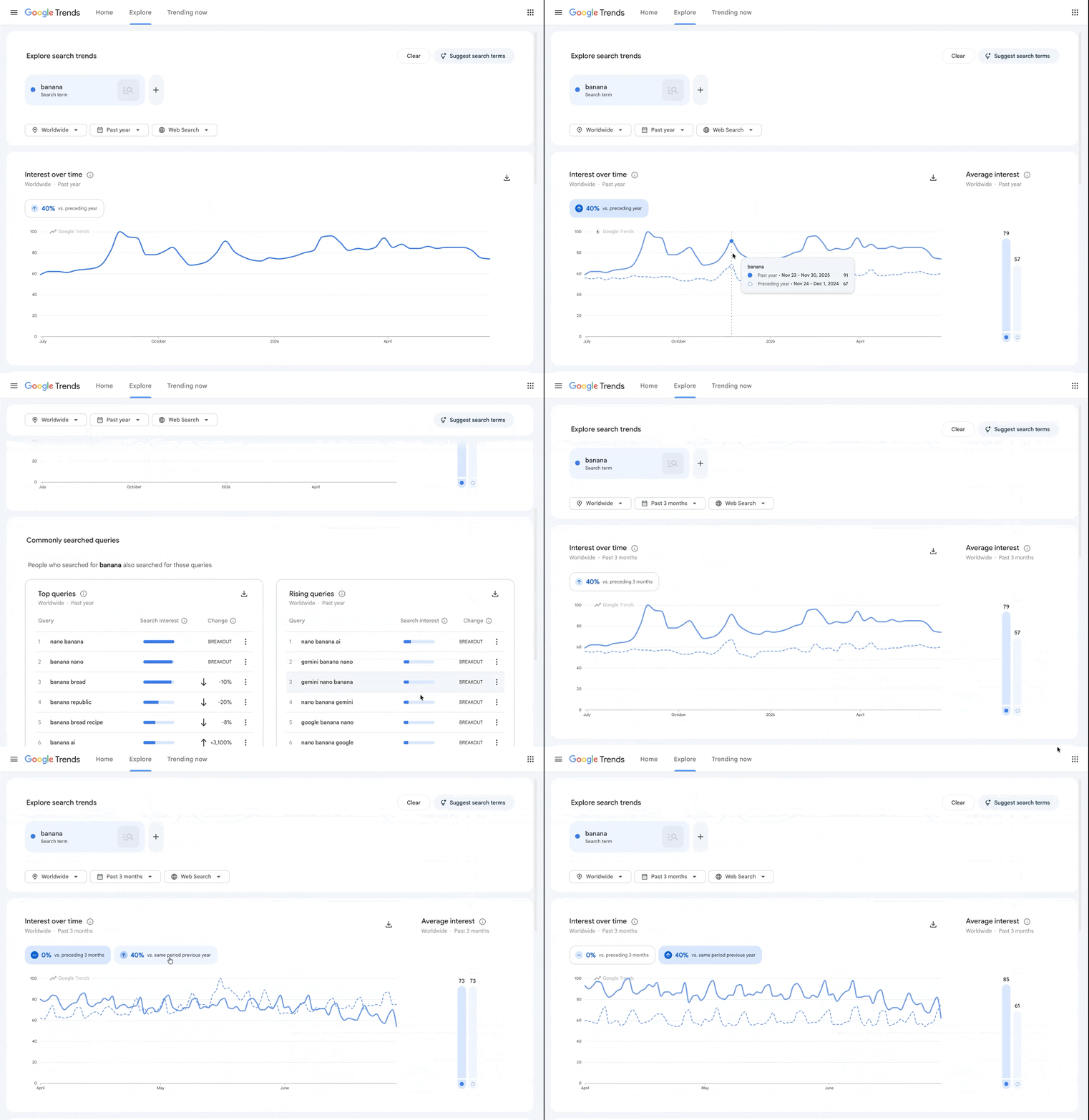
In an update shared by Google Search Central, Google said users can now compare a trend’s change against preceding periods directly inside Google Trends. After adding a search term or topic, new comparison chips appear above the timeline, showing percentage changes across periods such as month-over-month, week-over-week and year-over-year.
For affiliate marketers, this is a small product update with practical value. Search interest data is often used to understand seasonal demand, identify emerging topics and compare how interest in a niche changes before, during and after major retail moments. Making those comparisons easier inside the Trends interface can help teams move faster when planning content, campaigns and partner activity.
Source: Google Search Central Profile
Key Takeaways from Google Trends’ New Comparison Data
- Google Trends now makes it easier to compare search interest across different time periods, including week-over-week, month-over-month and year-over-year views.
- For affiliate marketers, the update can help identify whether demand is rising, slowing or following a seasonal pattern.
- The feature can support content planning, campaign timing, product-category analysis and partner briefing.
- Trend data should be treated as a directional signal, not a replacement for keyword research, analytics or conversion data.
- The most useful insight comes from connecting search interest to commercial intent, such as whether users are researching, comparing or ready to buy.
Why Search Interest Comparisons Matter for Affiliates
Affiliate teams often rely on timing. A product category may not have changed much in total search volume, but the direction of interest can still matter. A week-over-week lift may point to a short-term opportunity, while a year-over-year comparison can help separate seasonal patterns from genuine growth.
This is especially useful for categories shaped by events, promotions and changing consumer behavior. Ecommerce affiliates can use Google Trends to compare interest around shopping periods, product launches and deal-led searches. Finance, travel, software and subscription affiliates can also use the feature to understand when audience attention is building or cooling.
The update may also help content teams make faster editorial decisions. Instead of manually adjusting date ranges to check whether a topic is outperforming a previous period, marketers can use the new chips to add historical context to the graph more quickly. That can support decisions around whether to refresh an existing guide, publish a comparison page, create short-form social content or brief affiliates around a new campaign angle.
How Affiliates Can Use Google Trends Comparison Data
For affiliate teams, the new comparison view can support several practical workflows:
- Seasonal content planning: Affiliates can compare current search interest against the same period last year to see whether demand is arriving earlier, later or stronger than expected. This can help teams decide when to update buying guides, publish comparison content or brief partners ahead of peak demand.
- Campaign timing: If a brand, product or category starts gaining week-over-week interest, affiliate managers can use that signal to review whether landing pages, offers and partner assets are ready to capture demand. For ecommerce affiliates, this can be useful around deal periods, product drops and shopping events, especially as Google’s AI search ads and shopping updates move product discovery closer to paid visibility and merchant data.
- Content refreshes: A guide that was quiet for months may become worth revisiting if search interest begins rising again. In that case, the next step is not only to update the page, but to make sure it still follows Google’s AI search guidelines for affiliates, with clear structure, useful context and crawlable information.
- Performance reporting: Trend movement should be compared with on-site performance, not treated as a standalone answer. If interest is rising but traffic or conversions are not, teams may need to check rankings, SERP changes, referral traffic or tracking gaps. That is where tracking AI traffic in GA4 and reviewing wider channel performance can help connect search interest to actual commercial outcomes.
A Better Signal, Not a Complete Strategy
Google Trends should still be treated as a directional tool rather than a full keyword research platform. Trends data shows relative search interest, not exact search volume, so it works best when combined with SEO tools, site analytics, paid search data and conversion performance.
For affiliates, the most useful takeaway is not simply that a topic is rising. The real value comes from connecting that rise to commercial intent. If search interest is increasing around a product category, marketers still need to ask whether users are researching, comparing, buying or simply reacting to news.
The update makes that first layer of analysis easier. It gives affiliate marketers a quicker way to spot movement in audience demand and compare it against previous periods. In a market where AI search, social commerce and changing discovery habits are already reshaping traffic patterns, faster trend comparison can help teams react with more context and less guesswork.
That does not mean affiliates should chase every spike. A stronger approach is to treat Trends as one input inside a broader SEO and GEO strategy for affiliates, where search interest, content quality, analytics and conversion data all work together.
Everflow
Connect
Tradedoubler
Connect
1win Partners
Connect
PIN-UP Partners
Connect
Shopnomix, a Nomix Group Company
Connect
V.Partners
Connect
Huffson Group
Connect
Kawaii Partners
Connect
Share your expertise and expand your reach and become a content contributor with us today!
Contact Us To Find Out More