Currys Opens TikTok Shop With Weekly LIVE and Affiliate Management
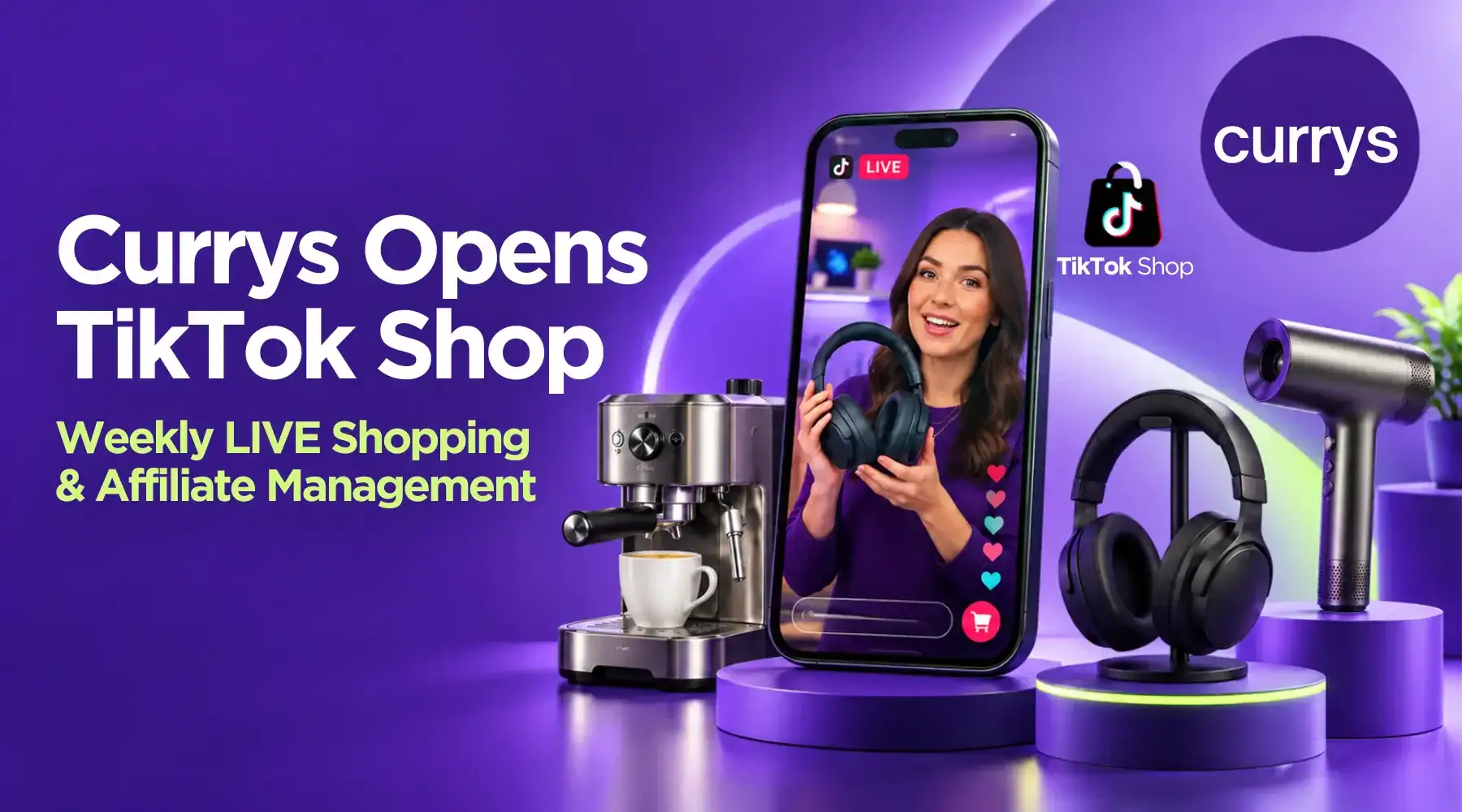
UK technology retailer Currys has launched a TikTok Shop trial with a selected range of audio, health and beauty, coffee and seasonal products. THG Commerce will manage strategy, trading, shop operations, affiliate activity and weekly livestreams, while Currys plans to work with creators to showcase products. The trial adds in-app shopping to the retailer’s existing store and website channels.
Key Takeaways: Currys Builds a Managed TikTok Shop
- The initial range covers audio, health and beauty, coffee and seasonal products.
- Currys plans creator partnerships and weekly TikTok LIVE shopping.
- THG Commerce will handle strategy, trading, shop management, livestreaming and affiliate management.
Currys Starts With a Curated Product Range
The official announcement, published October 7, describes a selected assortment rather than the retailer’s full catalog.
Ed Connolly, Chief Commercial Officer at Currys:
Social media has become a genuine shopping destination for consumers, and we want to meet them where they are already scrolling.
For a trial, a narrower assortment could make it easier to compare which products attract attention and which convert after a demonstration. It also gives the team a manageable starting point for matching creators to categories and preparing answers to common buying questions.
The useful test is whether those answers help shoppers choose a suitable product. A successful video can generate interest without resolving the questions that determine a purchase.
THG Commerce Runs the Affiliate and LIVE Operation
Bringing these functions under one partner could simplify coordination. A livestream team needs to know which products are available, what offers are active and whether creators have accurate information. Affiliate recruitment has limited value if the promoted item sells out before content is published.
Weekly broadcasts also create recurring work: choosing products, preparing demonstrations, scheduling hosts, moderating questions and reviewing results. Retailers considering a similar approach should account for that workload when comparing outsourced support with an internal team.
Outsourced support still needs a retailer contact who can approve promotions and resolve stock or product questions. That handoff should be agreed before a creator publishes content or a broadcast begins.
Affiverse’s coverage of TikTok Shop’s proposed managed service for US sellers examines another approach to coordinating creator and marketing activity. That separate initiative provides context; it does not establish the terms of Currys’ arrangement.
Technology Products Need More Than a Product Tag
A headphone demonstration, for example, could explain controls, device compatibility and everyday use. A coffee-machine video could show preparation, cleaning and the space needed on a kitchen counter.
Creators need enough product knowledge to explain those details accurately, plus a clear route for questions they cannot answer. Retailers should decide which claims require checking and when viewers should be directed to product information or customer support.
Another example comes from tm’s TikTok Shop studios in Times Square, where creators demonstrated technology products during an in-store shoppable livestream. A permanent studio remains available for further broadcasts, showing another way retailers can provide space for ongoing creator content and LIVE shopping.
What Currys Has Not Disclosed
The announcement does not specify commission rates, named creator partners, sales targets or the trial’s duration. It also leaves unanswered how returns will affect creator payments, how warranty information will be communicated and how attribution will be assessed across channels.
Those gaps limit what affiliate teams can conclude about the commercial opportunity. A familiar retail brand may attract creator interest, but partners still need clear terms on earnings, samples, content requirements and payment timing.
Affiverse’s TikTok creator monetization guide explains the differences between Shop Affiliate commissions and separately negotiated brand work. Currys has not detailed its compensation model.
What Retail Affiliate Teams Should Note
The operational lesson is to assign ownership before recruiting creators. Someone needs responsibility for product information, stock updates, content review, livestream delivery and customer queries.
Measurement should then connect creator activity with completed orders, returns and the costs of running the channel. Teams should also examine whether buyers are new customers or existing shoppers purchasing through a different route.
That would give retailers a firmer basis for judging whether a managed TikTok Shop earns its operating cost and which products justify further investment.
Everflow
Connect
Tradedoubler
Connect
1win Partners
Connect
PIN-UP Partners
Connect
Shopnomix, a Nomix Group Company
Connect
V.Partners
Connect
Huffson Group
Connect
Kawaii Partners
Connect
Share your expertise and expand your reach and become a content contributor with us today!
Contact Us To Find Out More