TikTok Shop Tests Managed Service That Could Challenge Agency Partners
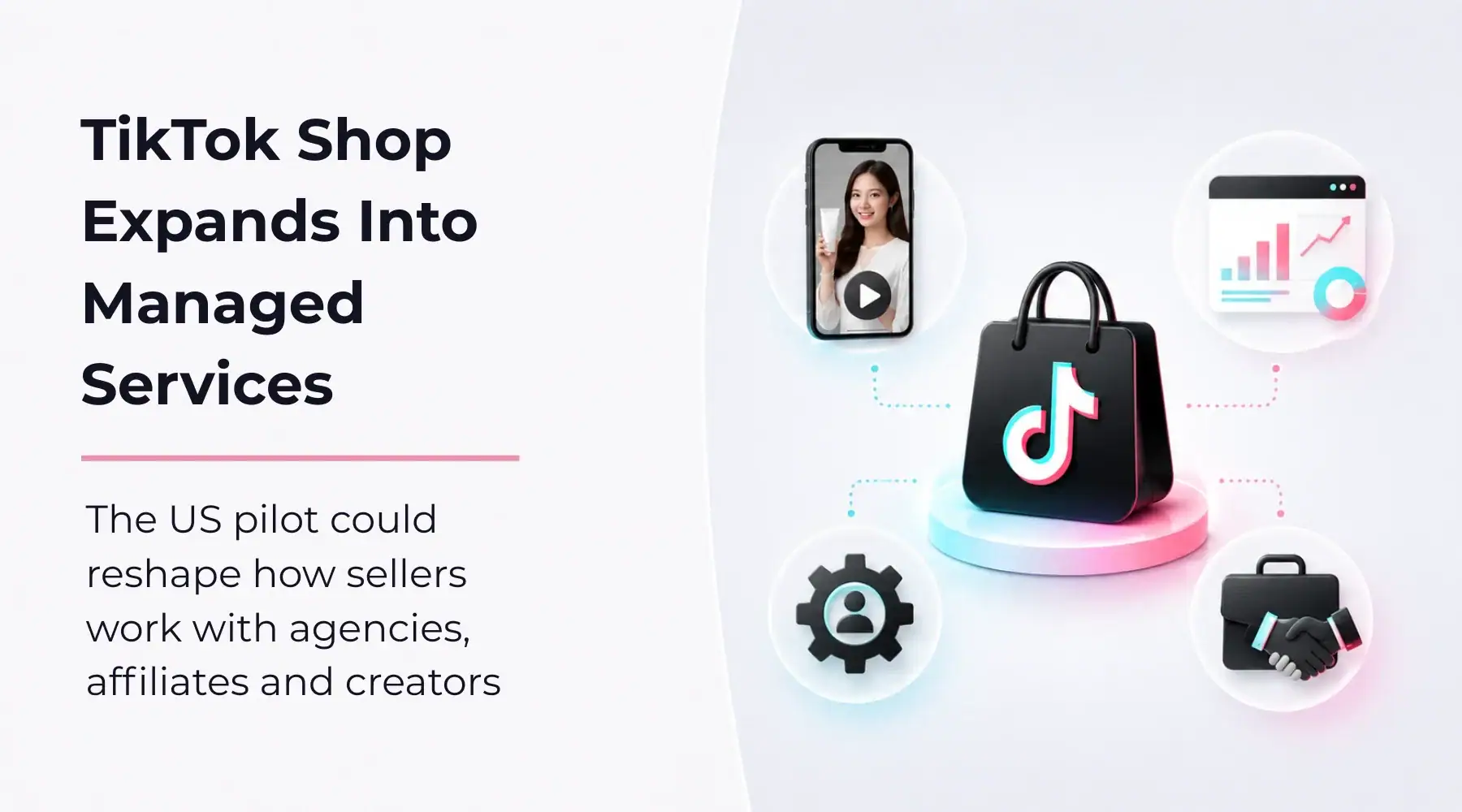
TikTok Shop is preparing to test a managed service that would give the platform a more direct role in running selected sellers’ advertising, creator partnerships, and content production.
According to Business Insider, TikTok is recruiting participants for a US pilot expected to begin in August 2026. The platform would oversee much of a seller’s Shop marketing, including running automated advertising, testing creative, optimizing product listings, recruiting creators, and producing promotional content.
TikTok’s own Managed Service Plan Seller Terms confirm that the paid program can include content creation, creator management, promotions, and advertising support. While this could reduce the work required from participating sellers, it also moves TikTok further into areas currently handled by Shop agencies, creator managers, and other ecommerce partners.
Key Takeaways: What TikTok Would Manage
- Advertising: TikTok could run and optimize automated campaigns through its GMV Max system.
- Creator partnerships: The platform could recruit, coordinate, and pay creators involved in managed campaigns.
- Content production: Support may include creator-led content, edited seller assets, and AI-generated promotional videos.
- Product promotion: TikTok could help manage listings, offers, and other promotional activity connected to Shop campaigns.
- Agency overlap: The service would bring several functions currently handled by sellers, agencies, and creator-management partners under TikTok’s direct control.
- Limited availability: Participation is restricted to sellers selected by TikTok, with no guarantee that the program will receive a wider or permanent rollout.
TikTok Moves Further Into Seller Operations
TikTok Shop has generally provided the marketplace, advertising tools, and affiliate infrastructure used by sellers and creators. The managed model would place the platform closer to the day-to-day running of individual campaigns. TikTok could oversee almost every part of a participating merchant’s Shop marketing. Sellers would still need to list their products and provide samples for creators, but much of the advertising and promotional work could be handled by TikTok.
TikTok’s official terms describe the Managed Service Plan as a paid service that typically runs for a defined period. The platform can provide content and creator management services that are not included in its standard plan, alongside advertising and promotional support. Sellers remain responsible for their products, fulfilment, returns, customer service, legal compliance, and the accuracy of advertising claims. This means the program is not a complete outsourcing of the seller’s business. Instead, it packages together several marketing and creator services within TikTok’s own ecosystem.
Reported Fees Include a Fixed Charge and Sales Commission
According to documentation reviewed by Business Insider, sellers participating in the US pilot would pay a $10,000 fixed fee, followed by a 10% to 20% commission on each sale, depending on the product category. TikTok has not publicly confirmed whether those rates will apply beyond the reported pilot.
TikTok’s published terms confirm that the Managed Service Plan may include a one-time participation fee and a transaction-based service fee calculated against completed and settled sales. However, the company does not provide standard rates publicly, and the charges may apply alongside other TikTok Shop fees and operating costs.
The commercial value of the service will therefore depend on whether the additional sales generated through TikTok’s support outweigh the combined cost of program fees, sales commissions, advertising, discounts, and product samples.
Why TikTok Shop Agencies May Be Watching
The program overlaps with work already carried out by TikTok Shop agencies. These businesses commonly help sellers recruit creator affiliates, produce short-form content, manage livestreams, run advertising, and improve Shop performance. TikTok would now be offering several of those services directly. A seller accepted into the managed program may no longer require separate partners for every part of its creator and advertising operation.
That does not mean agencies will become unnecessary. The program is limited to selected sellers, while brands may still need independent support with strategy, creative direction, logistics, compliance, and marketing outside TikTok. Agencies may also offer closer brand oversight or specialist knowledge that a standardized platform service cannot provide.
However, the pilot creates a potential channel conflict. TikTok would control the marketplace, advertising system, attribution tools, and creator coordination while also charging sellers to manage their campaigns. Agencies may therefore need to demonstrate value in areas that TikTok cannot easily automate or bring in-house.
TikTok Would Recruit and Pay Creators Directly
The creator relationship is another important part of the program. TikTok’s Managed Service Plan Creator Terms state that creators involved in these campaigns are engaged by TikTok rather than contracting directly with the seller. TikTok would also be responsible for paying them. Compensation could include a fixed fee, sales commission, performance bonus, or another incentive presented when the creator accepts a campaign. This differs from a standard Shop Affiliate arrangement, where the creator usually promotes a seller’s product in return for commission connected to attributed orders.
The distinction between these models is explained further in the TikTok Creator Monetization Guide, which compares Shop Affiliate income with Creator Rewards and direct brand agreements. Under the managed service, TikTok would take a more active role as campaign coordinator and direct source of payment. For sellers, this could make creator recruitment easier. It may also reduce their direct visibility into how creators are selected, managed, and compensated. That makes clear reporting particularly important, especially as questions around transparency in influencer payments continue to affect creator and affiliate partnerships.
AI Content Forms Part of the Service
TikTok’s terms allow the Managed Service Plan to include content created or modified through AI tools. Business Insider reports that pilot materials refer to the production of hundreds of AI-generated videos for participating sellers.
This could help brands test more creative variations without filming every video individually. However, sellers remain responsible for product claims, endorsements, and required disclosures, even when promotional material is produced through TikTok’s service.
The issue connects with the wider growth of AI-generated TikTok Shop videos. Faster content production may improve campaign scale, but it also increases the need to check whether demonstrations, product details, and commercial claims accurately represent what is being sold.
TikTok’s US Pilot Will Test the Managed Model
The reported US pilot is expected to begin in August 2026, although TikTok has not announced a wider rollout or confirmed the reported pricing. The program is currently limited to selected sellers, and TikTok’s terms allow the company to change, suspend, or discontinue the service.
The test should provide a clearer picture of which merchants TikTok accepts, how much control sellers retain, and whether the managed model can generate enough additional sales to justify its fees.
Agencies will also be watching closely as TikTok moves further into services traditionally provided by its own partners. For affiliates and creators, the model could place more of the campaign process under TikTok’s control, including recruitment, content production, advertising, attribution, and payment.
Everflow
Connect
Tradedoubler
Connect
1win Partners
Connect
Shopnomix, a Nomix Group Company
Connect
Huffson Group
Connect
Kawaii Partners
Connect
Trackdesk
Connect
Share your expertise and expand your reach and become a content contributor with us today!
Contact Us To Find Out More