Stealth UGC Ads Turn Secondary Accounts Into Paid Media
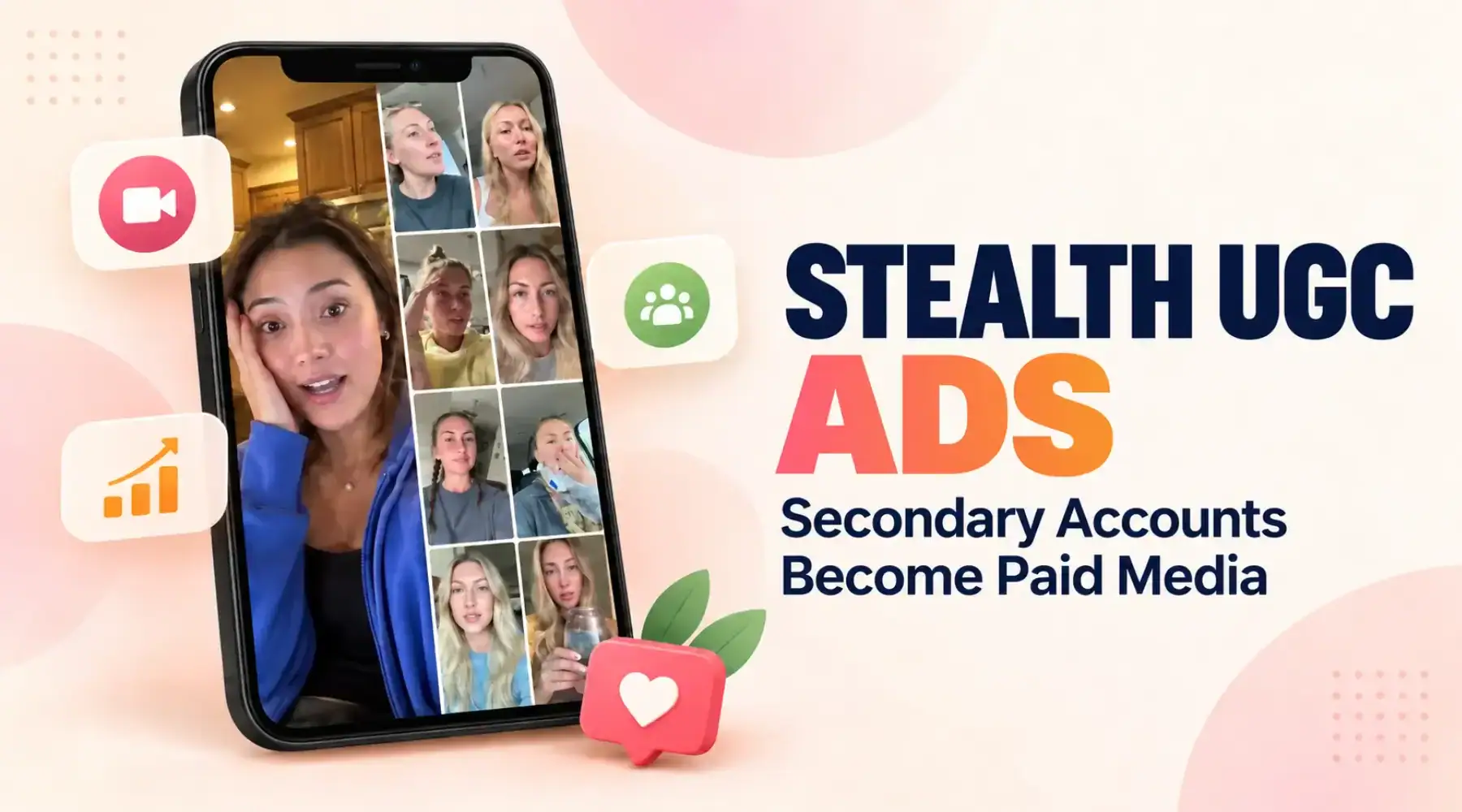
Stealth UGC ads are turning secondary TikTok and Instagram accounts into a new form of paid media. Instead of buying access to an established creator audience, campaigns are paying everyday users to produce and publish promotional videos designed to resemble organic social posts.
The account itself becomes the ad placement. Creators provide the face, content, and distribution, placing the model somewhere between UGC advertising, influencer marketing, and performance acquisition. It reflects a wider shift as creator and affiliate programs move beyond separate budget lines.
Key Takeaways: What Stealth UGC Ads Mean for Performance Marketing
- Secondary creator accounts are functioning as paid distribution channels, even when the posts resemble organic social content.
- Brands may be buying production and placement rather than influence, reducing the need for creators with large established audiences.
- The model blurs reporting categories across creator marketing, paid social and performance acquisition.
- Attribution can become harder to audit when account ownership, links and campaign classification are unclear.
- Undisclosed payment creates an added compliance risk for creators, advertisers and intermediaries.
A Different Kind of Creator Campaign
The Wall Street Journal reported that everyday social media users are being paid to publish promotional content, sometimes through secondary accounts created around recurring scenarios.
In one example, a creator reportedly received more than $800 to operate an account featuring fictional breakup messages while an app appeared in her responses.
This differs from a conventional influencer partnership, where access to an established audience is part of the purchase. Here, the account acts as the media placement. The creator supplies the performance, editing, and publishing activity, while the content is built to travel through recommendation feeds. Affiverse’s TikTok creator monetization guide explains how brand deals can pay for production, publication, or content reuse rather than attributed sales.
Brands already use paid UGC through their own profiles and ad accounts. Publishing it through a creator-operated account adds another distribution layer and makes the distinction between paid and organic reach less obvious. Previous analysis found that who publishes an Instagram collaboration can affect its engagement, although secondary accounts may not bring the established audience relationship that gives conventional creator partnerships part of their value.
Why Secondary Accounts Matter to Performance Teams
Paid social records media spend, impressions, and clicks, while affiliate marketing generally connects conversions to a link, code, or partner account. Secondary-account UGC does not fit neatly into either structure. A creator may receive a flat fee while the campaign generates searches, app installs, or direct visits that cannot be attributed to the account unless tracking is included.
Performance teams therefore need to classify the activity, establish who controls the account, and decide whether its posts remain live after the campaign. These questions form part of the wider creator marketing measurement gap, where production, organic reach, paid distribution, and sales influence are not always separated in campaign reporting.
If undisclosed posts perform differently from clearly labeled ads, marketers cannot assume the creative or distribution method caused the difference. The absence of disclosure may itself affect how viewers respond.
Native Creative Is Not the Same as Hidden Advertising
Social-first advertising can use informal scripts, familiar formats, and creator-led storytelling without misleading viewers. The compliance issue begins when the commercial relationship is concealed.
The Federal Trade Commission’s influencer guidance says paid relationships should be disclosed clearly and alongside the endorsement. For video, the disclosure should appear within the video rather than only in its caption or profile information. Publishing through a secondary account does not remove that requirement.
Responsibility may extend beyond the creator. In its Endorsement Guides Q&A, the FTC says advertisers should train and monitor promoters. Intermediaries that recruit, pay, or direct creators may also face liability when required disclosures are missing.
What Affiliate and Performance Teams Should Ask
Before testing this type of campaign, teams should establish:
- Who owns and controls each publishing account;
- Whether the activity is recorded as paid, creator, or organic acquisition;
- How traffic and conversions will be attributed;
- Who approves the script, product claims, and disclosure;
- What evidence of the live post will be retained; and
- How non-compliant content will be corrected or removed.
Secondary creator accounts are developing into a flexible form of social distribution. Performance teams now need measurement and compliance systems that match it.
Everflow
Connect
Tradedoubler
Connect
1win Partners
Connect
PIN-UP Partners
Connect
Shopnomix, a Nomix Group Company
Connect
V.Partners
Connect
Huffson Group
Connect
Kawaii Partners
Connect
Share your expertise and expand your reach and become a content contributor with us today!
Contact Us To Find Out More