Google Publishes New Guidance for Allowing Google-Agent Website Access
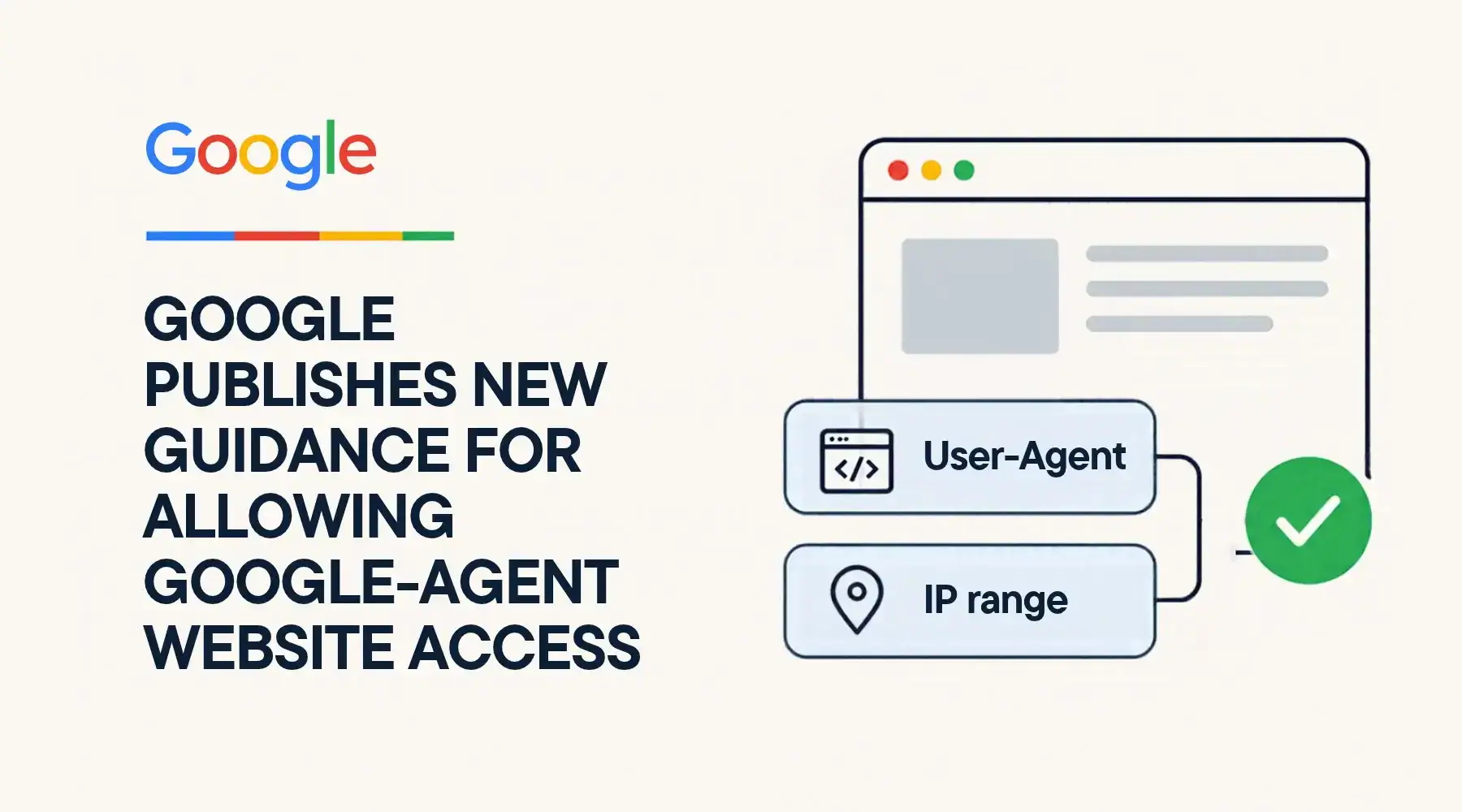
Google published new technical guidance on November 17, 2026, explaining how website owners can verify and allow Google-Agent traffic through content delivery networks (CDNs), web application firewalls (WAFs), and bot-detection systems. The update helps publishers and ecommerce businesses distinguish legitimate requests from automated traffic that website security controls might otherwise block.
For affiliate publishers and brands, the guidance raises practical questions about AI agent accessibility, website functionality, and how automated journeys interact with existing traffic measurement.
Key Takeaways From Google’s Google-Agent Guidance
- Google has published instructions for verifying and allowing Google-Agent traffic while maintaining existing website security controls.
- Website owners can identify requests using the Google-Agent user-agent string and Google’s published IP ranges.
- Google is experimenting with signed requests through Web Bot Auth, providing an additional way to authenticate participating agents.
- Firewall rules, CAPTCHA challenges, API restrictions, and rate limits can prevent legitimate agent interactions even when a website’s main pages remain accessible.
What Is Google-Agent and How Does It Work?
Google-Agent is a user-triggered agent that operates on Google’s infrastructure to navigate websites and perform actions in response to user requests. Unlike Googlebot, which primarily supports search crawling and indexing, Google-Agent is designed for task-based interactions with websites.
Google introduced the Google-Agent user-agent identifier in March 2026. Its November 17 technical guidance now explains how website operators can identify and permit this traffic. Each request includes a User-Agent header containing Google-Agent and originates from Google’s published user-triggered-agents.json IP ranges. Google is also testing Web Bot Auth, an authentication approach that uses cryptographic signatures to verify requests from participating agents.
These signed requests use the https://agent.bot.goog identity, with verification information available through Google’s public key directory. The approach is intended to help website operators distinguish authentic Google-Agent traffic from requests that merely claim to originate from Google.
How Websites Can Allow Verified Google-Agent Traffic
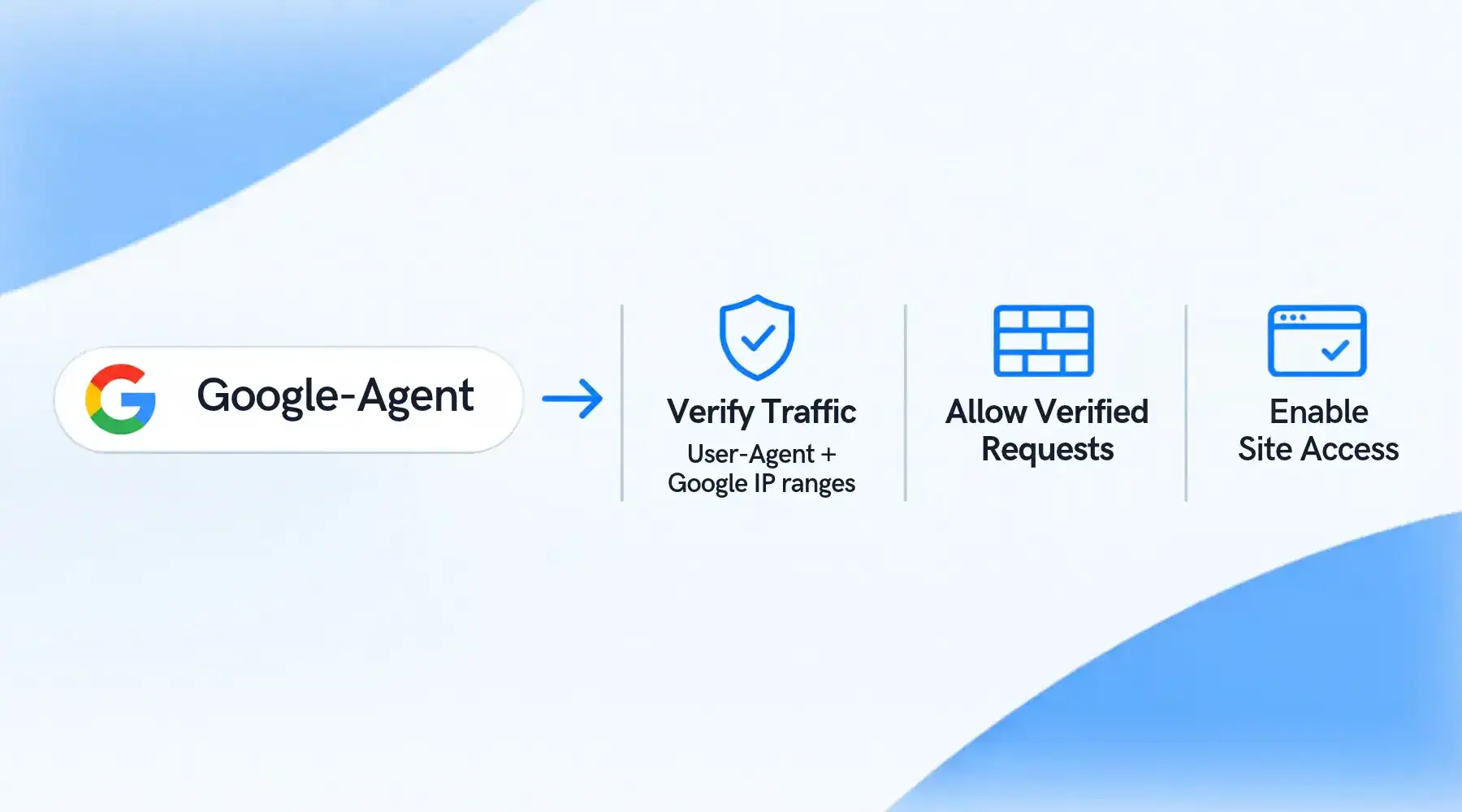
Google recommends configuring CDN, firewall, and bot-detection services to recognize verified Google-Agent requests. The process begins by checking the user-agent identifier and confirming that the originating IP address belongs to Google’s published agent ranges. When cryptographic signatures are available, websites can add an extra verification step using Web Bot Auth. Once requests are authenticated, security systems can allow legitimate interactions without removing broader protection against unwanted automated traffic.
However, the order of firewall rules matters. A verified agent can still encounter restrictions if broad data center blocks, managed bot policies, or AI agent restrictions take precedence. This creates a distinction between approving an agent in principle and ensuring that the website’s security infrastructure actually permits its requests.
The update adds another dimension to the issues we previously covered in our analysis of Cloudflare bot traffic and affiliate attribution, where distinguishing different types of automated traffic is important for performance reporting.
Why Access Goes Beyond the Homepage
Google’s guidance also addresses situations where an agent can load a website but cannot complete actions required by a user. CAPTCHA challenges, JavaScript verification, and bot restrictions may interrupt interactions after the initial page loads.
For ecommerce websites, this can affect actions such as searching for products, applying filters, accessing product details, or adding items to a cart. Google specifically recommends checking whether authenticated requests can reach the underlying APIs used by these functions, including XHR, GraphQL, and dedicated API endpoints.
Shared IP rate limits are another consideration because multiple agent requests may originate from the same Google infrastructure. Website operators should also keep verified IP ranges current and ensure that intermediary services preserve the headers required for authentication.
What the Guidance Means for Affiliate Publishers
For affiliate publishers, Google-Agent accessibility introduces an operational consideration alongside traditional search visibility. An AI agent may need to navigate product comparisons, check availability, or retrieve information from a publisher’s website while completing a user-requested task. However, allowing Google-Agent access does not guarantee additional organic traffic, search rankings, affiliate conversions, or commissions.
In our earlier coverage of Google’s AI search guidance for affiliate marketers, we highlighted the importance of accessible content, accurate product information, and clear website structure. The new guidance addresses a different part of that process: whether security infrastructure allows legitimate agent requests to reach the necessary pages and functionality.
It also intersects with the wider debate about automated access to publisher content. We also examined tools that help publishers assess AI bot access policies, reflecting growing interest in how websites manage AI-driven interactions. For affiliate teams, the practical next step is to review existing bot-management policies, confirm which Google-Agent requests can be authenticated, and test whether approved agents can complete relevant website interactions. Website owners must still decide which forms of automated access align with their security, commercial, and content policies. Google’s update provides technical guidance for enabling access rather than requiring every publisher to allow it.
Everflow
Connect
Tradedoubler
Connect
1win Partners
Connect
Shopnomix, a Nomix Group Company
Connect
Huffson Group
Connect
Kawaii Partners
Connect
Trackdesk
Connect
Share your expertise and expand your reach and become a content contributor with us today!
Contact Us To Find Out More