IAB Creatorfronts Highlights the Measurement Gap Holding Back Creator Budgets
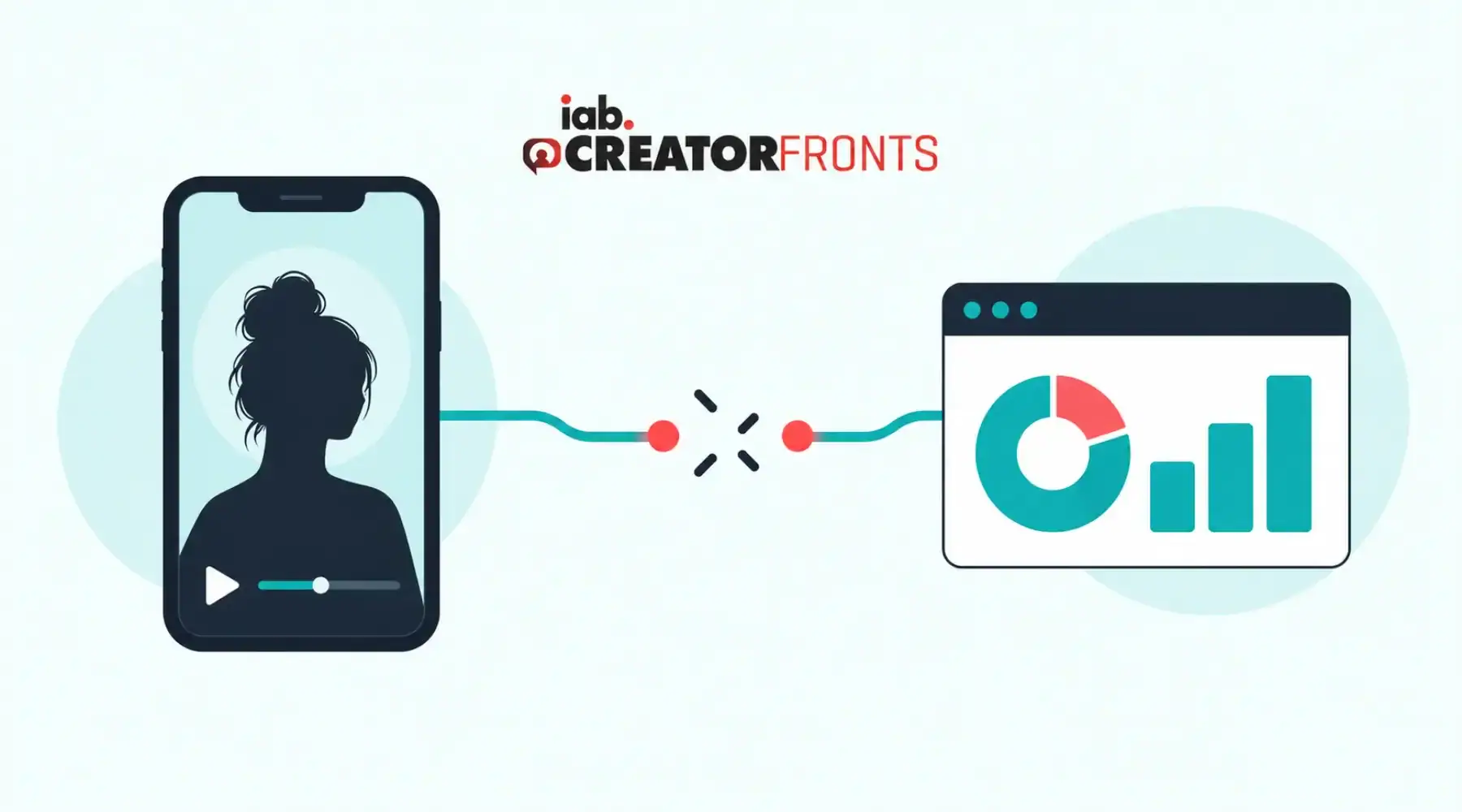
Creator marketing has a measurement infrastructure problem. Preliminary responses to a new IAB initiative identified inconsistent definitions, performance reporting and creator “buyability” as barriers preventing brands from investing more confidently in the channel.
Key Takeaways From IAB Creatorfronts
- The inaugural IAB Creatorfronts took place in New York on September 15.
- IAB announced its Trusted Creator Brand Deal Initiative.
- Preliminary responses identified inconsistent view definitions, performance measurement and creator buyability as recurring problems.
- Pricing differences and unclear total expenditure also make creator investment harder to assess.
- IAB has not introduced new standards yet. The initiative is currently gathering information and setting priorities.
IAB Maps Where Creator Deals Break Down
IAB launched its Trusted Creator Brand Deal Initiative at Creatorfronts, part of the wider IAB Global Creator Week. The initiative uses a survey to identify where creator deals encounter friction across brands, agencies, platforms, and creators.
James Douglas, IAB’s vice president of the Experience Center, told Digiday that preliminary responses pointed to three recurring problems: disagreement over what counts as a view, inconsistent approaches to measuring performance, and creator buyability.
Buyability refers to how easily brands can find, compare, contract, and purchase creator inventory at scale. Unlike established advertising channels, creator partnerships often involve individual negotiations, different deliverables, and platform-specific reporting.
Douglas warned that the market’s reliance on improvised processes becomes harder to sustain as spending grows:
But there has to be infrastructure. Improvisation is easy when a market is small. But at $44 billion, it’s going to break.
The $44 billion figure refers to IAB’s forecast for US creator advertising spending in 2026, rather than spending newly measured at Creatorfronts.
IAB has not yet published a detailed methodology, final survey results or a new measurement standard. The findings will instead help establish priorities for the final quarter of 2026 and into 2027.
Brands Need to Know What They Are Buying
A creator agreement can combine several forms of value:
- Content production
- Organic audience reach
- Paid amplification
- Direct conversions
- Assisted sales
- Licensing and usage rights
These elements are not always separated in campaign budgets or reporting. A brand may pay one fee covering production, publication and content reuse without clearly calculating the cost or performance of each component.
Pricing creates another obstacle. Some IAB board members reportedly cannot state exactly how much their organizations spend on creator marketing. Recent research has also shown why creator pricing remains difficult to standardize when fees depend on production demands, audience access, usage rights and exclusivity.
Meta presented a reported 19% reduction in cost per action from its creator-commerce initiatives during Creatorfronts. However, this was a platform-supplied result rather than an independent benchmark for the wider creator market.
What Affiliate Infrastructure Can Contribute
Affiliate marketing does not provide a perfect measurement model. Last-click bias, cross-device journeys, commission deduplication and purchases completed through other channels can all distort attribution.
However, affiliate programs normally have operational systems for identifying partners, recording referrals, defining payable actions, calculating commission and investigating disputed conversions. Creator marketing often lacks that consistency across campaigns and platforms.
This does not mean every creator should be assessed solely by immediate sales. It means brands need to distinguish between the outcomes they are purchasing and the measurements available for each one.
The divide becomes harder to defend as creators and affiliates move across the same customer journey. One partner may produce content, generate attention and influence a purchase without receiving the final conversion credit.
Better Measurement Should Not Mean Last-Click Only
Creator marketing needs comparable definitions and clearer reporting before brands can scale investment confidently. That should include transparent treatment of views, production costs, paid media, sales influence, and content rights.
Affiliate infrastructure can help establish identifiable partners and agreed commercial outcomes. The remaining challenge is adding that accountability without reducing every creator’s contribution to a last-click conversion.
The Trusted Creator Brand Deal Initiative could provide a starting point, but it remains a priority-setting exercise. The industry is still waiting for the resulting guidance and any standards that follow.
Everflow
Connect
Tradedoubler
Connect
1win Partners
Connect
PIN-UP Partners
Connect
Shopnomix, a Nomix Group Company
Connect
V.Partners
Connect
Huffson Group
Connect
Kawaii Partners
Connect
Share your expertise and expand your reach and become a content contributor with us today!
Contact Us To Find Out More