TikTok Creator Monetization Guide: Rewards, Shop Affiliate and Brand Deals
TikTok creators have several ways to earn from their content, but each monetization method rewards something different. The Creator Rewards Program pays eligible creators for qualified video performance. TikTok Shop Affiliate connects product recommendations with sales commission. Brand deals pay creators for agreed commercial work, which may include producing content, publishing it to an audience or allowing an advertiser to reuse it. Creators can combine these income streams, but they should not be treated as interchangeable. Each has its own eligibility rules, content requirements and performance measures.
- TikTok Creator Monetization at a Glance
- How the TikTok Creator Rewards Program Works
- TikTok Creator Rewards Eligibility
- Which Videos Qualify for Creator Rewards?
- How TikTok Creator Rewards Are Calculated
- How to Apply for Creator Rewards
- How to Increase Qualified Views
- How TikTok Shop Affiliate Works
- TikTok Shop Affiliate Eligibility
- How Creators Find Products to Promote
- Shoppable Videos, LIVE and Product Showcases
- How TikTok Shop Commission Is Tracked and Paid
- What Makes TikTok Shop Content Effective?
- How TikTok Brand Deals Work
- Where Creators Can Find Brand Deals
- Types of TikTok Brand Partnerships
- What to Agree Before Accepting a Brand Deal
- Creator Rewards vs TikTok Shop Affiliate vs Brand Deals
- TikTok Earnings Examples: How the Numbers Work
- How to Combine TikTok Monetization Methods
- 1. Separate Content by Monetization Goal
- 2. Match the Metrics to the Revenue Model
- 3. Build a Portfolio for Commercial Opportunities
- 4. Keep Revenue Diversification Relevant
- TikTok Monetization Rules and Disclosures
- Other Ways Creators Can Make Money on TikTok
- Which TikTok Monetization Method Should Creators Start With?
- TikTok Creator Monetization FAQs
TikTok Creator Monetization at a Glance
The main difference between TikTok’s creator income models is the action that generates payment.
| Monetization method | How creators earn | Main requirement | Best suited to |
|---|---|---|---|
| Creator Rewards | Payment for qualified video views | Program and content eligibility | Original videos longer than one minute |
| TikTok Shop Affiliate | Commission from settled orders | Access to regional Shop creator tools | Reviews, tutorials and product demonstrations |
| Brand deals | An agreed production or campaign fee | Audience fit or content skills | Niche creators, influencers and UGC producers |
Creator Rewards is funded by TikTok, while Shop Affiliate earnings come from sales generated for participating sellers. Brand-deal payments are negotiated directly with an advertiser, agency or commercial partner.
The same video will not always qualify for more than one model. TikTok excludes advertising, paid promotions and sponsored content from Creator Rewards, for example. Creators therefore need to decide what a video is intended to achieve before adding a product tag, commercial message or campaign requirement.
How the TikTok Creator Rewards Program Works
The Creator Rewards Program pays eligible creators for qualifying original videos. It replaced the earlier Creator Fund in participating markets and places greater emphasis on longer videos, originality, audience response and search value. These differences also matter when comparing TikTok with YouTube Shorts for affiliate monetization, as the two platforms use different payout systems and approaches to commercial content.
TikTok Creator Rewards Eligibility
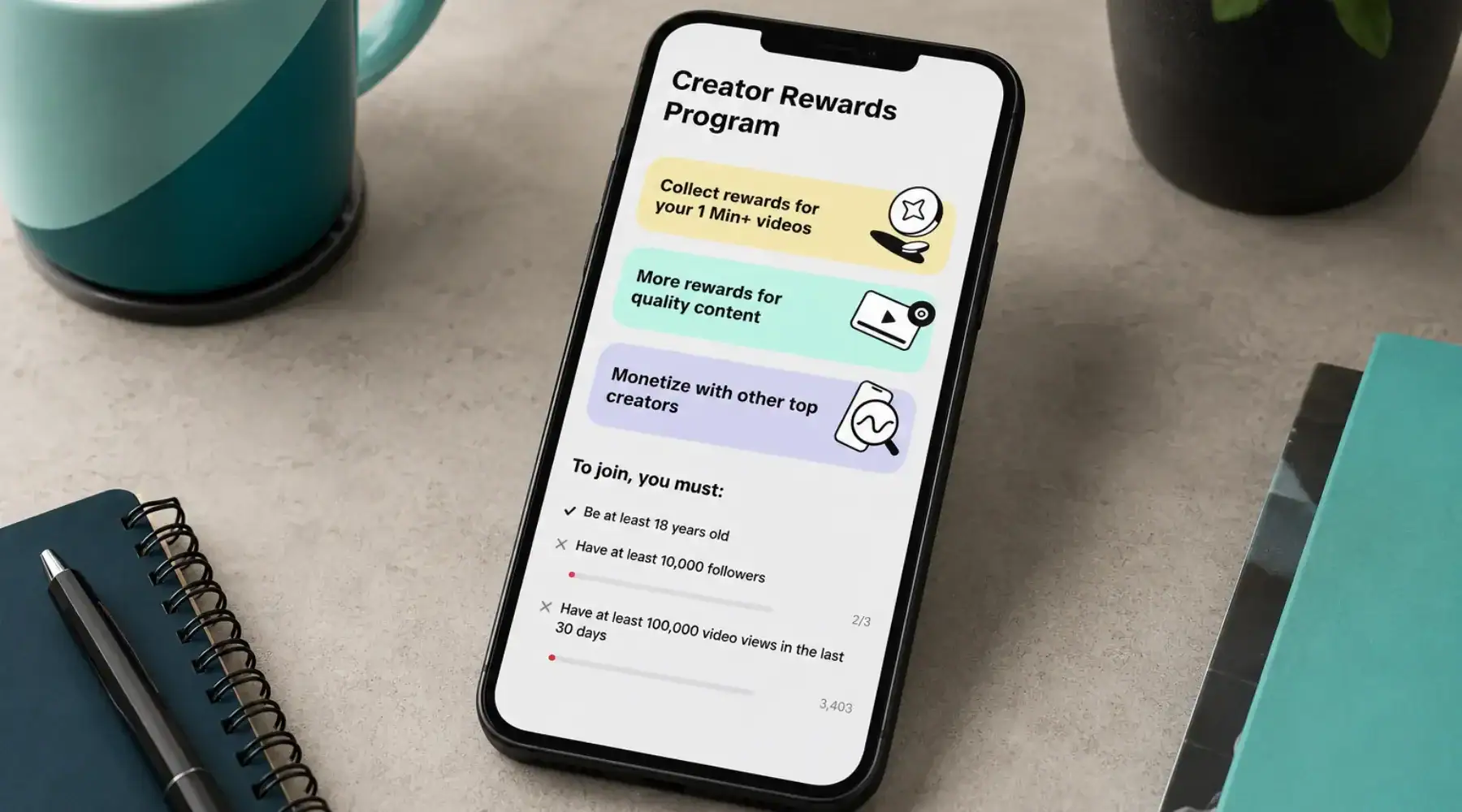
TikTok’s standard requirements include:
- Being at least 18 years old
- Living in a country where the program is available
- Using an eligible Personal Account in good standing
- Having at least 10,000 followers
- Receiving at least 100,000 video views during the previous 30 days
- Providing authentic account information
- Publishing original content that follows the program rules
Videos must be at least one minute long to qualify. Business Accounts are not eligible, and reaching the follower and view thresholds does not guarantee approval. Because availability remains limited by country and program rules can change, creators should review TikTok’s official Creator Rewards Program requirements and check the Monetization section of TikTok Studio for their account status.
Which Videos Qualify for Creator Rewards?
A qualifying video must be original, at least one minute long and published after the creator joins the program. It begins collecting rewards after reaching 1,000 qualified views from the For You feed.
TikTok does not count every public view. Qualified views exclude fraudulent or artificially generated activity, paid views, repeated views from the same account, views lasting less than five seconds and views from people who indicate that they are not interested in the video.
Copied or lightly modified content may also be excluded, along with Duets, Stitches, sponsored posts, paid promotions and videos connected to paid Series content. A video showing 200,000 public views may therefore have a smaller number used in its rewards calculation.
How TikTok Creator Rewards Are Calculated
TikTok uses rewards per 1,000 qualified views, commonly described as RPM, as part of its calculation. There is no fixed rate that every creator receives. TikTok says payments can be influenced by qualified performance, engagement, audience location, search value, originality and how specialised and well-produced the content is. Two videos with similar public view counts can therefore generate different rewards.
Instead of looking only at total views, creators should compare qualified views, average watch time, completion rate, search traffic, estimated RPM and rewards by video. These figures provide a clearer picture of which content is actually producing eligible viewing.
How to Apply for Creator Rewards
Applications are handled through TikTok Studio:
- Open TikTok Studio.
- Go to Monetization.
- Select Creator Rewards Program.
- Review the eligibility check and submit the application.
TikTok reviews the account before confirming access. Acceptance is not permanent if the creator or their videos later fail to meet the program rules.
How to Increase Qualified Views
There is no format that guarantees Creator Rewards income, but creators can focus on the factors TikTok measures.
The opening should establish the subject quickly and give viewers a clear reason to continue. The rest of the video should then deliver on that promise rather than being stretched simply to pass the one-minute requirement. Search-led videos may also remain discoverable beyond their initial appearance in the For You feed. Tutorials, comparisons and direct answers to common questions reflect the way people increasingly use TikTok to research products and topics. Affiverse has explored this behaviour in its analysis of TikTok’s growing role as a search engine.
Creator Rewards may suit accounts built around education, commentary, storytelling or entertainment. Its main limits are the entry thresholds, regional availability and the creator’s limited control over RPM and qualified-view calculations.
How TikTok Shop Affiliate Works
TikTok Shop Affiliate allows creators to promote products from participating sellers and earn commission from attributed orders. The creator does not normally hold stock, process payments or manage delivery. Instead, products are selected through TikTok Shop’s creator tools and added to shoppable videos, LIVE content or profile showcases. As TikTok has expanded its affiliate marketing features, product discovery, creator recommendations and in-app checkout have become more closely connected, giving creators a shorter route from content engagement to a completed sale.
TikTok Shop Affiliate Eligibility
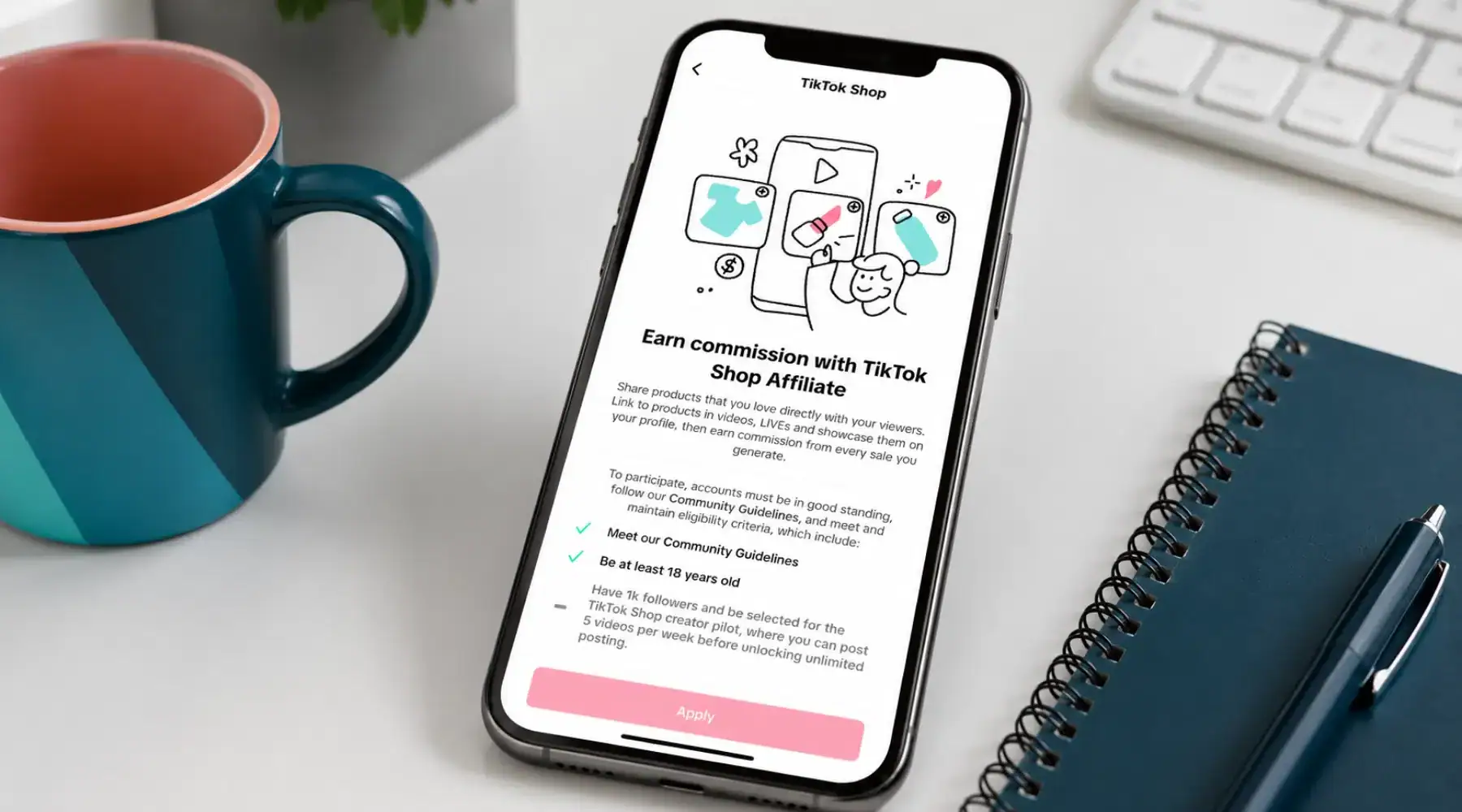
TikTok Shop requirements differ by market, so thresholds published for one country should not be treated as global rules. Eligibility can depend on the creator’s age, location, follower count, account history, identity verification and the type of Shop creator account being used. TikTok also operates pilot systems that can limit product access, content frequency or campaign participation while newer creators establish a compliance record.
In the US, TikTok Shop’s current Creator Eligibility Policy states that new Affiliate Creators with fewer than 5,000 followers automatically enter the Affiliate Creator Pilot Program for at least 30 days. During this period, limits may apply to product access, shoppable content and campaign participation. Creators generally need to complete the minimum pilot period, reach 5,000 followers and pass TikTok Shop’s compliance and security checks to remove all restrictions. Account status can be checked through the Pilot Program page in Creator Center.
How Creators Find Products to Promote
Eligible creators can browse products through TikTok Shop’s Product Marketplace. Sellers may make products available through open collaborations or send targeted invitations to individual creators. An offer can include a standard or creator-specific commission, access to samples and conditions covering videos or LIVE activity. The highest percentage is not automatically the strongest opportunity. Product relevance, seller reviews, price, delivery expectations, return risk and the creator’s ability to demonstrate the item all affect the likelihood of generating settled sales. A relevant product with a moderate commission may produce more revenue than a higher-paying item that does not fit the audience.
Shoppable Videos, LIVE and Product Showcases
Shoppable videos allow creators to attach products directly to recorded content. They are commonly used for demonstrations, comparisons, tutorials and reviews. LIVE gives creators more time to show the product, answer questions and respond to buying concerns. A profile showcase provides a more permanent place for viewers to return to products they discovered through earlier content. The right format depends on how much explanation the product needs. A simple item may work in a short demonstration, while a more considered purchase may benefit from a longer tutorial or LIVE session.
How TikTok Shop Commission Is Tracked and Paid
TikTok Shop Affiliate commission moves through several stages:
- Product discovery: A viewer opens a tagged product or approved affiliate link from the creator’s content.
- Order attribution: TikTok connects the resulting purchase to the creator.
- Delivery: The seller processes the order and the product is delivered.
- Settlement: TikTok waits for the relevant return, refund and dispute periods to pass.
- Commission payment: Once the seller’s order has settled, the creator’s approved commission becomes payable.
An order may initially appear as estimated income before its final value is known. Cancellations and full refunds remove the commission, while partial refunds can reduce it. Settled commission is therefore a more reliable measure of earnings than gross orders or estimated commission. Under TikTok Shop’s current US affiliate commission guidance, creators typically receive commission on the 15th day after delivery. Payment can be delayed until 31 days after delivery when the seller has a longer settlement period, while unresolved returns, refunds or disputes can extend the process further. Timelines may differ in other markets. Creators should compare product clicks and conversion rates with completed orders, returns and settled commission. A video may attract considerable interest but still generate limited income when buyers cancel orders or return the product.
What Makes TikTok Shop Content Effective?
TikTok Shop content still has to work as content. A product tag does not make a vague or generic video useful. Strong product content normally helps viewers understand what the item does, how it is used and who it may suit. Demonstrations, tutorials, fair comparisons, follow-up reviews and answers to audience questions can all support that process.
Search behaviour matters here as well. A clear review or tutorial may continue attracting viewers after the first wave of distribution, particularly when it answers a specific product question. Creators should also verify prices, discounts and product claims rather than relying entirely on a seller brief. Misleading demonstrations or unsupported claims can create platform and regulatory problems, while poor recommendations can damage the audience trust on which affiliate performance depends.
How TikTok Brand Deals Work
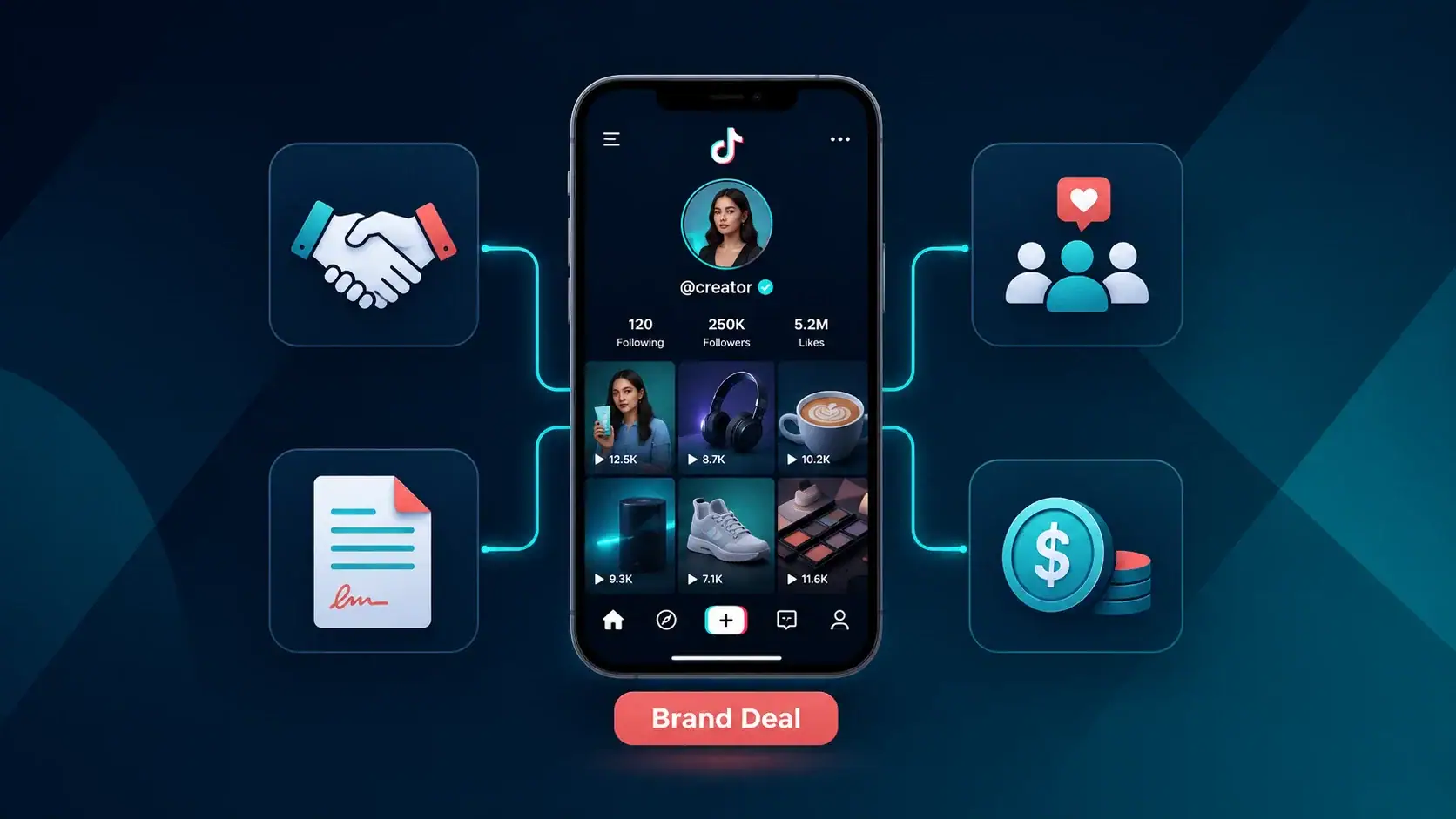
Brand deals are commercial agreements between a creator and an advertiser, agency or other business. Unlike Creator Rewards and standard Shop commission, payment is usually negotiated before the content is produced. The brand may be paying for access to an audience, the production itself, specialist knowledge or permission to reuse the finished video. Follower count can be important, but it is not the only consideration. A smaller creator may still offer a relevant niche audience, strong engagement or useful UGC production skills.
Where Creators Can Find Brand Deals
Creators can find brand opportunities through TikTok’s own collaboration tools or by working directly with advertisers and agencies.
TikTok One includes Creator Marketplace and other tools used by creators, brands and advertisers to manage commercial partnerships. TikTok’s current TikTok One eligibility requirements generally require creators to be at least 18, have an account in good standing, reach 10,000 followers, receive 1,000 post views in the previous 30 days and publish three posts during that period. Age and follower requirements may differ by region. Eligible creators can check access through TikTok Studio → Monetization → Creator Marketplace.
TikTok is also adding more technology to the creator-discovery process. Its Symphony Agent and Content Suite tools can help advertisers search for relevant creator videos, receive content recommendations and identify work that fits a campaign brief. The tools sit alongside TikTok One as part of the platform’s wider creator and advertising workflow.
Direct partnerships can come through brand outreach, inbound enquiries, agencies, affiliate managers, campaign platforms and previous client relationships. These agreements do not have a universal follower threshold. The advertiser decides whether the creator’s audience, niche, content and pricing fit the campaign.
UGC production offers another route for creators who do not yet have a large following. A brand may hire a creator to produce videos for its own TikTok account or advertising campaigns without requiring the content to appear on the creator’s profile. In this case, the commercial value comes mainly from the creator’s production and storytelling skills.
Types of TikTok Brand Partnerships
A partnership can involve one sponsored post, a package of campaign videos, UGC for a brand-owned account, product integration, LIVE content, event coverage or a longer-term ambassadorship. Some agreements combine a fixed production fee with affiliate commission, while others give the advertiser permission to run the content as paid media. These arrangements should not automatically have the same price. Producing a video is one service. Publishing it to an established audience adds distribution. Allowing the advertiser to reuse the video or run it through Spark Ads adds another commercial right.
What to Agree Before Accepting a Brand Deal
A written agreement should cover:
- The number, length and format of the deliverables
- Production and publication deadlines
- The approval process and number of revisions
- The fee, deposit and payment deadline
- Organic and paid usage rights
- Spark Ads permissions
- Exclusivity and campaign reporting
- Cancellation or postponement terms
Usage rights deserve particular attention. Payment for creating and publishing one organic video does not automatically give the advertiser permanent permission to run it in ads, place it on other channels or reuse it indefinitely. Creators should know where the content will appear, how long it can be used and whether the advertising will run through their own TikTok identity.
Creator Rewards vs TikTok Shop Affiliate vs Brand Deals
| Factor | Creator Rewards | TikTok Shop Affiliate | Brand deals |
|---|---|---|---|
| Payment trigger | Qualified views | Attributed and settled orders | Contracted work |
| Main payer | TikTok | Seller | Brand or agency |
| Product required | No | Yes | Usually |
| Negotiation required | No | Usually no | Yes |
| Sponsored content | Excluded | Central to the model | Central to the model |
| Main metric | Qualified views and RPM | Conversion and settled commission | Campaign-specific KPIs |
| Income predictability | Variable | Variable | More clearly defined per agreement |
| Regional restrictions | Yes | Yes | Fewer platform restrictions |
| Main creator skill | Holding attention | Influencing product decisions | Commercial content delivery |
No method is always the most profitable. Creator Rewards depends on qualified viewing and TikTok’s calculation. Shop Affiliate depends on product demand, commission and completed orders. Brand deals depend on the campaign scope, the value the creator provides and the commercial terms they negotiate.
TikTok Earnings Examples: How the Numbers Work
Note: The following figures are hypothetical and demonstrate the calculations rather than typical earnings.
| Method | Example | Result |
|---|---|---|
| Creator Rewards | 200,000 qualified views at a hypothetical $0.50 RPM | $100 |
| TikTok Shop Affiliate | 45 settled orders at $40 with a 10% commission | $180 |
| Brand deal | $500 production, $300 publishing and $400 advertising rights | $1,200 |
For Creator Rewards, the calculation would be 200,000 divided by 1,000 and multiplied by the assumed RPM. The same number of public views could produce a different result when the number of qualified views or the RPM changes. The Shop example includes only orders that completed settlement. Cancelled or refunded purchases would reduce the commission. The brand-deal example separates production, distribution and advertising rights. These are illustrative figures rather than recommended rates.
How to Combine TikTok Monetization Methods
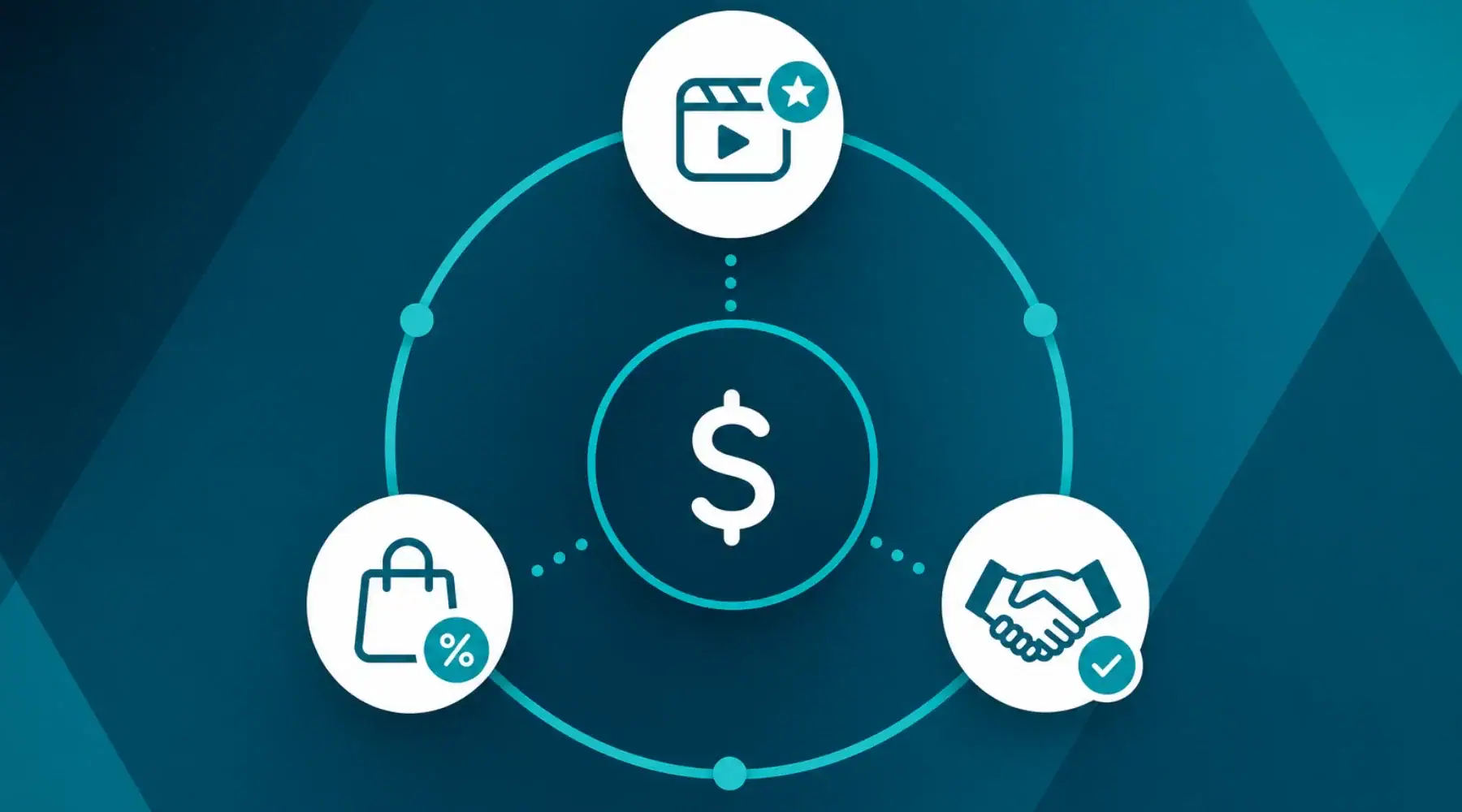
Creators can use Creator Rewards, TikTok Shop Affiliate and brand deals on the same account when they meet the relevant requirements. The clearest approach is to give each type of content a distinct purpose rather than expecting one video to support every revenue stream.
1. Separate Content by Monetization Goal
An educational creator might publish original explainers for Creator Rewards, use separate product tutorials for TikTok Shop and produce clearly disclosed campaign posts for advertisers.
| Content type | Main objective | Relevant monetization model |
|---|---|---|
| Original explainers or entertainment | Generate qualified viewing | Creator Rewards |
| Product tutorials and reviews | Drive attributed sales | TikTok Shop Affiliate |
| Sponsored or commissioned posts | Deliver agreed campaign work | Brand deals |
This separation prevents one video from carrying several competing calls to action. It also makes it easier to understand why a post performed well or poorly. A video can support more than one outcome, but it should still have one clear primary purpose, whether that is qualified views, product sales, campaign delivery or audience growth.
2. Match the Metrics to the Revenue Model
Measurement should follow the purpose of the content. Creator Rewards performance is best judged through qualified views, audience retention and RPM. TikTok Shop content requires attention to product clicks, completed orders, returns and settled commission. Brand campaigns should be assessed against the deliverables and performance measures agreed in the brief. Using total views as the main measure for every post can give a misleading picture. A product video with moderate reach may still perform well when it converts strongly, while a widely viewed sponsored post may fail to meet a campaign’s agreed objectives.
3. Build a Portfolio for Commercial Opportunities
Creators seeking brand partnerships should maintain a media kit showing their niche, audience, representative content, average performance and previous commercial work. UGC creators can also build a portfolio from demonstrations, tutorials and product-led videos even when they do not have a large following. In this case, the portfolio shows what the creator can produce rather than how many people currently follow the account. This growing focus on analytics, content planning and commercial skills is also reflected in TikTok’s creator education efforts. Affiverse’s coverage of the TikTok Creator Academy looks at how the platform is helping creators develop those capabilities.
4. Keep Revenue Diversification Relevant
Using several income streams can reduce reliance on one platform program, but every commercial opportunity should still make sense for the audience. Creator Rewards can fluctuate with qualified viewing performance. Shop commission can change because of product availability, returns and seller terms. Brand work may rise or fall with advertiser budgets. A mixed approach can reduce those risks without turning every post into promotional content. TikTok Shop is also part of a wider move towards commerce-led creator channels. Affiverse included it among the platforms affiliates should pay attention to in 2026, alongside other channels connecting content discovery more directly with purchasing.
TikTok Monetization Rules and Disclosures
Commercial content is subject to TikTok’s platform policies and the advertising rules that apply in the markets where it appears. Creators should review TikTok’s guidance on disclosing promotional and branded content, including when its Promotional content or Paid partnership labels are required.
Music, product claims and other campaign materials also need to be cleared for commercial use. TikTok recommends checking its commercial music guidance, while Shop creators should follow the product and content policies shown in TikTok Shop Creator Center. Requirements can vary by country and may change, so creators and brands should check the current rules before publishing.
Other Ways Creators Can Make Money on TikTok
Creator Rewards, TikTok Shop Affiliate and brand deals are the main models covered in this guide, but other income routes may be available depending on the creator’s location and account eligibility.
| Income route | How it works |
|---|---|
| LIVE Gifts and Video Gifts | Viewers send virtual gifts that eligible creators can convert into earnings. |
| Subscriptions | Followers pay for access to subscriber-only benefits and content. |
| TikTok Series | Eligible creators sell access to premium collections of videos. |
| Own products or services | Creators use TikTok to promote products, courses, memberships or professional services. |
| External affiliate programs | Product recommendations are monetized through affiliate platforms outside TikTok’s native tools. |
| Owned channels | TikTok traffic is directed towards a website, newsletter or other platform the creator controls. |
Each option has separate eligibility, payment and content rules. Creators considering paid video collections should review TikTok’s current Series guidance before treating it as an available income stream. External integrations can also connect TikTok content with wider affiliate activity. Creators may also be able to earn through affiliate partnerships beyond TikTok Shop. TikTok has previously tested broader affiliate integrations with retailers and affiliate networks, giving creators another way to connect product recommendations with commission-based earnings. Availability and functionality may vary by market and account.
Which TikTok Monetization Method Should Creators Start With?
The best starting point depends on the creator’s audience, content style, production skills and access to TikTok’s regional programs.
| Creator stage | Best starting point | Why it may fit |
|---|---|---|
| New creator | UGC production and direct outreach | Brand work may be available before the creator reaches TikTok’s native monetization thresholds. |
| Growing niche creator | TikTok Shop Affiliate and smaller brand deals | A focused audience can be valuable to relevant sellers and advertisers, even without broad reach. |
| Established creator | Creator Rewards alongside affiliate and brand income | Eligible creators can combine several revenue streams while keeping promotional and non-commercial content separate. |
Creator Rewards is most relevant to eligible creators who consistently produce original videos longer than one minute and can maintain audience attention. TikTok Shop Affiliate may suit creators whose viewers respond to product reviews, tutorials and demonstrations. Brand deals can work for creators with a defined niche, useful production skills or an audience that advertisers want to reach.
The right approach is not to attach a payment method to every post. It is to understand what the audience values and match each piece of content with the monetization model that best fits its purpose.
TikTok Creator Monetization FAQs
How many followers do you need to monetize on TikTok?
The requirement depends on the program and market. Creator Rewards generally requires at least 10,000 followers. TikTok One also lists a standard requirement of 10,000 followers, although TikTok says regional thresholds may differ. TikTok Shop Affiliate uses separate market-specific rules.
Does TikTok pay creators for every video view?
No. Creator Rewards pays for qualified views on eligible videos. TikTok excludes activity such as paid or fraudulent views, repeat views from the same account and views lasting less than five seconds.
Can creators use Creator Rewards and TikTok Shop Affiliate together?
Yes, provided the account qualifies for both programs. However, sponsored and promotional videos do not qualify for Creator Rewards, so creators normally need separate content for each model.
Can small TikTok creators get brand deals?
Yes. Direct brand partnerships do not have a universal TikTok follower threshold. Smaller creators may be selected because of their niche, audience relevance, location, engagement or ability to produce UGC.
Which TikTok monetization method pays the most?
There is no single answer. Creator Rewards depends on qualified views and RPM, Shop Affiliate depends on settled orders and commission, and brand deals depend on the campaign scope, fees and content rights negotiated.
Everflow
Connect
Tradedoubler
Connect
1win Partners
Connect
PIN-UP Partners
Connect
Shopnomix, a Nomix Group Company
Connect
V.Partners
Connect
Huffson Group
Connect
Kawaii Partners
Connect
Share your expertise and expand your reach and become a content contributor with us today!
Contact Us To Find Out More