LinkedIn Creator Marketplace Adds a New Layer to B2B Creator Discovery
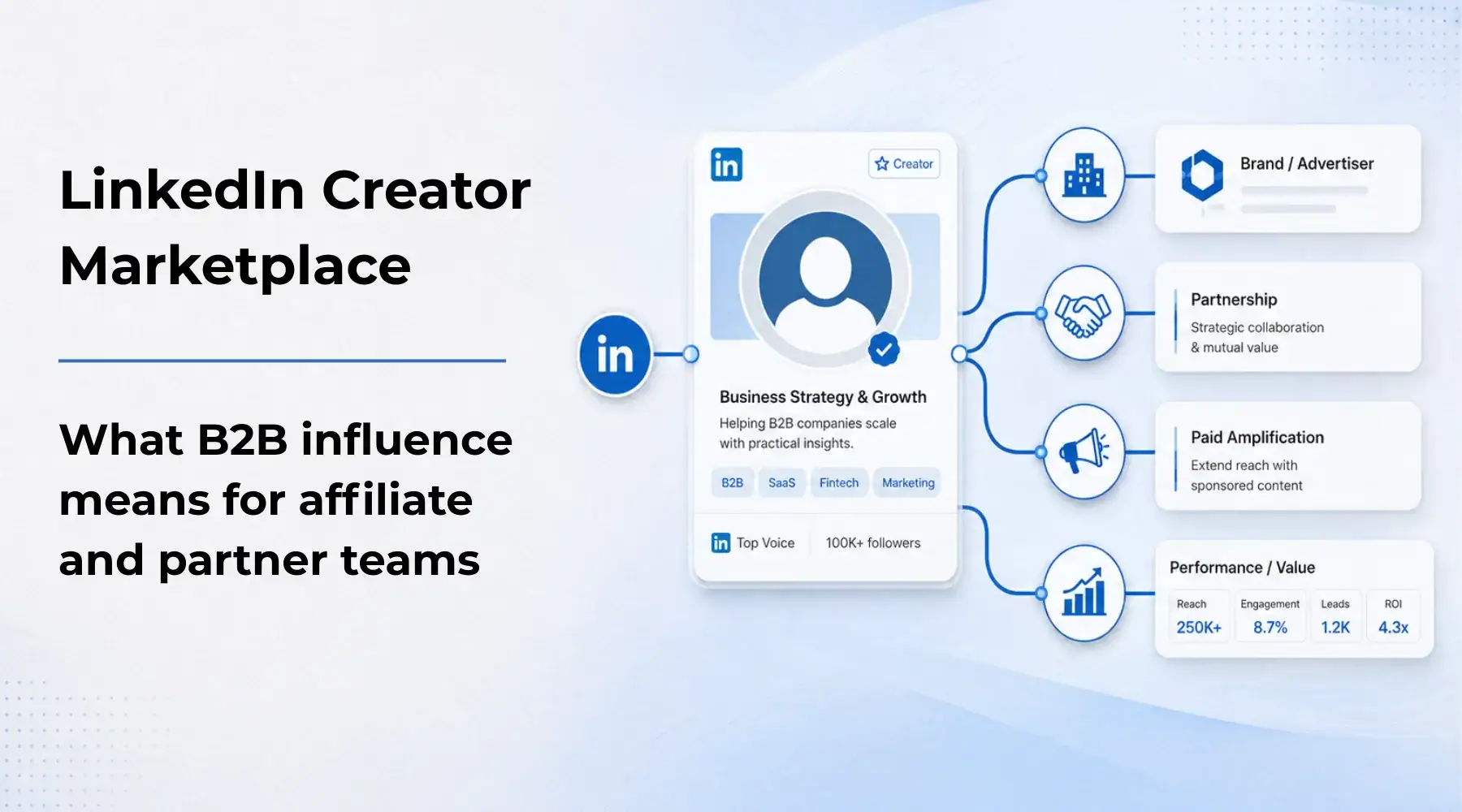
LinkedIn is making a clearer move into B2B creator discovery. The platform has introduced Creator Marketplace, a new section inside LinkedIn’s ad platform that helps advertisers find creators by sector, audience relevance, and business expertise. The tool gives brands another way to identify professional voices that may be relevant to campaigns, branded content, events, and wider partnerships.
For affiliate and partner marketers, the launch is worth watching because B2B creator activity may become easier to structure inside paid and partner-led campaigns. That doesn’t mean every creator relationship will fit neatly into an affiliate model. It does mean more brands may start treating professional creators as part of the wider partner mix.
LinkedIn’s pitch is different from creator marketplaces built mainly around entertainment reach. The focus sits closer to professional influence. Think operators, founders, analysts, consultants, executives, niche creators, and subject-matter experts who already speak to a defined business audience. For affiliate teams, that creates a practical question: where do credible B2B voices fit inside partner programs, and how should their value be measured?
- What LinkedIn Creator Marketplace Adds
- Why LinkedIn’s Version Is Different
- What LinkedIn Creator Marketplace Could Mean for Affiliates
- 1. More Structured Creator Discovery
- 2. More Competition for Credible Experts
- 3. New Partnership Formats
- 4. Better Paid Amplification Routes
- 5. More Pressure on Measurement
- How Affiliate and Partner Teams Might Approach It
- The Risk: Creator Marketing Becomes Too Media-Buying Led
- Affiverse Take: B2B Creators Are Moving Closer to Partner Programs
What LinkedIn Creator Marketplace Adds
LinkedIn Creator Marketplace gives advertisers a more direct way to find professional creators inside LinkedIn’s ad platform.
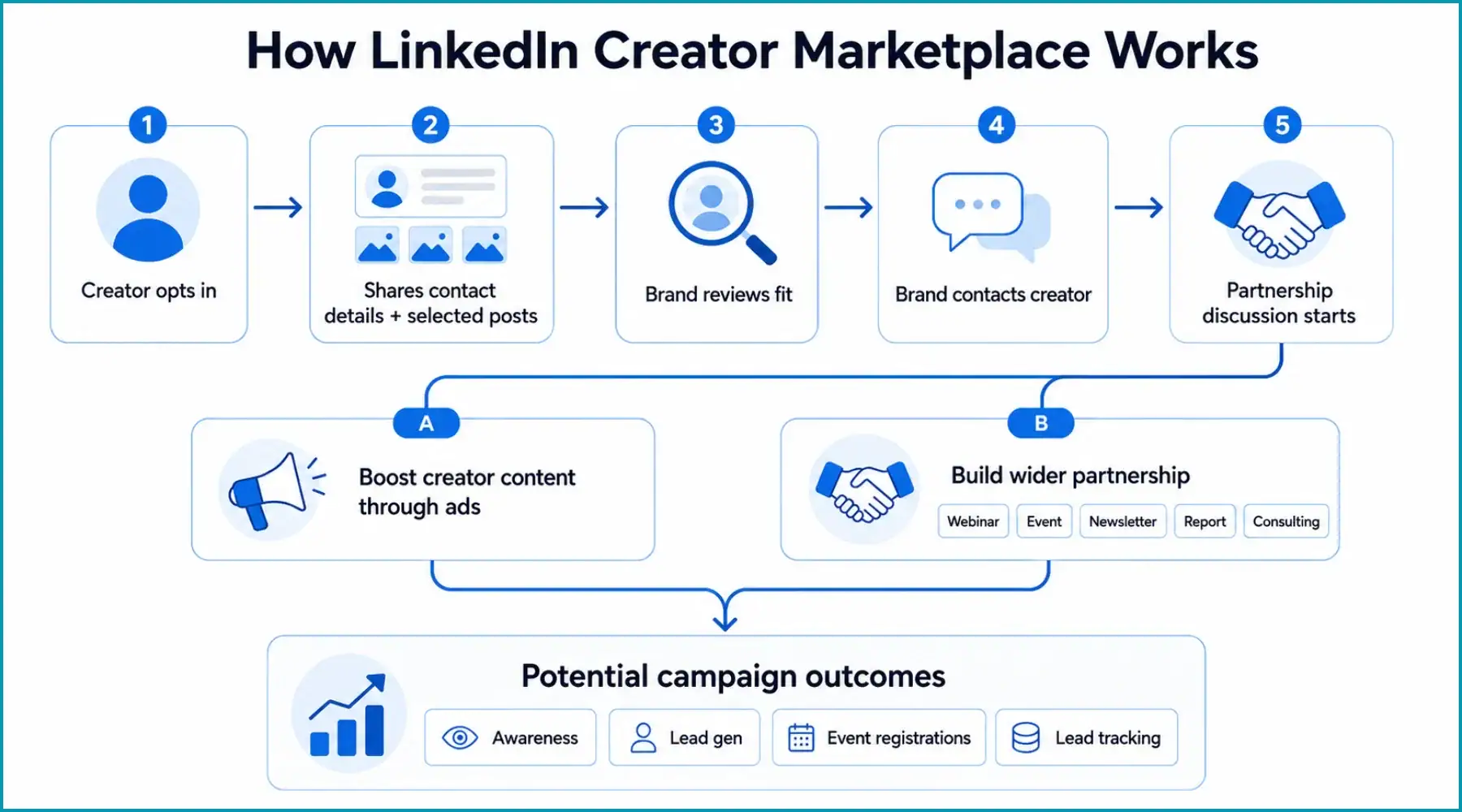
As reported by Business Insider, the setup gives creators a way to opt in and make themselves easier for brands to assess. In practical terms, creators can:
- showcase selected posts;
- signal that they’re open to partnership conversations;
- create content that advertisers can boost through paid ads;
- connect with brands for wider collaborations beyond sponsored posts.
That last point matters.
On LinkedIn, a creator partnership doesn’t have to stop at a single post. It could support a webinar, event appearance, gated report, newsletter feature, consulting project, lead-gen campaign, or executive thought leadership series. LinkedIn’s professional context gives credibility a bigger role, so creator fit may depend on whether someone can speak clearly to a specific industry, job role, or business problem.
That fits the wider rise of The LinkedInfluencer as a B2B marketing asset. Creator Marketplace adds a buying layer to that behavior. Instead of finding credible professional voices through manual research, comments, referrals, and speaker lists, brands may have a more structured route to discovery, contact, content review, and paid amplification.
Why LinkedIn’s Version Is Different
YouTube, Meta, TikTok, and third-party influencer platforms already give brands ways to find creators. LinkedIn arrives late to that game. LinkedIn appears to be positioning the product around credibility rather than cheap reach.
Sam Corrao Clanon, director of product at LinkedIn, explains the difference clearly:
Whereas on other platforms you might go to the marketplace to be like, ‘What are the cheapest CPMs I can get if I push my messaging through people?’ Here, what you’re looking for are subject matter experts and practitioners in addition to capital ‘C’ creators that can speak credibly to their experience with your product.
That framing changes the buying logic. In some B2B categories, a creator with 40,000 relevant followers may be more useful than a general creator with a much larger audience. The reason comes down to audience fit.
- Who follows them?
- What problems do they talk about?
- Do buyers trust their view?
- Can they explain a product without sounding like a scripted ad?
Those questions matter more in B2B than raw impressions.
That same logic explains why LinkedIn already plays such a strong role in B2B lead generation. Business context, job titles, and audience intent give marketers signals they don’t always get from broader social platforms. Creator Marketplace could add another layer to that: trusted voices who already speak to the people brands want to reach.
What LinkedIn Creator Marketplace Could Mean for Affiliates
For affiliate and partner marketers, LinkedIn Creator Marketplace matters because B2B influence rarely works in a straight line. A professional creator might introduce a brand to the right audience long before a lead fills out a form. They might shape a vendor shortlist, drive webinar attendance, support a product launch, or give a campaign more credibility with a specific buying group.
That connects directly with the wider growth of B2B affiliate marketing, where partner value often stretches across long sales cycles, multiple touchpoints, and decision committees. LinkedIn Creator Marketplace could bring more creators into that model, but it also puts more pressure on teams to define what influence means before the campaign starts.
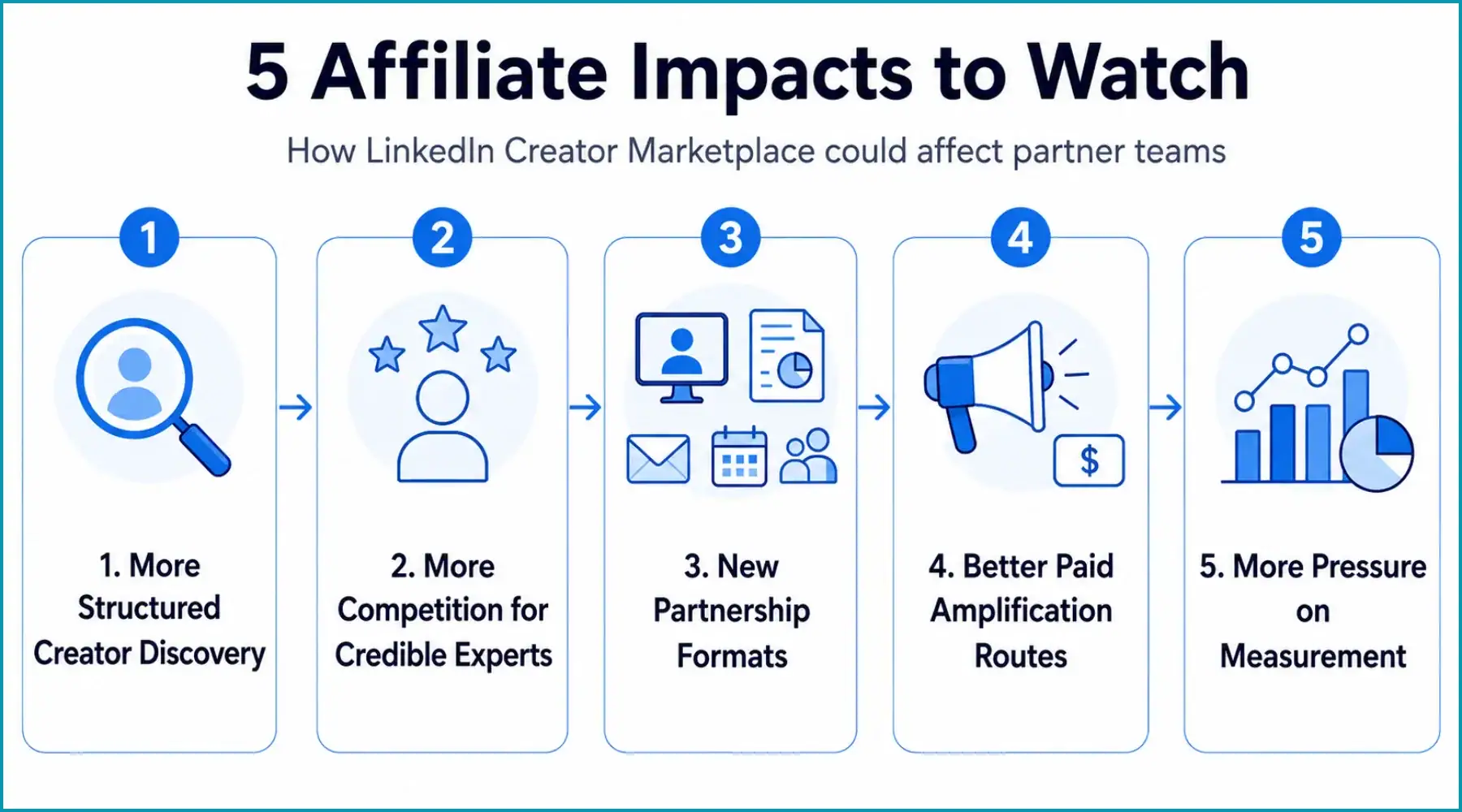
Here are five areas affiliate teams should watch.
1. More Structured Creator Discovery
Creator discovery may become more organized. Partner managers could get a clearer way to identify creators who already influence a specific professional audience. That helps in categories where discovery still happens through manual LinkedIn searches, referrals, comment sections, newsletter mentions, and event speaker lists.
2. More Competition for Credible Experts
Competition for credible experts may rise. If brands can find high-quality B2B creators faster, those creators may become more selective. Strong voices won’t need to accept every deal. They’ll care about fit, reputation, and whether the product makes sense for their audience.
3. New Partnership Formats
Creator partnerships may move beyond one-off sponsored posts. A deal might start with a LinkedIn post, but it can quickly turn into a webinar, industry report, newsletter feature, podcast appearance, product demo, event panel, advisory session, or gated content campaign.
4. Better Paid Amplification Routes
Paid amplification may become easier to connect with creator activity. If advertisers can boost creator content that mentions their brand, affiliate and partner teams gain a route to combine trusted creator content with paid media reach. That could help teams test messages, expand reach, and keep creator activity tied to campaign goals.
5. More Pressure on Measurement
Measurement will need more attention. Creator-led B2B influence rarely works like a last-click coupon model. Partner teams will need clearer attribution logic, tracked links, CRM data, assisted conversion reporting, lead-quality checks, and agreed KPIs before they treat LinkedIn creators as formal partners.
How Affiliate and Partner Teams Might Approach It
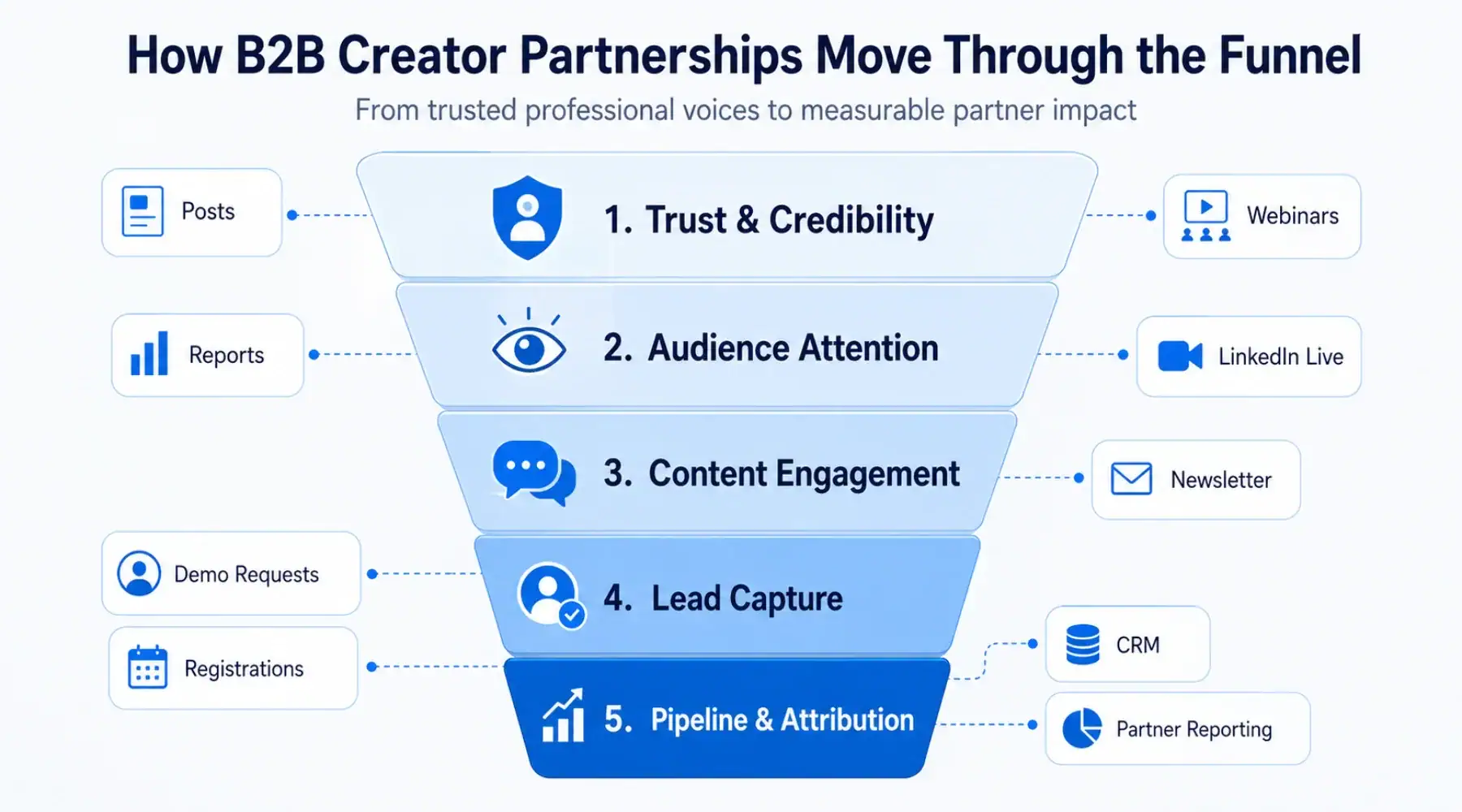
Affiliate teams shouldn’t treat LinkedIn Creator Marketplace as a pure awareness tool. In B2B, trusted professional voices can influence vendor shortlists, webinar registrations, demo requests, newsletter signups, event attendance, and internal buying conversations. That influence may happen before a prospect clicks anything. It may also happen after a prospect already knows the brand but needs social proof from someone they trust. That makes creator partnerships relevant in the middle of the funnel. In some cases, they may also support lower-funnel activity.
A LinkedIn creator could support a campaign by:
- hosting a product walkthrough for a niche audience;
- speaking at a partner-led virtual event;
- running a LinkedIn Live session tied to a gated download;
- sending tracked referrals into a CRM.
This creates room for hybrid commercial models. CPA can work in some cases, especially for lower-friction products, trials, or paid signups. But B2B creator deals may also involve flat fees, paid amplification budgets, referral tracking, lead-based incentives, event KPIs, and content usage rights.
That pushes affiliate marketing closer to partner marketing, where value can come from a wider mix of influence, reach, referrals, content, and long-term relationship building.
The key question for affiliate teams is not whether creators can generate attention. It is whether that attention can be tied to a clear campaign role, a defined audience, and a measurement model that makes sense for longer B2B buying cycles.
The Risk: Creator Marketing Becomes Too Media-Buying Led
LinkedIn’s ad-platform workflow gives marketers control. That brings obvious benefits. It also creates a risk. B2B creator marketing can’t work like a display placement with a familiar face attached. The value comes from trust, context, and fit. A creator who has spent years building credibility with CFOs, affiliate managers, agency founders, HR leaders, or SaaS buyers can lose that trust quickly if every post starts sounding like paid copy. The audience notices. Fast.
Partner teams need to protect the reason the creator matters in the first place. That means fewer generic briefs. Fewer forced talking points. Better product access. Clearer disclosure. More time for creators to understand the offer. More room for them to explain where a product fits and where it doesn’t.
LinkedIn VP of marketing Davang Shah put the point plainly:
The most valuable currency in the world right now is trust.
That line should sit on every creator brief.
Affiverse Take: B2B Creators Are Moving Closer to Partner Programs
LinkedIn Creator Marketplace points to a practical shift in partner marketing: B2B influence is becoming easier to search, compare, and activate inside campaign workflows.
That could help affiliate and partner teams bring creators into more formal programs. It could also raise the standard for how those relationships are managed. A professional creator won’t always fit a last-click commission model. A credible expert may need a deal that reflects content value, audience trust, lead quality, and longer buying cycles. The better affiliate teams won’t simply buy posts from professional creators. They’ll define where each creator fits: content, events, lead capture, paid amplification, attribution, or long-term authority. LinkedIn may make discovery easier. It won’t make trust easier to earn.
Everflow
Connect
Tradedoubler
Connect
1win Partners
Connect
Shopnomix, a Nomix Group Company
Connect
Huffson Group
Connect
Kawaii Partners
Connect
Trackdesk
Connect
Share your expertise and expand your reach and become a content contributor with us today!
Contact Us To Find Out More