European Publishers Take on Google: What the EPC’s Antitrust Complaint Means for Affiliate Marketers
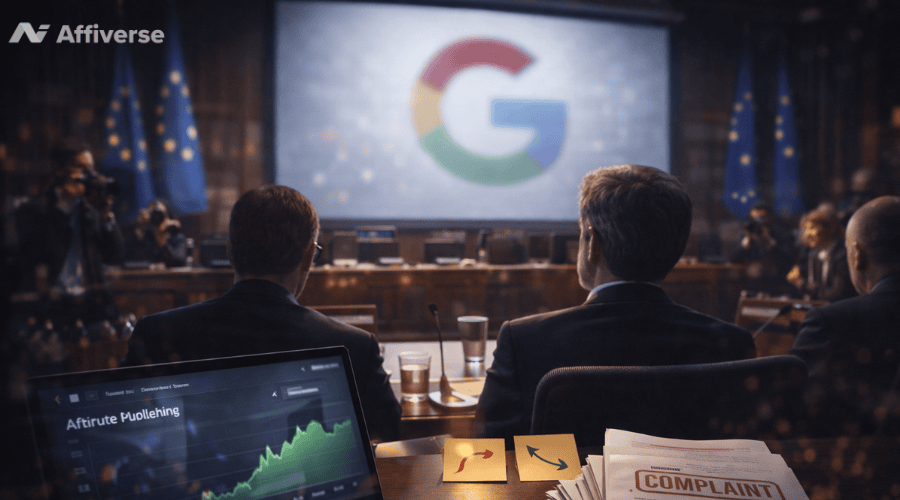
The European Publishers Council has fired a significant shot in the battle over AI-generated search content, filing a formal antitrust complaint with the European Commission accusing Google and Alphabet of abusing their dominant position in search. The complaint, filed on 10 February 2026, targets Google’s AI Overviews and AI Mode features, alleging they systematically strip traffic from publishers while using their content without consent, fair compensation, or any realistic opt-out mechanism.
This is not a minor regulatory skirmish. The EPC’s membership includes major publishing groups such as DMG Media, The Guardian, News UK, Condé Nast, Axel Springer, and The New York Times. When organisations of that scale coordinate a legal challenge, the industry should pay close attention.
For affiliate marketers and content publishers who depend on organic search traffic, the implications are substantial. The complaint directly addresses the mechanisms that have been eroding the click-through economy for months, and whatever the outcome, the regulatory direction is now firmly set.
What the EPC Is Actually Alleging
The complaint goes well beyond a general grievance about traffic loss. It accuses Google of seven specific categories of anti-competitive behaviour: systematic traffic substitution and disintermediation, exploitative use of publisher content for AI training and output, the absence of any meaningful opt-out, unfair trading conditions imposed by what the EPC calls an “unavoidable trading partner,” the undermining of emerging licensing markets, copyright noncompliance, and structural harm that will be irreversible if left unchecked.
At the heart of the complaint is what the EPC describes as an “untenable choice.” To remain visible on Google Search, publishers must accept that their content is crawled, reproduced, and repurposed for Google’s AI features. The technical controls Google has offered, primarily the NOSNIPPET meta tag and Google-Extended crawler blocks, are presented as inadequate. Opting out of AI use effectively means opting out of search visibility entirely, something most publishers simply cannot afford to do.
Christian Van Thillo, chairman of the EPC, framed the complaint in stark terms, stating that it is not about resisting innovation or AI, but about preventing a dominant gatekeeper from using market power to take content without consent or fair compensation.
Google has pushed back, with a spokesperson telling Reuters that the claims are inaccurate and represent an attempt to hold back AI features that European users want.
This Didn’t Come Out of Nowhere
The complaint builds directly on enforcement action the European Commission announced in December 2025, when it opened a formal antitrust investigation into whether Google breached EU competition rules by using web publisher and YouTube content for AI purposes. The EPC’s filing adds publisher-specific evidence and grievances to a regulatory process that was already underway.
The Commission’s investigation is examining whether Google’s dominant position in search gives it privileged access to vast content stores, placing rival AI developers at a structural disadvantage while forcing publishers to accept unfavourable terms. The EPC complaint reinforces these concerns with detailed allegations about how AI Overviews and AI Mode function in practice.
This also sits within a broader EU regulatory posture that has been tightening steadily. The Digital Services Act already imposes stricter transparency requirements on platforms operating in the EU. The proposed Digital Fairness Act is moving toward even more comprehensive consumer protection measures. Google’s AI practices are being scrutinised across multiple regulatory fronts simultaneously.
The Traffic Numbers That Make This Fight Inevitable
The data underpinning the EPC’s complaint is damning, and it tracks closely with what affiliate marketers have been experiencing firsthand. The EPC references publishers losing up to 40% of their traffic since AI Overviews began appearing more prominently in search results.
Independent research tells an even more detailed story. An Ahrefs study published in early February 2026 found that AI Overviews now correlate with a 58% reduction in click-through rates for top-ranking pages, nearly double the 34.5% decline documented in April 2025. A separate Pew Research Center study tracking actual user behaviour across 68,000 search queries found click-through rates dropped from 15% to 8% when AI summaries appeared, a 46.7% relative reduction.
For affiliate marketers, these numbers are not abstract. As we explored in our analysis of Google’s AI Mode expansion, AI Overviews now appear in over 35% of all U.S. desktop searches, and the trend is accelerating globally. The data from Italy, where AI Overviews launched in February 2025, showed general information sites experiencing traffic reductions between 30% and 40%, a sobering preview of what other markets can expect.
The zero-click phenomenon compounds the problem. Approximately 58% of Google searches now end without any click to an external website. For affiliates who built their businesses on capturing users at the moment of intent and guiding them through a purchase funnel, this represents a fundamental challenge to the revenue model.
Why Affiliate Marketers Should Care About a Publisher Fight
It would be easy to view this as a dispute between major news publishers and Google, with limited relevance to the affiliate marketing world. That would be a mistake.
The mechanisms the EPC is challenging are the same ones reshaping the affiliate landscape. When Google’s AI synthesises product comparisons, buying guides, and recommendation content directly in search results, the affiliate sites that created that value get bypassed. Research from finder.com CEO Jon Ostler, discussed in our coverage of the affiliate bypass problem, found that 62% of AI citations reference affiliate sources, but only 20% link to direct providers. The content is being used; the creators are not being compensated.
The complaint’s allegations about the absence of meaningful opt-out mechanisms and the undermining of licensing markets apply with equal force to affiliate content publishers. If the Commission rules that Google must compensate publishers for AI use of their content, establish transparent licensing frameworks, or provide genuine opt-out controls that do not penalise search visibility, those precedents would reshape the entire content ecosystem, including affiliate marketing.
The EPC specifically highlights that Google has largely avoided the licensing agreements other AI providers have signed with publishers. If regulatory action forces Google toward licensing models, this could eventually create new revenue streams for content publishers across sectors, though the timeline for any such outcome remains uncertain.
What This Means for Your Strategy Right Now
Regardless of how the regulatory process plays out, and EU antitrust investigations operate without fixed deadlines, the direction is clear. The era of building affiliate businesses primarily on organic Google search traffic is ending, and the regulatory landscape is only going to make it more complex.
Our 2026 SEO predictions outlined the scale of this shift: Gartner predicted a 25% decline in organic search traffic by 2026, and current data suggests that estimate may prove conservative. The affiliate marketers who will thrive are those treating this not as a temporary disruption but as a permanent structural change.
Traffic diversification is no longer optional. As we detailed in our guide to alternative traffic channels for affiliates, building a multi-channel approach combining email, social media, video content, and direct audience relationships is essential risk management. Programs that have diversified publisher partnerships across platforms less susceptible to AI disruption, including Instagram, TikTok, YouTube, and email-based publishers, are better positioned to weather whatever comes next.
Content quality and brand authority also become more important, not less. Google’s own 2026 marketing predictions signal that how content is structured for AI consumption matters as much as the content itself. But the EPC complaint highlights a deeper tension: creating high-quality content that AI systems want to reference is only valuable if the creator captures some of that value. Without structural changes to how AI features attribute and compensate content sources, the incentive to invest in quality content gradually erodes.
The Bigger Picture
The EPC complaint represents one front in a multi-jurisdictional challenge to how AI platforms use third-party content. The UK’s Competition and Markets Authority announced measures in January 2026 requiring Google to give publishers genuine opt-out rights from AI features without losing search visibility. India’s Department for Promotion of Industry and Internal Trade has proposed mandatory licensing for AI training on copyrighted works. The regulatory pressure is global and growing.
For the affiliate marketing industry, the most important thing is not to wait for regulatory outcomes before acting. The traffic data is clear, the strategic direction is set, and the marketers who adapt early will be the ones still standing when the regulatory dust settles.
Whether the EPC’s complaint ultimately forces Google to change its practices, pay licensing fees, or provide meaningful publisher controls, the underlying dynamic will continue: AI is reshaping how consumers discover, evaluate, and purchase products. The affiliate model needs to evolve from traffic arbitrage toward influence, brand authority, and direct audience relationships.
That transition is already underway. The regulatory environment is simply making the urgency impossible to ignore.
Everflow
Connect
Tradedoubler
Connect
1win Partners
Connect
PIN-UP Partners
Connect
Shopnomix, a Nomix Group Company
Connect
V.Partners
Connect
Huffson Group
Connect
Kawaii Partners
Connect
Share your expertise and expand your reach and become a content contributor with us today!
Contact Us To Find Out More