Google AI Mode Goes Global: The End of Organic Traffic as We Know It?
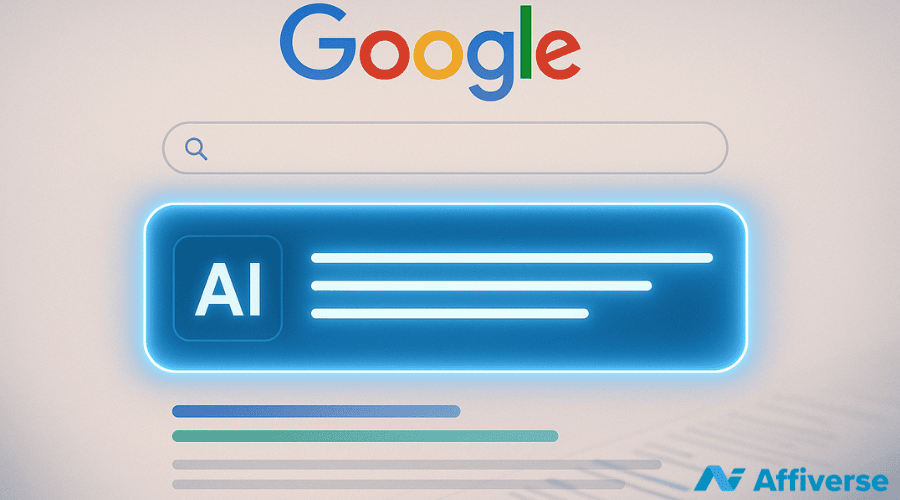
Google’s aggressive expansion of AI Mode to over 180 countries represents more than a feature rollout—it signals the death knell for traditional affiliate marketing models built on organic search traffic. With AI Mode designed to keep users within Google’s ecosystem by providing direct answers and now offering agentic booking capabilities that can handle restaurant reservations through partners like OpenTable and Resy, we’re witnessing the systematic dismantling of the click-through economy.
The numbers paint a stark picture for businesses that have spent years optimising their way to the top of search results. Recent studies show AI Overviews are causing a 34.5% drop in position 1 click-through rates when present, while Google’s top organic CTR has plummeted from 28% to 19% following AI Overview expansion—a devastating 32% decline. For affiliate marketers who’ve built entire businesses around capturing that precious organic traffic, these aren’t just statistics—they’re an existential threat.
The Perfect Storm: AI Overviews Meet Agentic Capabilities
Google’s latest AI Mode update goes beyond simple search result summarisation. The platform now features agentic capabilities that can scan real-time availability across booking platforms and present users with actionable options, complete with direct links to reservation pages. This represents a fundamental shift from information discovery to task completion—all within Google’s walled garden.
The implications are profound for service-based businesses that have traditionally relied on organic search to drive bookings and inquiries. When users can ask AI Mode to “find me a table for four at an Italian restaurant downtown tonight” and receive curated options with real-time availability, the need to visit restaurant websites, comparison sites, or even affiliate platforms diminishes dramatically.
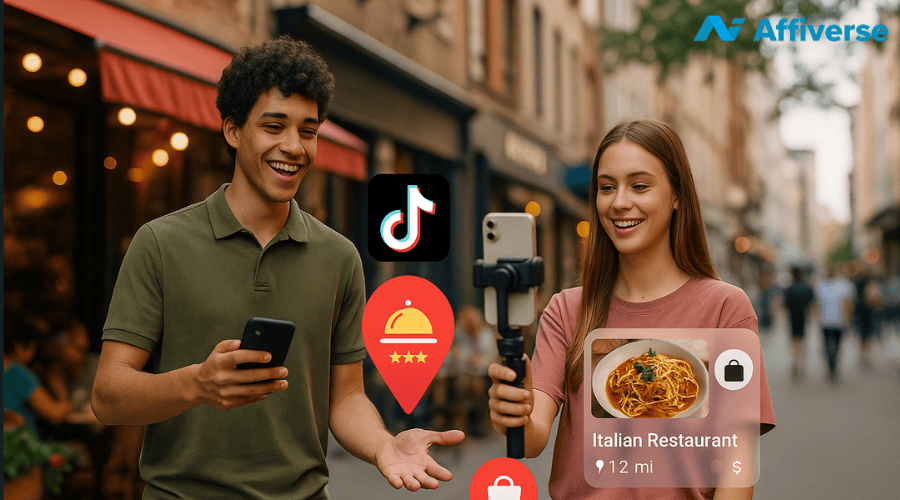
This development echoes the broader trend we’ve seen with TikTok GO’s challenge to Google’s local search dominance, where platforms are increasingly becoming the destination rather than the starting point for discovery. The difference is that Google, with its massive search infrastructure and established partnerships, has the power to execute this transition on a global scale practically overnight.
The evolution from browser extensions like Honey to AI-powered search agents represents a natural progression in platform consolidation. Where Honey once faced allegations of affiliate commission hijacking through browser extensions, Google’s AI Mode achieves similar results through search interface integration—but with the legitimacy of being the search engine itself rather than a third-party intermediary.
From Browser Extensions to AI Agents: The Evolution of Affiliate Disruption
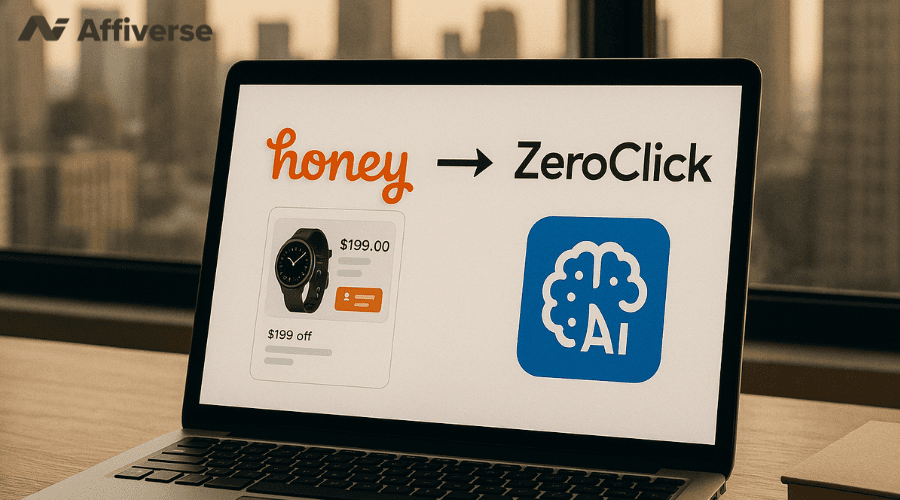
The trajectory from Honey’s browser extension controversy to Google’s AI Mode represents a fascinating evolution in how platforms capture value from affiliate marketing. Ryan Hudson’s $4 billion exit with Honey in 2020 demonstrated that browser extensions could effectively intercept and redirect affiliate commissions at scale. Now, with his new venture PIE (People’s Internet Experiment) promising users control over their advertising experience while still facing criticism for similar practices, we’re witnessing the next phase of this disruption.
Google’s approach with AI Mode is far more sophisticated than browser extension hijacking. Rather than replacing affiliate links after the fact, Google’s AI system prevents users from ever needing to click through to affiliate sites in the first place. When AI Mode can provide restaurant recommendations with real-time availability and direct booking links, the traditional affiliate model—where users discover, research, and convert through third-party sites—becomes obsolete.
This represents what industry observers are calling the “zero-click” evolution: from Honey’s post-click intervention to Google’s pre-click prevention. The result is the same—affiliate marketers lose revenue—but Google’s method carries the legitimacy of improving user experience rather than exploiting browser vulnerabilities.
The Affiliate Marketing Reckoning
For affiliate marketers, the writing isn’t just on the wall—it’s in bold, underlined text. AI Overviews now appear in over 35% of all U.S. Google desktop searches and the trend is accelerating. The data from Italy, where AI Overviews launched in February 2025, provides a sobering preview: general information sites are experiencing traffic reductions between 30 and 40%.
The affiliate model, which has long depended on capturing users at the moment of intent and guiding them through the purchase funnel, faces a fundamental challenge when Google’s AI can provide recommendations and even facilitate bookings without requiring a single external click. This shift is particularly devastating for affiliates in the travel, dining, and entertainment sectors where Google’s new partnerships with OpenTable, Ticketmaster, and StubHub create direct pathways to conversion.
The irony is palpable: while the industry spent years debating whether Honey’s browser extension practices constituted affiliate fraud, Google has achieved something far more comprehensive through AI Mode. Where Honey intercepted individual transactions, Google’s AI prevents the need for transactions to flow through affiliate sites entirely.
As we noted in our analysis of Google’s crackdown on affiliate content, the search giant has been steadily tightening the screws on affiliate sites. The AI Mode expansion represents the logical conclusion of this trend: why allow third-party sites to capture value from search queries when Google can provide the answers—and increasingly, the solutions—directly?
The New Intermediary Economy
What makes Google’s strategy particularly compelling is how it positions AI Mode as the solution to problems that browser extensions like Honey helped create. While Honey faced lawsuits from influencers claiming commission theft, Google frames AI Mode as enhancing user experience by eliminating the need to visit multiple sites for research and booking.
Ryan Hudson’s response to the Honey controversy—launching PIE with promises of user-controlled advertising—demonstrates how the industry continues to grapple with the fundamental tension between user benefit and affiliate revenue. Hudson’s new venture promises users can “get paid a fair share to opt into ads” while still participating in affiliate commissions, but critics argue this merely repackages the same value extraction in more palatable terms.
Google’s AI Mode sidesteps these ethical debates entirely by positioning itself as a service rather than an intermediary. When users ask AI Mode to find restaurant reservations, they’re not being redirected through affiliate links—they’re receiving direct assistance with real-time booking capabilities. The value extraction is the same, but the narrative is cleaner.
Google’s AI Mode expansion must be understood within the broader context of platform consolidation. Just as TikTok GO is attempting to capture local search revenue through its creator-driven affiliate model, Google is leveraging AI to retain users within its ecosystem while expanding into transaction facilitation.
The strategic implications are staggering. Google isn’t just competing for search queries anymore—it’s positioning itself as the ultimate digital concierge. When users can discover, evaluate, and book services without leaving Google’s interface, traditional affiliate marketing becomes an unnecessary middleman in an increasingly streamlined process.
This transformation mirrors what we’ve seen in affiliate marketing’s relationship with AI, where the technology has evolved from a tool for content creation to a primary driver of user experience. The difference is that Google’s implementation doesn’t just use AI to enhance existing processes—it fundamentally reimagines how consumers interact with commercial information.
The Winners and Losers in Google’s New World Order
While the overall trend spells doom for traditional organic traffic strategies, the data suggests a more nuanced redistribution of winners and losers. Expert blogs, in-depth technical sites, and educational platforms are seeing visibility increases of 15 to 45% as AI favors documented expertise for complex topics.

This shift rewards depth over breadth, expertise over volume—a fundamental departure from the SEO strategies that have dominated affiliate marketing for the past decade. Sites that built their success on keyword-stuffed product roundups and templated reviews will find themselves increasingly marginalised, while those offering genuine expertise and original insights may discover new opportunities for visibility within AI-generated responses.
The challenge, however, lies in monetisation. Even if your content is cited within an AI Overview, CTR drops to less than 5% on desktop and 7% on mobile when AI Overviews are present. For affiliate marketers, this creates a paradox: visibility without traffic, authority without conversion.
The Path Forward: Adaptation or Extinction
For affiliate marketers and content creators who have built their businesses on organic search traffic, the message is clear: adapt or face extinction. The strategies that worked in 2024—optimising for featured snippets, building topical authority, creating comprehensive buying guides—are increasingly irrelevant in a world where Google’s AI can synthesise information from multiple sources and present actionable recommendations without requiring users to leave the platform.
The most successful affiliate marketers in this new landscape will be those who can pivot from traffic-dependent models to influence-based strategies. This means building audiences on platforms where they own the relationship—email lists, social media followings, and direct brand partnerships rather than relying on Google’s algorithmic goodwill.

As we’ve documented in our coverage of Google’s algorithm updates, the search giant has consistently moved toward rewarding authentic, experience-based content over manufactured SEO fodder. AI Mode represents the culmination of this trend, where only the most authoritative, well-sourced content will achieve visibility—and even then, without the traffic benefits that once made such visibility valuable.
The Monetisation Dilemma
Google’s expansion of AI Mode creates a fundamental tension in the digital economy. The platform generates revenue through advertising, yet its AI-powered search results reduce the need for users to visit the advertiser-supported websites that form the backbone of the affiliate marketing ecosystem. This creates what economists might recognise as a classic case of eating your own tail—Google’s pursuit of user engagement may ultimately undermine the very ecosystem that funds its operations.
The introduction of paid ads in AI Overviews, announced at Google Marketing Live 2025, suggests the company is well aware of this dilemma. However, this development offers little comfort to affiliate marketers who suddenly find themselves competing not just for organic visibility but for paid placement within AI-generated content—a significantly more expensive proposition than traditional PPC advertising.
The Global Stakes
Google’s decision to roll out AI Mode to 180 countries simultaneously demonstrates the company’s confidence in this strategic direction. Unlike previous search features that were tested in limited markets before global expansion, AI Mode’s rapid international deployment suggests Google views this as an essential defensive move against competitors like ChatGPT, Perplexity, and emerging platforms like TikTok GO.
This global rollout also means that affiliate marketers worldwide will face these challenges simultaneously, without the luxury of observing market impacts in other regions before adapting their strategies. The businesses that survive this transition will be those that recognise the shift early and invest in building direct relationships with their audiences rather than depending on Google’s continued benevolence.
Conclusion: From Honey’s Disruption to Google’s Dominion
Google’s AI Mode expansion represents more than technological evolution—it marks the culmination of a disruption cycle that began with browser extensions like Honey and now reaches its logical endpoint in AI-powered search agents. For affiliate marketers who have built their businesses on the promise of free, scalable traffic from search engines, this transition requires nothing less than a fundamental reimagining of their value proposition.
The businesses that will thrive in this new landscape are those that recognise AI Mode not as a threat to existing strategies but as a signal to develop new ones. This means building direct relationships with audiences, creating genuine expertise that AI systems must cite, and developing revenue models that don’t depend on search engine traffic.
Ryan Hudson’s journey from Honey’s $4 billion exit to PIE’s controversial launch illustrates the persistent tension between user empowerment and platform profitability. While Hudson promises to give users control over their internet experience, Google’s AI Mode demonstrates how true control might simply mean choosing which AI agent manages your commercial interactions.
The affiliate marketing industry has weathered significant changes before—from Google’s early algorithm updates to the rise of social media commerce to the browser extension wars that Honey epitomised. The AI Mode expansion may be the most significant challenge yet, but it also represents an opportunity for the most adaptable players to establish sustainable competitive advantages in a rapidly evolving digital economy.
The question isn’t whether AI will reshape affiliate marketing—it’s whether today’s affiliate marketers will reshape themselves quickly enough to remain relevant in tomorrow’s AI-driven economy. As we’ve learned from the Honey saga, the platforms that successfully navigate the line between user benefit and value extraction will define the next decade of digital commerce.
Everflow
Connect
Tradedoubler
Connect
1win Partners
Connect
PIN-UP Partners
Connect
Shopnomix, a Nomix Group Company
Connect
V.Partners
Connect
Huffson Group
Connect
Kawaii Partners
Connect
Share your expertise and expand your reach and become a content contributor with us today!
Contact Us To Find Out More