Apple Turns to Google’s Gemini AI to Power Siri: What the Deal Means for Affiliate Marketers
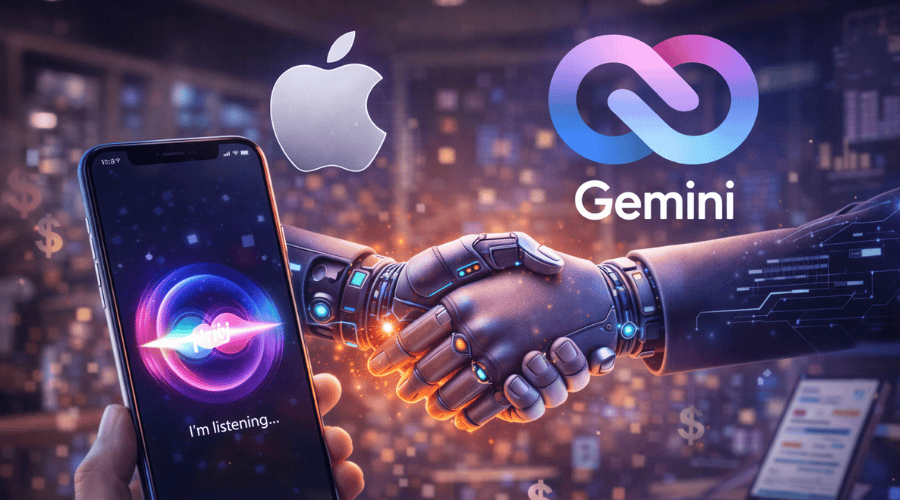
Apple has announced a multi-year collaboration with Google that will see the iPhone maker base key improvements to Siri and other services on Google’s Gemini AI models. The partnership, revealed in a joint statement on Monday, marks a significant strategic shift for a company that has historically insisted on owning every layer of its technology stack.
For affiliate marketers who have been tracking the evolution of AI across the industry, this deal carries substantial implications for voice commerce, product discovery, and the broader question of which AI systems will mediate consumer purchasing decisions in the years ahead.
Why Apple Outsourced Its AI Foundation
The announcement arrives at a time when Apple has faced growing criticism for falling behind competitors in AI capabilities. While Google, Samsung, and other smartphone manufacturers have aggressively integrated generative AI features into their devices, Apple’s own AI efforts have progressed more cautiously.
IDC analyst Francisco Jeronimo didn’t mince words in his assessment. He told the BBC that by outsourcing the foundational layer of its AI to Google, Apple is effectively admitting that its internal efforts couldn’t compete with Google’s Gemini in terms of capability and scale in the short term. He described the move as a significant and pragmatic strategy, but also noted it marked a departure from Apple’s historic approach to development.
This isn’t Apple’s first AI partnership. The company unveiled a similar collaboration with OpenAI in June 2024, making ChatGPT available as part of its suite of generative AI tools, Apple Intelligence. That earlier deal signalled Apple’s recognition that it couldn’t build competitive AI capabilities entirely in house.
The Google partnership goes deeper, however. Rather than simply integrating a third party chatbot, Apple is now using Google’s technology as the foundation for its own AI models. The joint statement noted that after careful evaluation, Apple determined that Google’s AI technology provides the most capable foundation for Apple Foundation Models.
What This Means for Voice Commerce and Affiliate Marketing
With over 50% of all queries now voice activated and 8.4 billion voice assistants in use globally, the technology powering Siri directly affects how hundreds of millions of consumers discover and purchase products. Affiliates who have been optimising for voice search now face a shifting landscape where Google’s AI models will process queries on Apple devices.
The implications are significant. Voice queries are longer, conversational, and question based. When users ask Siri “What’s the best espresso machine under £200?” or “Which running shoes are best for marathon training?”, the responses they receive will now be shaped by Google’s Gemini models rather than purely Apple developed systems.
For affiliates, this consolidation around Google’s AI infrastructure creates both opportunities and challenges. On one hand, it potentially simplifies optimisation strategies since the same underlying AI technology now powers product recommendations across both Android and iOS ecosystems. On the other hand, it concentrates significant influence over consumer discovery in a single company’s technology.
The deal also raises questions about Apple Intelligence’s impact on affiliate marketing that we explored when the iPhone 16 launched. At that time, Apple Intelligence promised hyper personalised recommendations that could drive higher conversion rates for affiliates whose products aligned with user preferences. With Google’s Gemini now powering these systems, the criteria determining which products get recommended may shift.
Privacy: Apple’s Differentiator or Regulatory Flashpoint?
Both companies were careful to emphasise privacy protections in their announcement. Google and Apple stated that Apple Intelligence would continue to run on Apple devices and Private Cloud Compute, while maintaining Apple’s industry leading privacy standards.
This matters for affiliate marketers who have long navigated Apple’s privacy initiatives including Intelligent Tracking Protection, which complicated affiliate tracking on Safari browsers. The question now is how Google’s AI integration affects the data flowing through Apple’s ecosystem and whether Apple can maintain its privacy positioning while relying on Google’s models.
The regulatory dimension adds another layer of complexity. Jeronimo suggested the deal is likely to be a red flag for regulators, noting that iPhone users familiar with Google products may not be overly concerned, but antitrust authorities will scrutinise the arrangement closely.
The precedent is clear. Prior to a US judge ruling in August 2024 that Google had operated an illegal online search monopoly, it was revealed the company had paid more than $26 billion in 2021 alone to firms including Apple to make its search engine the default option on iPhones. EU and UK regulators have previously expressed concern over big tech deals out of fears they could leverage their size, wealth, and market power to maintain dominance.
The UK’s Competition and Markets Authority said in October that Apple and Google both held an effective duopoly in the UK, designating both companies as having strategic market status. This gives the regulator power to demand changes at firms it decides have too much market power.
The Consolidation of AI in Consumer Commerce
This partnership accelerates a trend reshaping affiliate marketing in 2026: AI powered platforms are fundamentally altering how consumers discover and purchase products. The channel barely resembles what it was even two years ago, with conversational search fragmenting traditional purchase journeys.
For affiliate marketers, the Apple Google deal raises strategic questions that extend beyond voice search optimisation:
Attribution complexity increases. When AI systems mediate product discovery across devices and platforms, tracking the customer journey from initial query to final purchase becomes more challenging. Traditional last click attribution models already miss significant influence that occurs in AI powered environments. This consolidation makes multi touch attribution essential rather than optional.
Content authority matters more. AI models don’t simply scrape the web and synthesise generic summaries. They prioritise expert written, trustworthy content when formulating responses. Affiliates producing substantive reviews, in depth comparisons, and genuine hands on testing will find their content referenced by AI systems. Generic product descriptions won’t surface.
Platform strategy requires reconsideration. The assumption that iOS and Android represented distinct ecosystems for affiliate optimisation may need updating. With Google’s AI models now powering recommendations on both platforms, the strategic value of platform specific approaches diminishes.
What Affiliates Should Do Now
The immediate practical implications centre on ensuring content is optimised for the AI systems that will increasingly mediate consumer discovery.
First, affiliates should audit their content library through a voice search lens. Product reviews need reformatting to answer spoken questions consumers actually ask. Featured snippets capture 40% of voice results, requiring concise answers that AI systems can easily reference.
Second, the consolidation around Google’s AI makes structured data and schema markup more valuable than ever. Content that AI systems can easily parse and cite receives preferential treatment in recommendations.
Third, affiliates should monitor how AI systems reference their content. Tools that track AI citations and brand mentions become essential for understanding influence that occurs before traditional tracking kicks in.
Tech analyst Paolo Pescatore noted that Apple’s latest financial results suggested AI was not the most sought after feature for people deciding whether to buy an iPhone, but added that this will gradually change as AI powered services gain adoption. For affiliate marketers, the time to prepare for that shift is now, not when consumer behaviour has already changed.
The Apple Google partnership won’t be the last major AI deal to reshape the affiliate landscape. But it signals clearly that the companies controlling AI infrastructure will increasingly shape which products consumers discover, consider, and ultimately purchase. Affiliates who build strategies around that reality will capture value in this evolving environment. Those who don’t will find their traditional approaches delivering diminishing returns.
Everflow
Connect
Tradedoubler
Connect
1win Partners
Connect
Shopnomix, a Nomix Group Company
Connect
Huffson Group
Connect
Kawaii Partners
Connect
Trackdesk
Connect
Share your expertise and expand your reach and become a content contributor with us today!
Contact Us To Find Out More