YouTube Shopping Affiliate Programs: The Strategic Playbook for Holiday Commerce
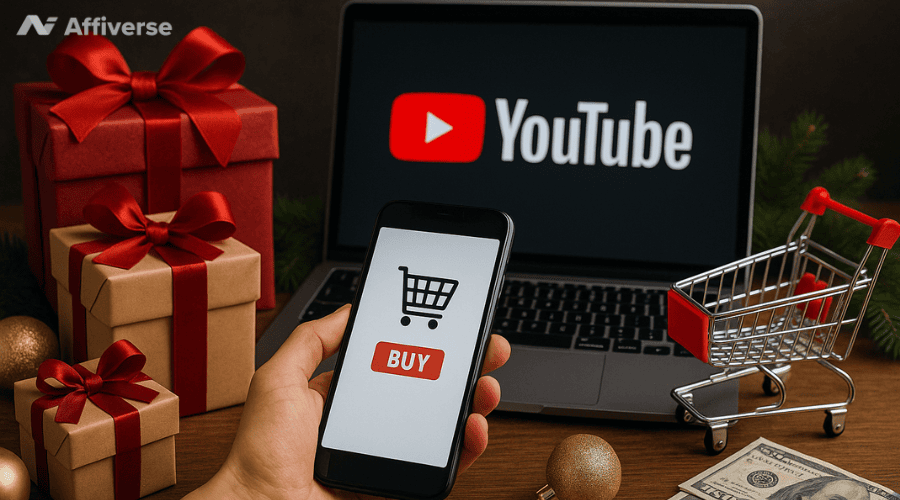
YouTube’s Shopping Affiliate program has evolved from an experimental monetisation feature into a legitimate commerce channel capable of driving substantial holiday revenue. The platform quietly processes millions in transaction volume during peak shopping periods, yet most brands and creators still approach it as an afterthought rather than a strategic asset.
The December shopping window creates a unique pressure test: creators must balance authentic content creation with aggressive product promotion, while brands need to ensure their offerings appear in creator dashboards at exactly the right moments. Short-form product tags delivered the highest conversion rates in recent tests, while brands offering transparent commission structures and rapid stock updates secured consistent placement in creator videos.
Success during this compressed timeline isn’t about ad spend—it’s about content timing, offer design, and understanding the platform’s attribution mechanics before competitors figure them out.
Who Can Actually Scale YouTube Shopping Affiliate Campaigns
YouTube’s Shopping Affiliate program operates under specific eligibility criteria that immediately exclude significant portions of both creator and brand populations. Understanding these constraints prevents wasted planning effort on partnerships that can’t materialise.
Creators need YouTube Partner Program membership, minimum 10,000 subscribers, and residency in one of nine eligible countries: United States, South Korea, Indonesia, Thailand, Vietnam, Malaysia, Philippines, India, and Singapore. The platform also blocks “Made for Kids” channels and official music channels from participation.
Geographic restrictions create immediate strategic implications. Even creators with substantial audiences can’t access the program if they’re based in Europe, Latin America, or Africa. Brands operating globally must concentrate their affiliate investment in markets where creator participation is actually possible.
The 10,000 subscriber threshold—recently reduced from 15,000—widens the creator pool but doesn’t guarantee commerce-ready audiences. Driving meaningful holiday sales typically requires audiences in the hundreds of thousands, particularly audiences that actually make purchase decisions rather than passive entertainment viewers.
Building effective creator partnerships requires understanding that audience size matters less than audience intent. A tech review channel with 50,000 engaged subscribers outperforms an entertainment channel with 500,000 passive viewers when measuring actual conversion.
How YouTube Affiliate Attribution and Earnings Actually Work
Commission structures on YouTube Shopping vary significantly by merchant and product category. Median commission rates sit around 15%, with bottom-quartile offers dropping to 10% or below. Creators see these rates directly in their YouTube Studio dashboard before deciding which products merit tagging.
Attribution windows—the timeframe during which a click remains eligible for commission—are set by merchants rather than YouTube. This creates strategic implications: longer windows favour content creators producing evergreen reviews, while shorter windows push creators toward time-sensitive promotional content.
Earnings trigger when viewers click tagged products and complete purchases within the attribution window. YouTube processes payments through AdSense after a 60-to-120-day holding period that accounts for potential returns and reversals. If products get returned, commissions reverse.
This payment timing creates cash flow challenges for creators dependent on holiday earnings. December sales don’t translate to actual deposits until February or March, requiring creators to plan financial runway accordingly.
YouTube also maintains a performance bonus structure for eligible creators who hit monthly sales thresholds. The exact mechanics remain opaque, but creators report additional payments beyond standard commissions when driving substantial transaction volume.
Understanding affiliate tracking attribution becomes critical as platforms layer multiple revenue models. Creators earning both ad revenue and affiliate commissions need systems tracking which content formats drive which revenue types.
Strategic Product Tagging Across Holiday Shopping Phases
Consumer shopping behaviour follows distinct patterns from early November through late December. Creators treating this as a uniform promotional period miss the majority of available revenue.
Pre-Black Friday Discovery (November 15-21): Three-quarters of shoppers now begin research before mid-November, according to Impact.com’s annual consumer research. This early window rewards “first look” content and gift guide videos that seed products before promotional intensity peaks.
Creators should tag evergreen products and early-announced bundles during this phase, focusing on items with confirmed discount schedules. Beauty kits, smart home accessories, and gaming peripherals consistently perform well in this discovery window.
Brands can support early tagging by pre-loading affiliate offers into creator dashboards at least one week before Black Friday. When creators film preview content in early November, seeing confirmed commission rates prevents placeholder content that requires later revision.
Black Friday Weekend (November 22-24): YouTube’s internal research found videos combining product tags, timestamp navigation, and description links drove 43% more clicks than description links alone. This makes visible on-screen tagging essential during the urgency window.
Daily Shorts spotlighting individual hero products with visible price overlays convert better than generic “deals of the day” compilations. Long-form videos divided into category chapters—with corresponding tags for each section—allow viewers to jump directly to relevant products rather than watching entire videos hoping to find specific items.
The influencer marketing shift toward micro-creators affects YouTube strategy differently than Instagram or TikTok. Smaller YouTube channels with highly engaged audiences often outperform larger channels with passive subscriber bases, particularly for technical products requiring detailed explanation rather than quick impressions.
Cyber Monday (November 25): This represents the final urgency moment for fence-sitters comparing bundles, colors, or configurations. Creators should focus on top-performing products from the Black Friday weekend, testing variants and emphasising “ends tonight” messaging.
Community Posts with product tags re-engage recent viewers who watched but didn’t convert, providing a non-intrusive reminder without requiring new video production.
December Sustained Gifting (December 1-20): Holiday shopping behaviour extends well beyond Cyber Monday, with gift-related searches remaining elevated throughout December. Content should shift from discount framing to recipient-focused storytelling.
Products tagged during this period should emphasise use cases and recipient types rather than price reductions. Complementary accessories—chargers with electronics, brush sets with beauty tools, cases with portable tech—lift average order values when tagged alongside primary products.
Post-Shipping Digital Products (December 18-25): Once carrier cutoff dates pass, physical product tagging becomes ineffective. Smart creators pivot to e-gift cards, digital subscriptions, downloadable games, and instant-delivery items.
Gaming platforms consistently see elevated digital store activity during late December. Nintendo, PlayStation, and Xbox all maintain extensive holiday discount catalogs for digital titles that can be delivered instantly, maintaining affiliate revenue streams after physical shipping windows close.
Offer Design That Actually Influences Creator Tagging Decisions
YouTube’s affiliate program transparency—showing commission rates directly in creator dashboards—means offer design becomes a competitive signal. When creators compare similar products, commission structures often determine which gets tagged.
Retailers operating at standard commission rates (1-10% for most categories) face disadvantages against competitors offering temporary uplifts. Even modest increases—an extra 2-3 percentage points during Black Friday through mid-December—concentrate creator attention on specific SKUs.
YouTube’s merchant documentation confirms brands can apply tiered rates to specific products or approved creator lists. Marking these temporary uplifts with clear expiration dates in offer metadata ensures creators see the time-bounded incentive immediately.
Bundle merchandising proves particularly effective for holiday promotion. Merchant Center allows sellers to combine related items into single shoppable listings, simplifying creator tagging while raising average order values. Beauty kits, home accessory sets, lifestyle gadget bundles, and apparel combinations all perform well when structured as unified offerings rather than separate SKUs.
Commission-based creator partnerships align incentives more effectively than flat-fee arrangements during holiday periods. Creators promote products they believe will actually convert, brands only pay for results, and successful partnerships naturally scale based on performance rather than upfront negotiation.
Promotion codes visible in YouTube’s system strengthen attribution even when codes aren’t technically required for tracking. Pairing creator-specific codes with affiliate tags reinforces authenticity and provides backup attribution if primary tracking encounters issues.
Turning YouTube Shopping Into a Sustained Holiday Revenue Channel
Black Friday through Christmas represents a compressed opportunity window where preparation months earlier determines outcomes. Brands treating YouTube Shopping as a tactical addition to existing holiday strategies miss the platform’s actual potential.
Creators who integrate affiliate tagging into every video format—Shorts, long-form reviews, Community Posts—build sustainable revenue rather than depending on isolated promotional pushes. For brands, that means staying visible in creator dashboards throughout the entire November-December period rather than appearing sporadically around major shopping dates.
The holiday winners combine visible, timestamped product tags with compelling offers and maintain clean inventory feeds through every shipping cutoff. Whether the product is premium skincare or downloadable entertainment, visibility plus velocity defines success in YouTube’s native commerce environment.
Social commerce continues evolving across platforms, but YouTube’s approach—combining authentic creator content with direct commerce functionality—creates advantages that other platforms struggle to replicate. The platform’s extended viewing time and detailed product explanation formats convert differently than Instagram’s visual browsing or TikTok’s entertainment-first approach.
For affiliate marketers, YouTube Shopping represents an opportunity to build creator relationships that extend beyond single promotional cycles. The brands and creators who master this channel during holiday periods establish foundations for year-round commerce partnerships that generate consistent revenue regardless of seasonal fluctuations.
The strategic imperative for 2025 is clear: treat YouTube Shopping as a primary commerce channel deserving dedicated strategy, not as an experimental addition to existing holiday tactics. The infrastructure exists, the audience behaviour patterns are established, and the competitive advantage belongs to those who execute systematically rather than opportunistically.
Everflow
Connect
Tradedoubler
Connect
1win Partners
Connect
PIN-UP Partners
Connect
Shopnomix, a Nomix Group Company
Connect
V.Partners
Connect
Huffson Group
Connect
Kawaii Partners
Connect
Share your expertise and expand your reach and become a content contributor with us today!
Contact Us To Find Out More