TikTok Shop Adds Box-Free Returns Through UPS-Owned Happy Returns
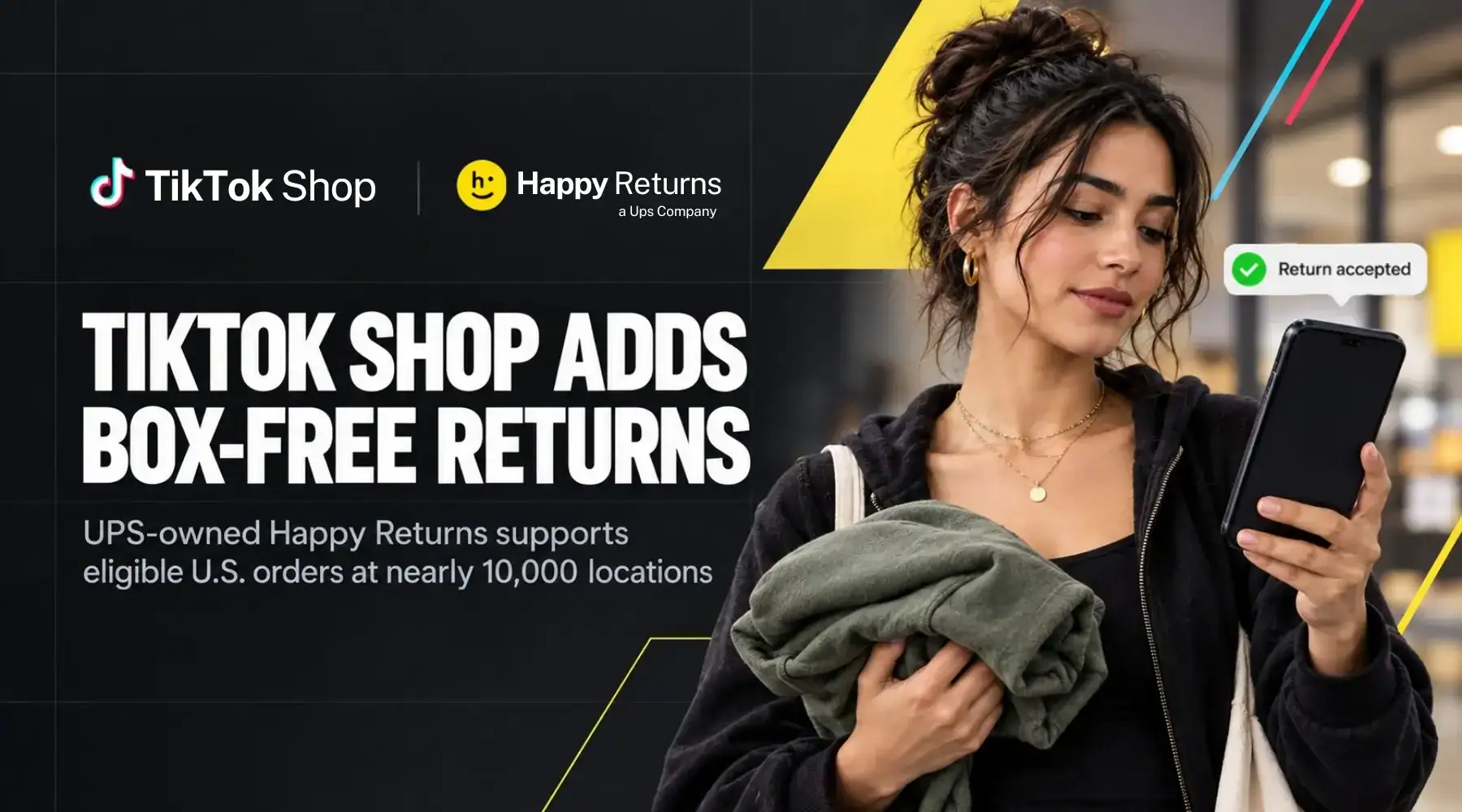
TikTok Shop has integrated UPS-owned Happy Returns into its US marketplace, allowing shoppers to return eligible orders without finding a box or printing a shipping label.
Customers can begin the process inside TikTok Shop before taking the item to one of nearly 10,000 Return Bar locations. For sellers and affiliate creators, the update makes returns, verification, and commission settlement a more visible part of the platform’s commerce system.
Key Takeaways: TikTok Shop Extends Commerce Beyond Checkout
- Eligible US shoppers can return TikTok Shop purchases without a box or printed label.
- Returns begin directly inside TikTok Shop.
- Happy Returns operates nearly 10,000 Return Bar locations across the US.
- The service supports eligible sellers using TikTok fulfillment or handling orders themselves.
- Returned products are scanned and verified before being accepted.
- Happy Returns uses behavioral signals and AI-supported checks to identify potentially suspicious returns.
- Full and partial refunds can still remove or reduce affiliate creator commissions.
TikTok Shop Brings Returns Into Its Shopping Experience
The Happy Returns integration extends TikTok Shop’s in-app buying journey beyond product discovery and checkout.
Shoppers can now initiate eligible returns without leaving TikTok Shop. The physical item is then handled through Happy Returns, which UPS acquired in 2023.
The service is available to participating retailers, whether they use TikTok Shop’s fulfillment service or manage storage and delivery independently. Happy Returns says the option comes as standard for eligible Fulfilled by TikTok orders, while seller-fulfilled merchants can opt in and complete the required setup.
TikTok Shop reported that its US transaction volume grew by nearly 80% during 2025, while its number of active sellers increased by almost 50%. These are company-supplied figures, but they explain why post-purchase infrastructure is becoming a larger operational requirement.
Patrick Nommensen, President of Strategic Initiatives at TikTok Shop, said:
TikTok Shop is where people discover products and brands, and the shopping experience extends well beyond checkout.
How Box-Free TikTok Shop Returns Work
The new return process follows four main stages:
- Start the return: The shopper opens the relevant order inside TikTok Shop and begins the return process.
- Select Happy Returns: Eligible customers can choose Happy Returns as the return method.
- Visit a Return Bar: The item can be taken to a participating location without a shipping box or printed label.
- Scan and verify: Staff scan and check the product before accepting it. Approved items are then consolidated with other returns and transported through the UPS network.
Happy Returns says accepted returns can receive an instant refund following verification. However, availability depends on the order, seller, and return eligibility shown inside TikTok Shop.
Sellers Gain In-Person Verification and Consolidated Shipping
Traditional mailed returns may require sellers to process individual parcels after they arrive at a warehouse. Happy Returns instead checks products at the drop-off point and combines multiple items into larger shipments.
The company says this can reduce handling costs, return fraud, and the time needed to place resaleable products back into inventory. It has not published TikTok Shop-specific results showing the effect on costs, refund rates, or inventory turnaround.
The system also uses behavioral risk signals and Happy Returns’ Return Vision technology to flag potentially suspicious activity. Items can be selected for further auditing rather than relying entirely on automated approval.
For sellers, the useful measures will include the percentage of shoppers choosing Return Bars, time from drop-off to inventory recovery, refund disputes, and product-level return rates. Gross order volume alone will not show whether the additional sales remain valid after returns are processed.
Returns Still Affect TikTok Shop Affiliate Commission
The update does not change the basic way TikTok Shop Affiliate commission is settled.
As explained in Affiverse’s TikTok creator monetization guide, a creator may see estimated earnings after an attributed order. The commission only becomes payable after delivery and the relevant return, refund, and dispute periods.
A full refund generally removes the creator’s commission, while a partial refund can reduce it. Brands and creators should therefore compare gross orders with completed sales, returns, and settled commission.
Return rates also need context. TikTok Shop is already connecting creator reach with product choice and content standards through its Promotion Performance Score, currently used in six Southeast Asian markets. A high return rate may point to inaccurate demonstrations or poor product fit, but it can also result from sizing, defects, delivery damage or seller fulfillment. Affiliate managers should therefore assess returns alongside content quality and product-level data rather than assuming the creator caused every refund.
Box-free returns may give shoppers greater confidence to purchase inside TikTok Shop, but the companies have not published evidence showing that the service increases conversion or repeat purchases. Easier returns could also change how often customers send products back, making settled revenue more useful than initial sales volume.
The integration gives TikTok Shop more control over the journey from creator content to purchase and return. It does not solve the wider cross-channel attribution gap when TikTok discovery leads to a purchase elsewhere.
For affiliate teams, the commercial result still depends on what remains after refunds: completed orders, retained revenue and commission that reaches settlement.
Everflow
Connect
Tradedoubler
Connect
1win Partners
Connect
PIN-UP Partners
Connect
Shopnomix, a Nomix Group Company
Connect
V.Partners
Connect
Huffson Group
Connect
Kawaii Partners
Connect
Share your expertise and expand your reach and become a content contributor with us today!
Contact Us To Find Out More