TikTok Introduces AI Content Checks and Creator Likeness Detection
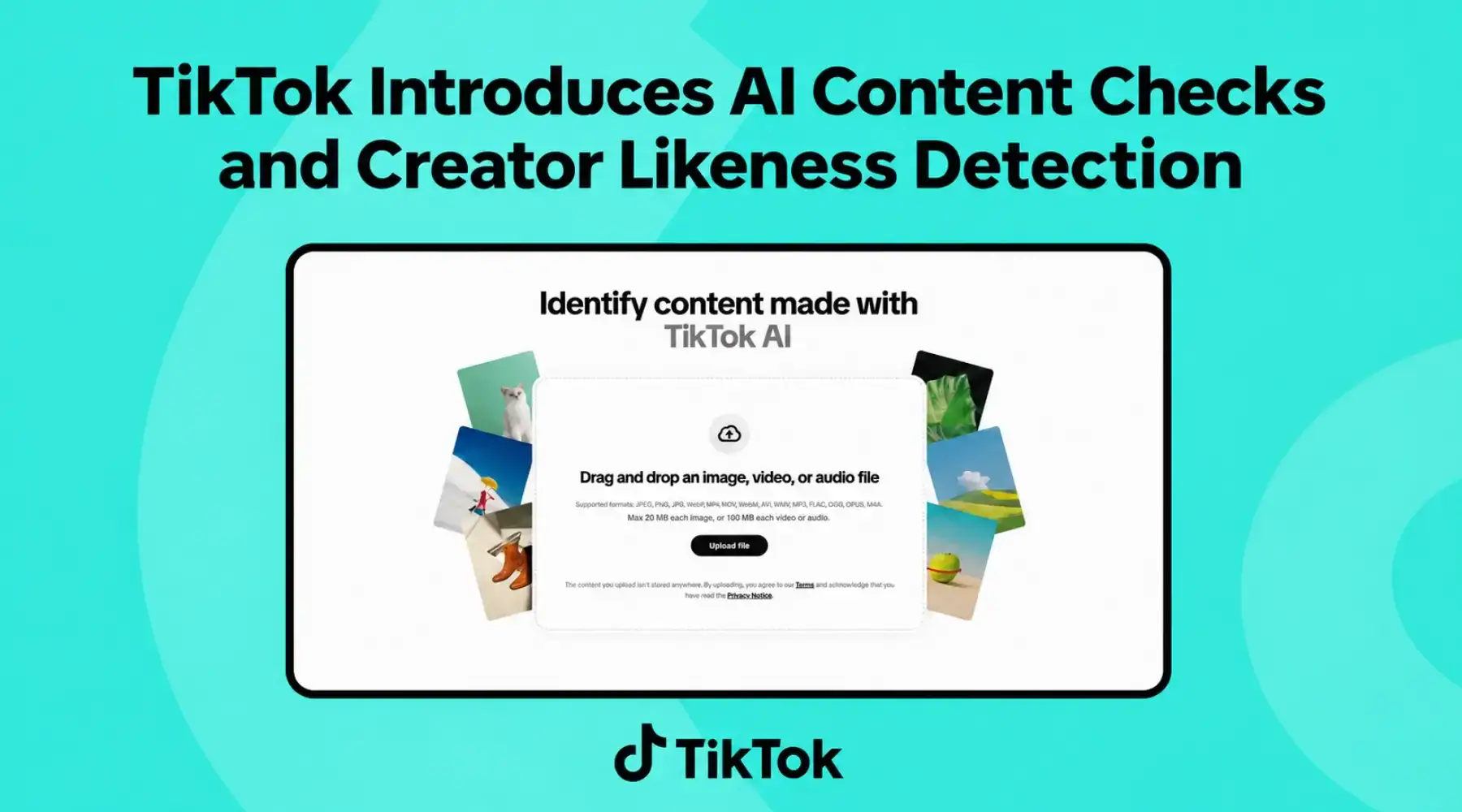
TikTok announced two new AI transparency and creator protection tools on November 19, 2026, introducing a public content checker and an opt-in Likeness Detection system. The checker is available now, while Likeness Detection is beginning a global rollout to eligible creators and public figures. The changes address growing concerns about synthetic content, impersonation, and the authenticity of creator-led promotions.
For affiliate marketers and brands working with influencers, the updates introduce additional ways to assess AI-generated content and identify potential misuse of creator identities.
Key Takeaways From TikTok’s AI Transparency Update
- TikTok has launched a public checker for content made or edited with supported AI creation tools. Its interface accepts images, videos, and audio.
- The checker uses C2PA Content Credentials and TikTok’s proprietary VeraDura invisible watermark technology.
- Likeness Detection is being rolled out globally, allowing eligible creators to identify and report AI-generated content that may use their appearance without consent.
- People without access to Likeness Detection can still report nonconsensual AI-generated content through TikTok’s existing privacy reporting form.
How TikTok’s New AI Content Checker Works
According to TikTok’s November 19 announcement, the new transparency checker allows anyone to upload an image or video to determine whether it was created or modified using TikTok’s AI features. Users do not need a TikTok account to access the tool, which is available through the platform’s Transparency Centre.
The checker’s interface names CapCut, Dreamina, Pippit, and Hypic. It also accepts audio files alongside images and videos, extending its stated upload options beyond the formats described in the announcement.
The checker examines C2PA Content Credentials, which contain information about how digital media was created or edited, alongside TikTok’s VeraDura invisible watermark. TikTok began adopting Content Credentials in 2024 to support AI-generated content identification across platforms. However, these credentials can disappear when files are downloaded, edited, or shared through services that do not preserve their metadata.
VeraDura provides an additional verification signal that TikTok describes as more durable and harder to remove. TikTok says its existing transparency technologies have helped label more than five billion AI-generated videos. The checker focuses on content made or edited with supported AI tools and should not be treated as a universal detector of AI-generated media.
How Likeness Detection Protects Creators
TikTok is also introducing Likeness Detection, an optional feature designed to help eligible creators identify AI-generated content and accounts that may reproduce their appearance without permission. The process involves three steps.
First, participating creators verify their identity through a trusted third-party provider. TikTok says it does not retain their identity documents. Once enrolled, creators receive notifications when the system identifies content or accounts that may be using their likeness. They can then review the material and submit reports directly to TikTok’s safety teams.
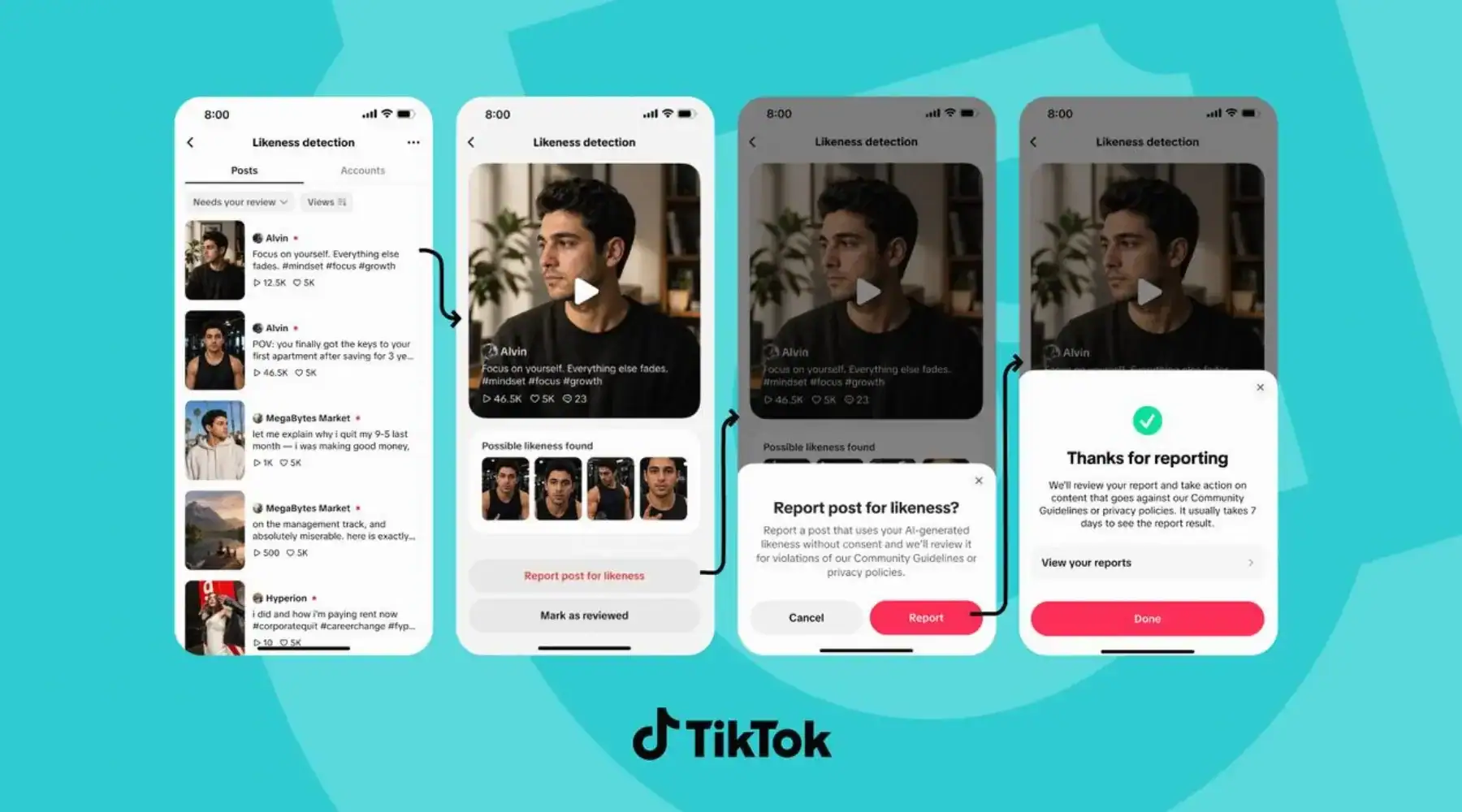
Source: TikTok Newsroom Announcement.
Content that violates TikTok’s Community Guidelines can be removed following review. Global rollout to eligible creators and public figures began on November 19. Likeness Detection helps participants find and report potential misuse, but it does not guarantee that every unauthorized AI impersonation will be identified or automatically removed.
People do not need access to Likeness Detection to report suspected misuse. TikTok says anyone, including people without a TikTok account, can report nonconsensual AI-generated content through its privacy reporting form.
Why Creator Identity Protection Matters for Affiliate Marketing
AI-generated personalities, synthetic product demonstrations, and digital replicas are becoming part of creator commerce. As we previously covered in our analysis of AI-generated TikTok Shop videos, brands increasingly face decisions about which forms of AI-assisted promotional content they will permit.
The challenge extends beyond identifying whether an image was created using AI. A synthetic video could imitate a recognizable creator, suggest an endorsement that never occurred, or present a product demonstration that the person shown never performed.
In our earlier reporting on Rare Beauty’s response to AI-generated TikTok Shop promotions, we examined how unauthorized synthetic content can create uncertainty around brand approval and affiliate relationships. TikTok’s Likeness Detection could give eligible creators another route to identify and report these representations.
What the Update Means for Creator Trust
The new tools also highlight the distinction between AI transparency and commercial disclosure. Identifying an AI-generated video does not establish whether its product claims are accurate, whether the creator tested the product, or whether the brand approved the promotion.
TikTok Shop’s US guidance already requires disclosure when content is fully generated or significantly edited using AI. It also prohibits false endorsements, unauthorized use of another person’s likeness or voice, and misleading product representations. These existing requirements give affiliate teams a basis for reviewing synthetic promotions alongside their own creator agreements.
Our coverage of Rakuten Advertising’s research into AI disclosure and creator trust explored how consumers respond differently to AI-assisted editing, translation, and entirely synthetic creator reviews. For affiliate programs, those distinctions remain important when assessing creator content.
Brands should establish clear rules covering synthetic presenters, digital replicas, product demonstrations, and consent requirements. AI-content labeling should remain separate from disclosures of paid partnerships or commission-based promotions.
TikTok also highlighted its existing Manage Topics controls, which let viewers adjust how much AI-generated content appears in their For You feed.
What Affiliate Teams Should Do Next
Affiliate managers can use the new checker as an additional verification tool when reviewing content that may have been produced using TikTok’s AI features. Creator agreements should specify acceptable AI uses, requirements for authorizing digital likenesses, and procedures for reporting suspicious promotional content.
Affiliate teams should use the checker as one part of content review. A result that detects no AI signals does not prove that a file is authentic, and teams still need to assess consent and product claims.
TikTok has not announced changes to affiliate payouts, tracked conversions, or campaign performance reporting as part of this update.
Everflow
Connect
Tradedoubler
Connect
1win Partners
Connect
Shopnomix, a Nomix Group Company
Connect
Huffson Group
Connect
Kawaii Partners
Connect
Trackdesk
Connect
Share your expertise and expand your reach and become a content contributor with us today!
Contact Us To Find Out More