CMA Opens Pricing Investigations Into Travel and Leisure Businesses
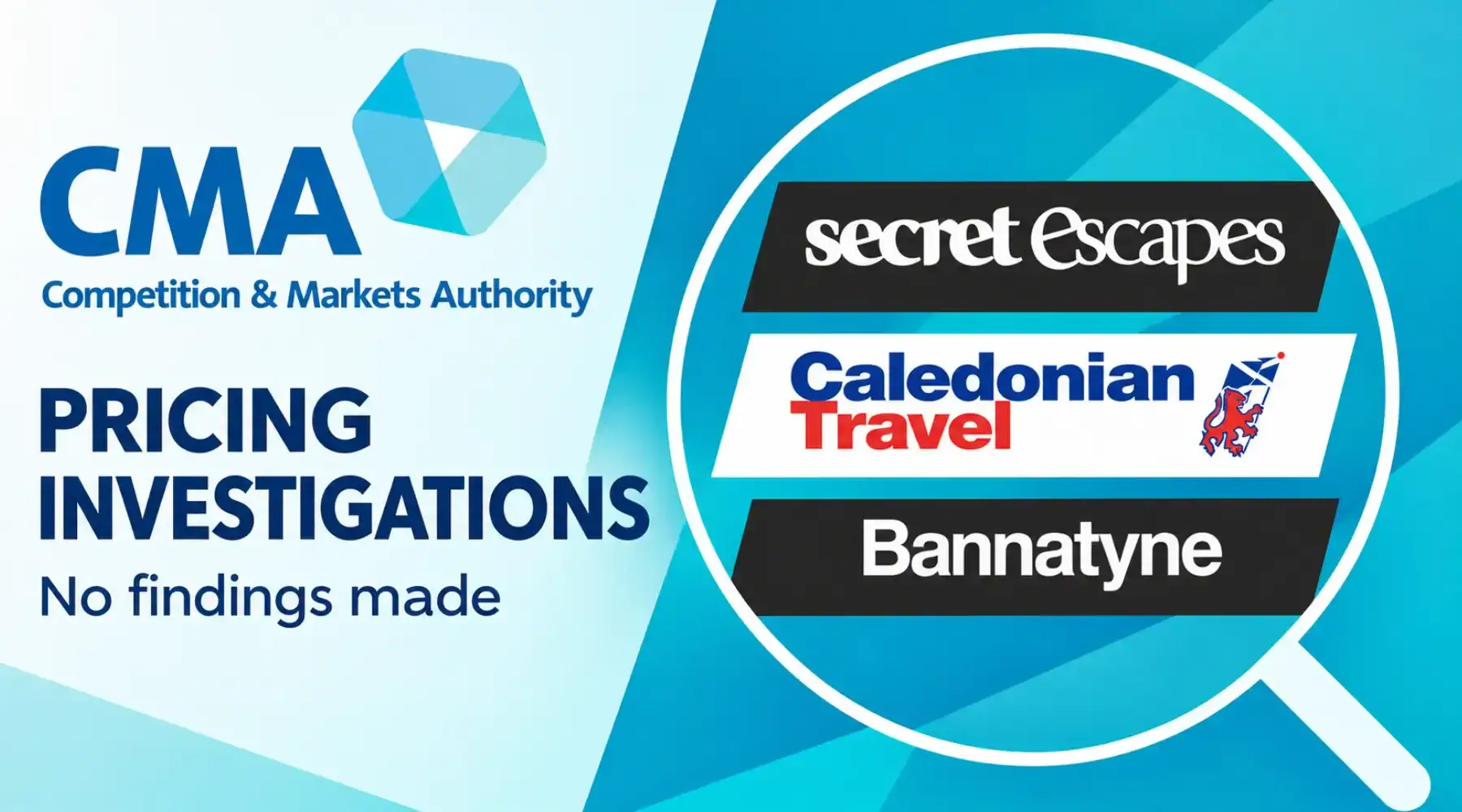
The UK’s CMA announced three pricing investigations on November 18, 2026, into Secret Escapes, Caledonian Travel, and Bannatyne Health Club over concerns about how they present mandatory charges. No findings of wrongdoing have been made at this stage. The cases opened on November 17, and the CMA has reached no conclusions about whether any of the businesses have broken consumer protection law.
Key Takeaways on the CMA Pricing Investigations
- Three businesses face investigations covering holiday deals, coach travel, and gym memberships.
- Upfront total prices are the focus, including unavoidable fees and the presentation of price changes.
- The cases remain open, with the CMA gathering evidence on suspected consumer law infringements.
Which Businesses Are Under Investigation
The CMA has opened separate investigations into two travel businesses and a health club operator. Each case examines whether customers see the total price, including mandatory charges, upfront.
Secret Escapes
The CMA is investigating whether Secret Escapes includes mandatory ATOL protection fees, local taxes, and resort fees in holiday prices from the start. It is also examining whether prices for components such as flights and car hire increase during booking.
Its case page raises a further question: whether customers receive a total price at any point in the purchase process.
Caledonian Travel
Caledonian Leisure Ltd, trading as Caledonian Travel, faces an investigation into its indicative per-person pricing and whether mandatory fees are included in the prices customers see.
The CMA’s concerns include single-person supplements and city taxes. It is examining whether unavoidable charges appear in both indicative and total prices during the purchase process.
Bannatyne Health Club
The CMA is investigating whether Bannatyne Health Club shows joining fees and charges for access to facilities upfront, or adds them later in the membership purchase process.
In a statement reported by PA Media, a Bannatyne Group spokesperson said the company was assisting the CMA’s review and providing the information required.
Why the CMA Is Examining Upfront Prices
Drip pricing means presenting a headline price and adding unavoidable charges later. The CMA says this can leave customers facing unexpected costs and make it harder to compare competing offers.
The cases concern existing UK rules on hidden fees under the Digital Markets, Competition and Consumers Act 2024. The relevant consumer protection regime took effect in April 2025. The November announcement is enforcement activity under that framework.
According to the CMA’s price transparency summary, mandatory charges normally belong in the total price. Listing them separately will not normally be sufficient.
Where the nature of a product prevents reasonable advance calculation, businesses must provide information enabling customers to calculate the total, with the same prominence as the price they can calculate. Optional extras can be presented separately.
For travel offers, the guidance says businesses should normally be able to calculate mandatory local taxes and resort fees. Where part of the total is payable locally, businesses should show the overall total alongside clear amounts for what customers pay now and at the destination.
Emma Cochrane, the CMA’s executive director for consumer protection, said the message to businesses was that:
The price customers see upfront should be the price they pay.
What Happens Next in the Investigations
The CMA will engage with the businesses and gather evidence. Opening a case does not establish that consumer law has been breached.
The Secret Escapes case page schedules initial information and evidence gathering through April 2027, with its next update expected that month.
If the CMA provisionally decides a business has broken the law, it will issue a provisional infringement notice setting out its concerns and giving the company an opportunity to respond. Depending on the evidence, cases may result in enforcement measures, undertakings, or closure.
Everflow
Connect
Tradedoubler
Connect
1win Partners
Connect
Shopnomix, a Nomix Group Company
Connect
Huffson Group
Connect
Kawaii Partners
Connect
Trackdesk
Connect
Share your expertise and expand your reach and become a content contributor with us today!
Contact Us To Find Out More