Spotify Expands Podcast Verification as AI Voice Cloning Raises Trust Concerns
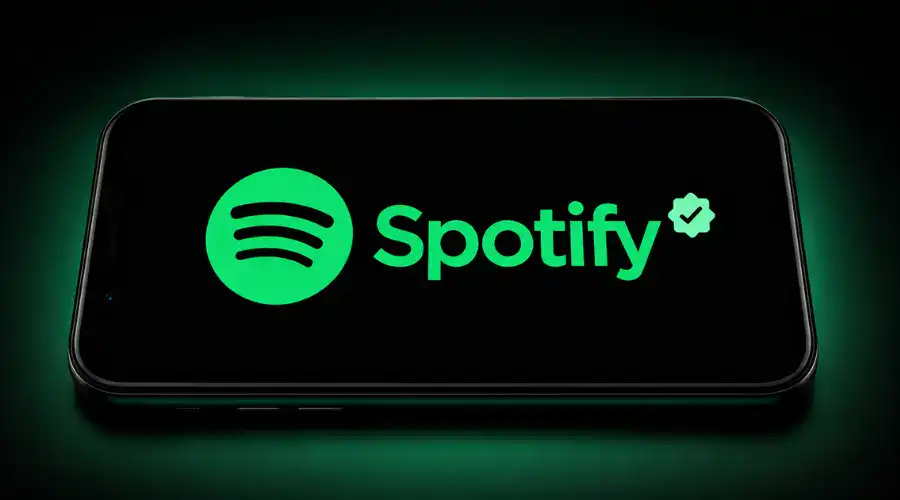
Spotify has expanded Verified by Spotify to podcasts, giving listeners a clearer way to identify official shows from creators, publishers, and brands. The update, announced on May 19, 2026, brings a light green checkmark and “Verified by Spotify” label to podcast show pages and search results. Spotify says the badge signals that a show has passed its standards for authenticity and trust. The first badges will appear on select shows, with a wider rollout planned over the coming months.
Podcasting now faces a trust issue that search results, artwork, and host names can’t solve on their own. AI voice cloning can copy a creator’s voice, spin up a fake show, and confuse listeners before they ever press play.
Key Takeaways: Spotify’s Podcast Badge Raises the Bar for Audio Trust
- Spotify expanded Verified by Spotify to podcasts on May 19, 2026.
- The badge uses a light green checkmark on show pages and search results.
- Verification depends on trust signals such as sustained engagement, audience authenticity, and policy compliance.
- Spotify’s trust push targets unauthorized impersonation, including AI voice cloning.
- The platform hasn’t banned AI podcasts. It has drawn a harder line around unauthorized impersonation.
- For brands and affiliates, podcast verification adds another signal when assessing creators, media partnerships, and audience quality.
How the Verified by Spotify Badge Works for Podcasts
The podcast badge identifies a show as the official presence of a creator, publisher, or brand. Spotify says verified shows have gone through a review process built around authenticity and trust, with the badge appearing in both search and show pages. The rollout won’t hit every eligible show at once. Spotify has started with select podcasts and plans to expand access over several months. That slower pace makes sense. Podcasting runs from solo creators recording at home to large publishers running dozens of feeds, and a rushed verification system could create confusion for listeners and creators.
Spotify says eligibility relies on trust signals rather than fame alone. Those signals include sustained listener activity over time, real audience engagement, compliance with platform policies, and protection against fraudulent or bot-driven listenership. LinkedIn’s coverage of the rollout also noted that Spotify looks at authenticated creator identities, sustained engagement, and good standing with content policies. That matters for media buying. A badge won’t prove campaign performance. It won’t replace checking listener fit, past ad results, GEO relevance, or conversion quality. But it gives affiliates, agencies, and creator-led brands one more signal when deciding whether a podcast looks legitimate. A cleaner signal. A faster first check.
The Threat of Synthetic Voices
Audio used to carry a basic assumption: if you heard a familiar host, you trusted the voice. AI voice cloning has weakened that assumption. In 2025 and 2026, synthetic audio tools became easier to use, cheaper to access, and harder for casual listeners to detect. A cloned voice can promote a fake feed, read misleading ads, imitate a public creator, or hijack search demand around a known show. Spotify’s podcast verification push responds directly to that risk. By checking whether a show represents the official presence of a creator, publisher, or brand, the badge gives listeners a clearer signal when impersonation and AI voice cloning make audio harder to trust. That line deserves attention. Spotify hasn’t banned AI-generated podcasts as a category. Earlier in May, Spotify introduced “Save to Spotify,” a tool that lets AI agents save generated personal audio briefings or summaries into a user’s Spotify library.
So the platform has drawn a narrower line. AI use can exist on Spotify, but creator impersonation sits in a different category. That distinction gives creators and advertisers a clearer rulebook. A publisher can test AI-assisted production. A creator can use AI for workflow support. A listener can save a private AI-made briefing. But copying someone’s voice or identity without permission crosses into a different category. For podcast advertising, this carries real commercial weight. Host-read ads work because listeners trust the host. Fake voices damage that trust. Inflated audiences waste budget. Confusing feeds can redirect listeners away from the real creator. Podcast discovery already has enough noise and synthetic audio adds another layer.
Spotify Builds a Wider Verified Ecosystem
Spotify’s podcast verification follows its April 30, 2026 rollout of Verified by Spotify for artists. That earlier update introduced the same light green checkmark for artist profiles and search results. Spotify said the artist badge relies on consistent listener activity, good standing with platform policies, and signals of a real artist presence, including concert dates, merch, and linked social accounts. At launch, Spotify also said profiles that appear to primarily represent AI-generated or AI-persona artists aren’t eligible for artist verification.
The podcast rollout applies the same logic to spoken-word content. Instead of tour dates, merch, and music releases, Spotify has to weigh show identity, creator presence, listener behavior, and audience authenticity. That makes Spotify’s verification problem different from Meta, X, or YouTube. Social platforms usually verify accounts, public figures, or paid subscribers across text, images, video, and mixed feeds. Spotify’s problem sits closer to sound itself. In podcasting, identity lives in the voice.That makes the badge more useful for the audio market than a normal profile checkmark. A podcast buyer doesn’t just need to know whether a show has a recognizable logo. They need to know whether the feed belongs to the right creator, whether the audience looks real, and whether the show follows platform rules. Spotify’s wider anti-spam work gives this more context. In 2025, Spotify said it had removed 75 million spam tracks over the prior year as AI made fake music easier to produce at scale. The company also pointed to stricter work around vocal deepfakes and spam detection. Podcasts now face a similar pressure. Different format, but the same trust problem.
Affiverse Take: Verification Is Becoming a Media Buying Signal
For agencies, publishers, and creator-led brands using the best podcasting apps and platforms for affiliates, Spotify’s podcast badge should be treated as more than a platform label. It gives media buyers another quick signal when judging whether a show has a real audience, a clear identity, and a lower impersonation risk. That doesn’t mean a verified podcast automatically performs better. Buyers still need to check listener fit, ad format, past campaign data, market relevance, and conversion quality. The badge helps with the identity layer. It doesn’t do the full audit.
The sharpest opportunity may sit with independent creators who can prove real engagement. As AI content fills more feeds, human trust becomes easier to sell and harder to fake. This also changes how brands should brief podcast campaigns. Creator identity now belongs in the same conversation as tracking links, promo codes, ad reads, and post-campaign reporting. A verified badge won’t make a poor-fit partnership work, but it can help teams avoid the obvious traps: wrong feed, fake host, and inflated numbers. Those mistakes cost money.
What Podcast Verification Means for Independent Creators
Independent podcasters may have mixed feelings about another platform-controlled badge. That reaction makes sense. Verification systems can create two groups: those with the badge and those still waiting. A show without the badge may look less official, even when the creator has done nothing wrong. Spotify has already said the rollout will continue over time, so absence of verification shouldn’t automatically count against a show. Still, the badge gives serious creators a clearer way to defend their identity. Hosts who publish consistently, build real listening habits, and follow platform rules now have a stronger signal to show listeners and commercial partners.
For affiliates and brands, the message looks simple. Podcast trust now sits closer to performance. A campaign starts with the audience, but it also starts with identity. Spotify’s light green checkmark won’t solve synthetic audio on its own. No badge can. But it gives listeners, creators, and buyers one thing to look for before they trust the voice in their ears.
Everflow
Connect
Tradedoubler
Connect
1win Partners
Connect
PIN-UP Partners
Connect
Shopnomix, a Nomix Group Company
Connect
V.Partners
Connect
Huffson Group
Connect
Kawaii Partners
Connect
Share your expertise and expand your reach and become a content contributor with us today!
Contact Us To Find Out More