Visa Expands Passkey and Click to Pay Push Across Asia
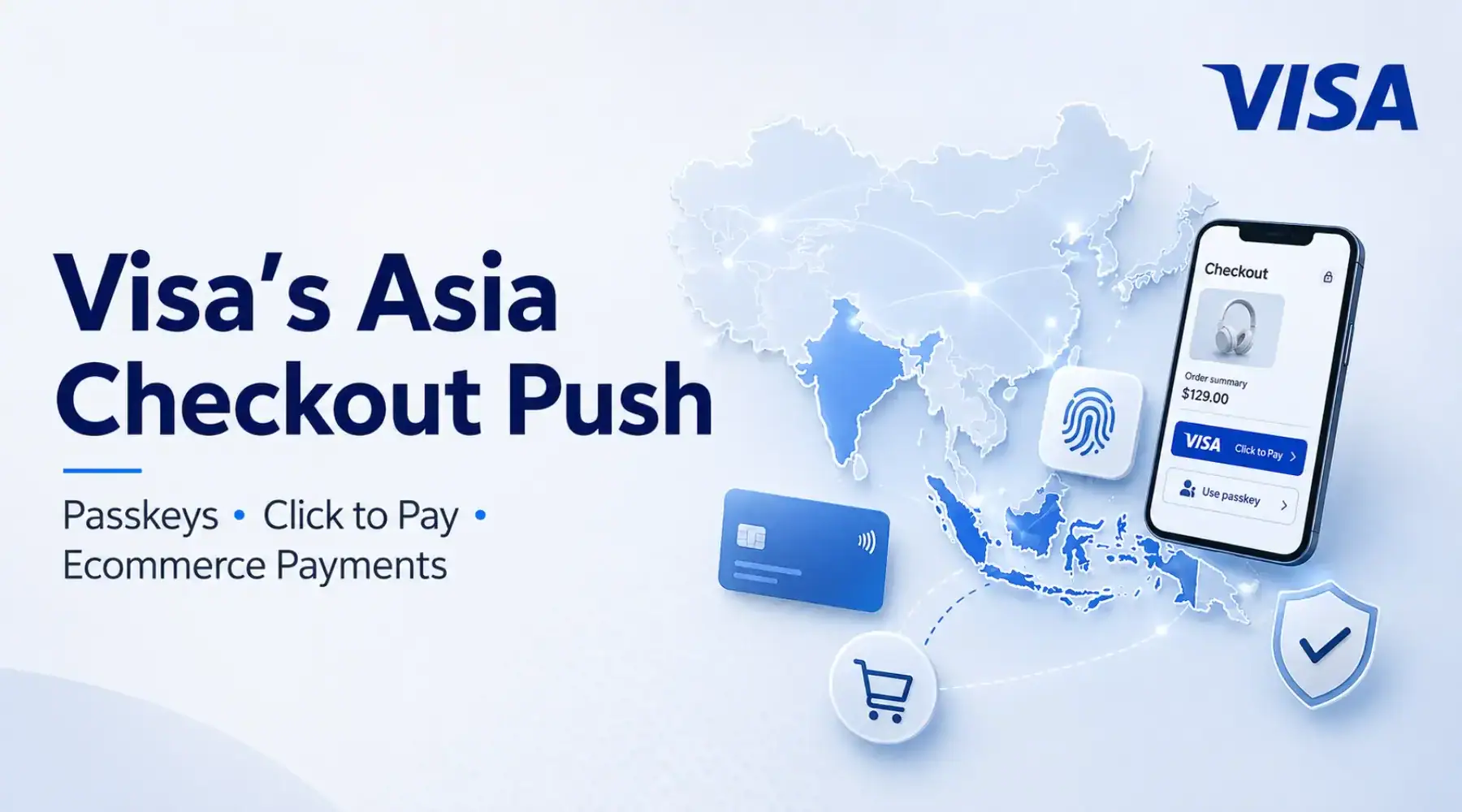
Visa is increasing its focus on lower-friction digital payments across Asia, as ecommerce checkout becomes a more important part of the performance marketing funnel.
The latest signal comes through Visa’s work with Thales in Asia Pacific. According to Thales’ official announcement, the company has joined Visa’s Digitalization Ready Program in the region, with the collaboration initially focused on helping issuers deploy Click to Pay and Payment Passkeys through Thales’ D1 platform.
The partnership is designed to make it easier for banks and financial institutions to roll out Visa’s digital payment services, while supporting faster and more secure online payment experiences for consumers.
What Visa’s Asia Payments Push Means for Ecommerce
- Thales has joined Visa’s Digitalization Ready Program in Asia Pacific.
- The collaboration focuses on Click to Pay and Payment Passkeys.
- Visa is positioning these tools around faster, safer digital checkout.
- The update matters for ecommerce because checkout friction can still affect whether users complete a purchase.
- For affiliate marketers, smoother payment flows may become another factor in how merchant conversion quality is judged.
Checkout Is Becoming Part of the Conversion Funnel
For shoppers, checkout improvements only matter if they make the final step feel easier. Fewer manual card fields, less reliance on passwords and faster authentication can reduce the small points of hesitation that often appear between “add to cart” and “place order.”
For ecommerce businesses, that makes payment experience a conversion issue, not just a technical one. A customer may arrive through search, a comparison page, a coupon site, creator content or an AI-led shopping journey, but the sale can still be lost if checkout feels slow, unfamiliar or difficult to complete.
Visa describes Payment Passkey as a device-based authentication tool for online payments, while Click to Pay is positioned around simpler and more convenient online checkout. For ecommerce teams, the important point is not the payment terminology itself but the direction of travel: fewer steps, stronger trust signals and less disruption at the point of purchase.
Why Asia Is a Key Market for Lower-Friction Payments
Asia is a useful focus for this story because many ecommerce journeys in the region are mobile-first, payment-led and highly sensitive to trust. In markets such as India and Indonesia, shoppers often move between apps, marketplaces, content platforms and merchant websites before completing a transaction.
Visa’s local pages already show how the company is positioning safer and simpler checkout across the region. Its India Click to Pay page highlights online shopping safety and convenience, while Visa Indonesia has connected Click to Pay, Payment Passkey and Digital ID with the future of online payments and reduced friction.
That makes the Thales partnership more than a backend infrastructure update. If issuers can roll out these services more easily, ecommerce businesses may eventually benefit from checkout flows that feel more familiar, secure and consistent to consumers across different merchants and devices.
Payment Tools Are Moving Closer to Purchase
The same pattern is showing up across the wider ecommerce market. We’ve seen how payment wallets are moving closer to checkout, as payment providers look for a bigger role in the purchase journey rather than sitting only at the final transaction step.
Ecommerce discovery and payment are becoming more connected. A shopper might compare a product through AI search, land on a merchant through an affiliate link, apply a discount code and complete the payment in a flow that is increasingly shaped by wallets, passkeys, platform-native checkout and merchant payment options.
It also connects to the rise of instant checkout within conversational commerce, where product discovery, recommendation and payment are moving closer together. For affiliates, the closer checkout gets to discovery, the more important it becomes to understand which merchants can convert traffic efficiently after the click.
Why Checkout Quality Now Matters After the Click
For affiliate marketers, the payment flow is becoming part of the conversion picture. Traffic quality, offer strength, commission rates and landing page experience still matter, but they do not guarantee a completed sale if the checkout process feels slow, unfamiliar or difficult to trust.
That becomes more important as offers, recommendations and checkout move closer together inside AI-led shopping journeys. A user may arrive with strong purchase intent, but payment friction can still weaken performance at the final step.
Visa and Thales’ work in Asia Pacific points to a wider ecommerce shift. Faster authentication and simpler checkout tools may sit behind the scenes, but their impact is practical: helping shoppers complete purchases more easily, helping sellers reduce checkout drop-off, and giving affiliate teams another reason to look at merchant checkout quality alongside tracking, attribution and commercial terms.
Everflow
Connect
Tradedoubler
Connect
1win Partners
Connect
Shopnomix, a Nomix Group Company
Connect
Huffson Group
Connect
Kawaii Partners
Connect
Trackdesk
Connect
Share your expertise and expand your reach and become a content contributor with us today!
Contact Us To Find Out More