Retailer-Owned Content vs Affiliate Publishers in AI Shopping
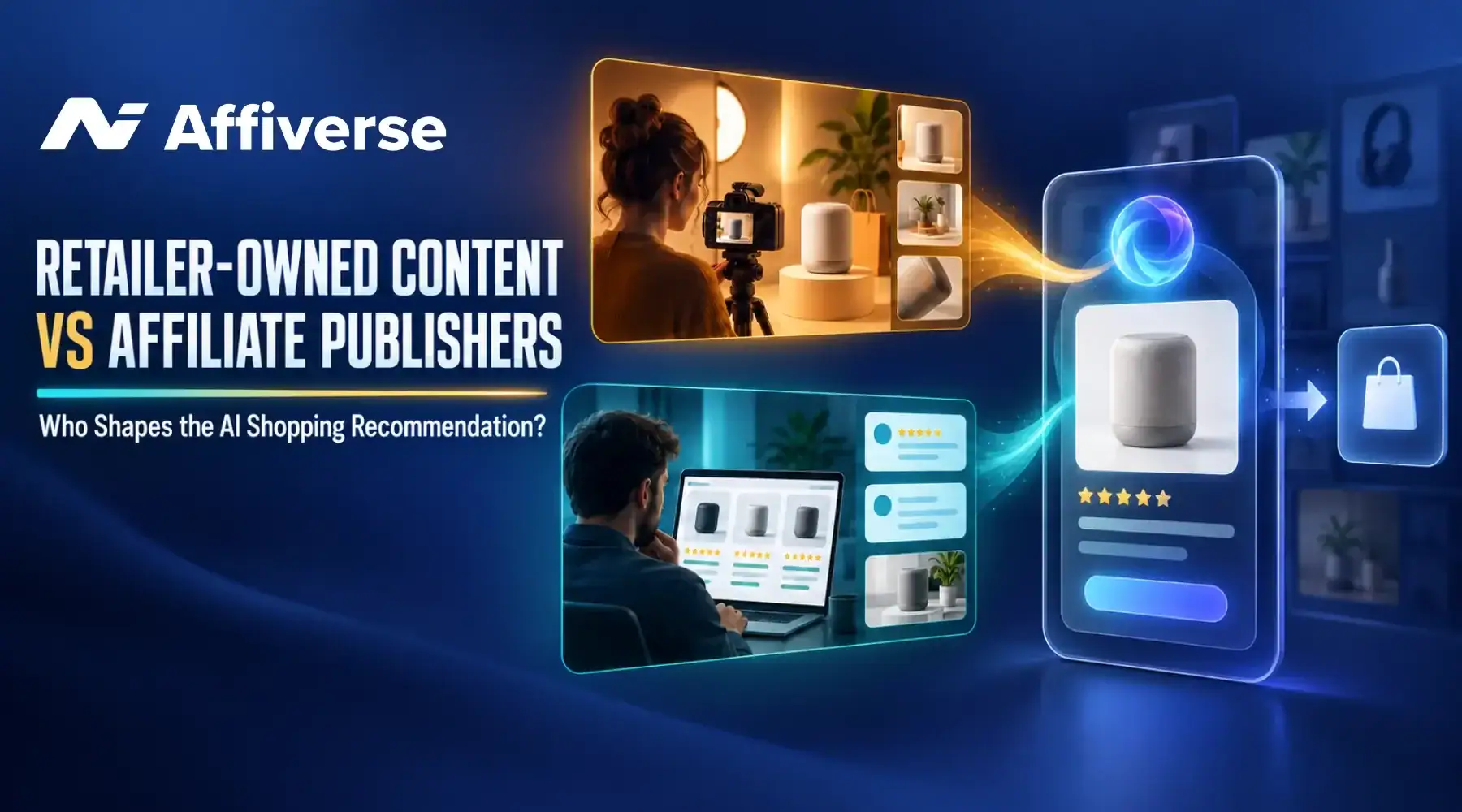
Retailers are beginning to produce the reviews, demonstrations, expert commentary, and creator videos that have traditionally helped affiliate publishers attract shoppers.
John Lewis provides an early case study. The retailer has opened an influencer studio at its Oxford Street flagship and is producing original video programming as searches from AI agents grow. If retailers can supply AI systems with enough useful product content directly, independent publishers could face greater competition at the discovery stage.
However, retailer-owned content and independent affiliate publishing do not serve the same purpose. One helps a merchant explain and sell its catalog. The other should help consumers decide which product and retailer best meet their needs.
Key Takeaways: Retailer Content Competes for AI Shopping Visibility
- John Lewis says searches from AI agents increased from 0.3% to 2.5% in one year.
- The retailer has opened a studio where influencers can produce content daily.
- Merchant-owned content can provide AI tools with current product, inventory, and promotional information.
- Affiliate publishers can still differentiate through independent testing and cross-retailer comparisons.
- Attribution becomes harder when creator or publisher content informs an AI recommendation without producing the final click.
John Lewis Provides an Early Case Study
John Lewis told Reuters that searches from AI agents had risen to 2.5%, compared with 0.3% a year earlier. These are company-supplied figures, and the retailer has not published the underlying search volumes or measurement methodology.
Its new studio will allow influencers to record content daily from the Oxford Street store. John Lewis is also producing Gift List, a YouTube series hosted by Angela Scanlon in which guests discuss memorable gifts.
According to The Guardian, six episodes are planned before Christmas, with shorter clips distributed through additional social platforms.
The immediate objective is content production, but the wider strategy concerns discovery. Frequent videos give John Lewis more material covering its products, expertise, and seasonal relevance. That content can reach people through social platforms while also increasing the information available to search engines and AI shopping tools.
Retailers Are Building Their Own Discovery Content
Retailers have several advantages when producing product content. They control their catalogs and can connect editorial material with current prices, availability, delivery options, and promotions.
They can also respond quickly when a product category attracts attention. A department store can film an expert or creator discussing a developing trend and connect that content directly with products it has available.
The development of customer-facing commerce agents could strengthen this model. A retailer-controlled assistant can search the merchant’s catalog, compare available products, assemble a cart and transfer the customer to checkout.
Combining those capabilities with retailer-owned creator content could keep more of the discovery and consideration journey within the merchant’s environment.
That does not make the resulting recommendation independent. A merchant-owned assistant can compare products in its own catalog, but it may not identify a better price, service, or product available elsewhere. Consumers may also struggle to determine whether a recommendation reflects suitability, available inventory, commercial priorities, or profit margin.
Affiliate Publishers Still Provide a Different Service
Independent publishers can compare several merchants, test competing products, and discuss shortcomings that a retailer may be less willing to emphasize.
This difference becomes more important when AI tools summarize product information. Retailer content may be accurate about specifications and availability, while affiliate publishers can contribute experience, comparisons, and context.
For example, shoppers are already using AI to compare prices and search for deals. Recent survey findings showed that nearly half of parents used AI during back-to-school shopping, although the studies did not track whether those interactions produced sales.
A useful AI shopping answer may therefore need both types of information: current commercial data from retailers and independent evaluation from publishers or creators.
The risk for affiliate publishers is that their work informs the answer without earning the visit. An AI assistant could summarize a publisher’s testing or comparison before directing the shopper to a retailer through another route.
AI Shopping Makes Attribution More Difficult
Traditional affiliate measurement depends heavily on observable actions. A publisher sends a click, a customer completes a transaction and the tracking system connects the two.
AI shopping can place another layer between influence and conversion. A shopper may encounter a creator video, ask an AI assistant for guidance and then visit the retailer directly. The final transaction may be recorded as direct, organic or AI-referred traffic, even when independent content shaped the decision.
This reflects the wider gap between AI influence and affiliate attribution. Existing commission systems generally do not reward content simply because it informed an AI-generated recommendation.
John Lewis has not announced how creators using its studio will be compensated or whether the content will include affiliate links. It has also not established that its content investment caused the reported increase in AI searches.
What Affiliate Publishers Still Need to Own
Affiliate publishers are unlikely to compete successfully by reproducing retailer product descriptions. The stronger position is to provide information merchants cannot supply as credibly:
- Firsthand testing and original product photography.
- Comparisons across several brands and retailers.
- Clear discussion of disadvantages and unsuitable use cases.
- Historical pricing and promotion context.
- Specialist knowledge within a defined product category.
- Evidence showing how conclusions were reached.
Retailers becoming publishers does not remove the need for independent recommendations. It does increase competition over which sources inform the shopping decision.
The next contest in affiliate publishing may therefore concern more than who receives the click. It may concern whose information AI systems use before the shopper decides where to buy.
Everflow
Connect
Tradedoubler
Connect
1win Partners
Connect
PIN-UP Partners
Connect
Shopnomix, a Nomix Group Company
Connect
V.Partners
Connect
Huffson Group
Connect
Share your expertise and expand your reach and become a content contributor with us today!
Contact Us To Find Out More