Perplexity Pulls the Plug on Paid Ads: What It Means for Affiliate Managers Eyeing AI Search Channels

Just over a year after becoming one of the first AI platforms to test advertising, Perplexity has walked away from the model entirely. The San Francisco-based answer engine, which began trialling sponsored placements beneath chatbot responses in late 2024, has confirmed that those experiments have been wound down and there are no plans to revisit them. For affiliate managers who have been watching AI search channels with an eye on new paid media opportunities, the decision carries some important lessons.
The reasons Perplexity gave are worth sitting with.
“A user needs to believe this is the best possible answer, to keep using the product and be willing to pay for it,” said one executive. The company went further, warning that once ads appear, users begin doubting everything, describing advertising as “misaligned with what users want” from an AI answer engine.
The departure of the company’s top advertising lead, Taz Patel, further confirmed the internal shift in direction. This is not a small platform stepping back from a failed experiment. Perplexity handles 780 million monthly queries and reached $200 million in annualised revenue by late 2025, representing nearly fivefold year-over-year growth on the back of subscriptions alone. The company is valued at $18 billion. Pulling advertising from a platform at that scale, and publicly framing it as a trust decision rather than a commercial one, is a meaningful signal about where the AI search market is heading.
A Channel in Three Different Directions
What makes this development particularly relevant for affiliate program managers is that AI search platforms are not moving as a bloc. They are diverging, and doing so quite quickly. OpenAI began testing advertisements in ChatGPT in February 2026 for users on free and lower-cost subscription tiers, placing clearly labelled sponsored results below organic answers.
The company stated that ads do not influence ChatGPT’s responses and that technical safeguards prevent advertiser relationships from affecting outputs. Google runs ads within AI Overviews and AI Mode in Search, though not within Gemini as a standalone product. Anthropic has publicly committed to keeping Claude ad-free, even running Super Bowl advertising that positioned ads as incompatible with deep thinking and productivity.
So within the same AI search category, you now have one platform testing ads on free users, one that has never run them and has committed not to, and one that tried, saw the impact on user trust, and walked away. For an affiliate manager trying to build a paid media strategy around AI search channels, this fragmentation is not a minor inconvenience. It is the central strategic challenge.
The Publisher Revenue Question
Perplexity originally launched its advertising experiment in November 2024 with ambitions to build a sustainable revenue-sharing model with publisher partners. That ambition has now seemingly been abandoned.
For publishers who had been exploring Perplexity as an emerging paid placement channel, that revenue stream now no longer exists. The only route to visibility on the platform is through organic content citation, which means appearing in Perplexity’s AI-generated answers because the platform’s systems determine your content is authoritative and relevant. This connects to a broader shift that affiliate managers are already navigating. As we explored in our analysis of how AI is reshaping influence and attribution, the platforms consuming publisher content to generate answers are not necessarily creating trackable referral traffic in return. The zero-click challenge that has been compressing organic affiliate traffic from Google is also present in AI-native search. Perplexity’s own shopping features, notably, do not include a transaction cut for publishers, another indicator the company is being deliberate about avoiding revenue models that create conflicts of interest in its answer quality.
For paid media partners in your program who had been positioning Perplexity as a new channel for sponsored placements, that conversation now needs to change. The paid route is closed, at least for the foreseeable future.
Why First-Mover Advantage Needs a Strategy Behind It
There is a version of this story that gets told as a first-mover opportunity. ChatGPT is now testing ads. Get in early before costs rise and inventory tightens. That framing is not wrong, but it is incomplete, and the Perplexity reversal illustrates exactly why. Perplexity was the first mover. It ran its advertising experiment, watched the trust data, and reversed course. A brand or paid media partner that had built a channel strategy around Perplexity advertising in Q1 2025 would now need to rebuild it from scratch. That is the practical cost of moving fast on a channel whose rules are still being written.
The AI advertising market right now carries a specific set of risks that are distinct from new channel launches on more established platforms. There are no mature advertiser policies on several of these platforms comparable to Google Ads or Meta’s advertising standards. Attribution infrastructure is limited. Consumer behaviour on AI-native search does not map cleanly onto traditional paid search intent models. And as Perplexity has demonstrated, even platforms that commit to advertising can walk it back when they conclude it conflicts with their core value proposition.
None of this means affiliate managers should ignore AI search advertising entirely.
It means the evaluation and tracking framework we associate for affiliate marketing in this space – may need to be different. The infrastructure for understanding how AI channels contribute to affiliate value is still being built. Making significant paid media commitments before that infrastructure matures carries real measurement risk.
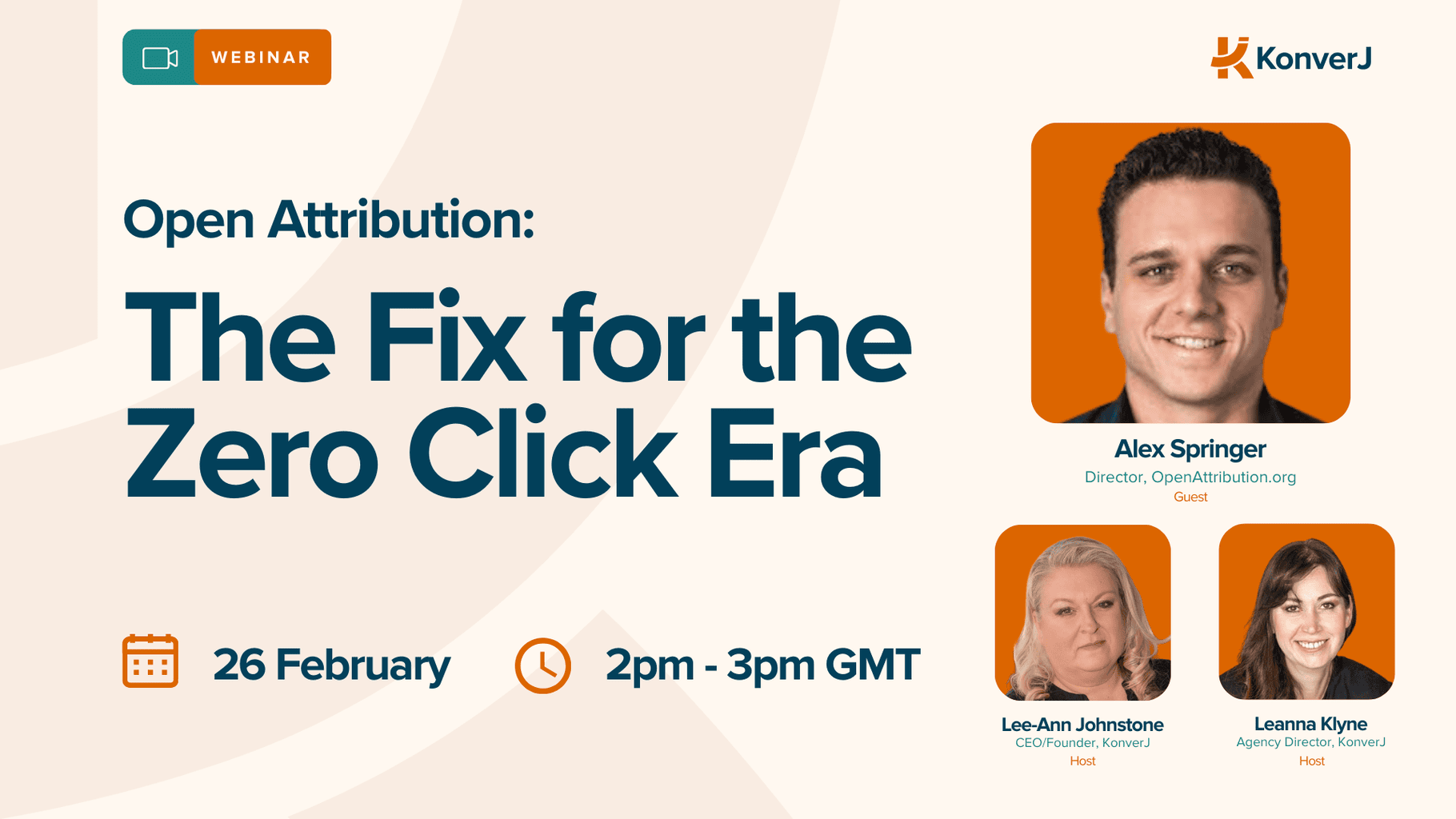
We’re hosting an informative webinar around this specific topic later this week, you can join us HERE and listen to what may be changing in the year to come.
Things to Do Before Your Paid Media Partners Move First
Map which partners are already exploring AI search advertising. If paid search partners in your programme are considering extending campaigns into ChatGPT’s emerging ad product or other AI platforms, you want visibility into that activity before it happens at scale. Standard affiliate reporting will not surface this automatically. Add a requirement to your programme terms for partners to notify you before activating placements on new AI platforms. This protects your attribution data and your compliance position.
Set a testing framework rather than a channel commitment. If you decide to explore ChatGPT advertising through your own media budget or through managed partner arrangements, define success metrics against your existing paid search benchmarks before you spend. Given that independent performance data on AI search advertising remains limited, you need internal benchmarks to assess whether early results justify further investment, rather than evaluating performance against assumptions built on optimism rather than evidence.
The Perplexity story is not only big news but also a useful reminder that in a market moving this fast, the first version of any new channel is rarely the version that lasts. The programs that will benefit from AI search advertising are not necessarily the ones who move first. They are the ones who build the infrastructure to test intelligently, measure accurately, and adapt when the rules change.
_________________________________________________________________________________________
TLDR: Three Key Takeaways
- Perplexity has confirmed it will not revive its advertising product, citing user trust as the deciding factor. With 780 million monthly queries and $200 million in annualised revenue, this is a significant strategic signal, not a small-scale experiment quietly shelved.
- AI search platforms are fragmenting across three distinct models: ChatGPT testing ads on free users, Claude committed to an ad-free product, and Perplexity returning to subscriptions only. There is no single AI search advertising standard for affiliate managers to plan around.
- The infrastructure for measuring AI search advertising performance, from attribution to policy compliance, is still forming. Paid media partners exploring this channel need clear programme terms, defined testing budgets, and agreed success metrics before committing at scale.
_________________________________________________________________________________________
Thinking about how to position your affiliate programme for the AI search era? The team at KonverJ.io works with brands navigating exactly these kinds of channel shifts. Or stay across developments as they happen by signing up to the Affiverse newsletter for weekly industry insights.

Everflow
Connect
Tradedoubler
Connect
1win Partners
Connect
PIN-UP Partners
Connect
Shopnomix, a Nomix Group Company
Connect
V.Partners
Connect
Huffson Group
Connect
Kawaii Partners
Connect
Share your expertise and expand your reach and become a content contributor with us today!
Contact Us To Find Out More