Google Site Kit Adds Site Goals Reporting to WordPress
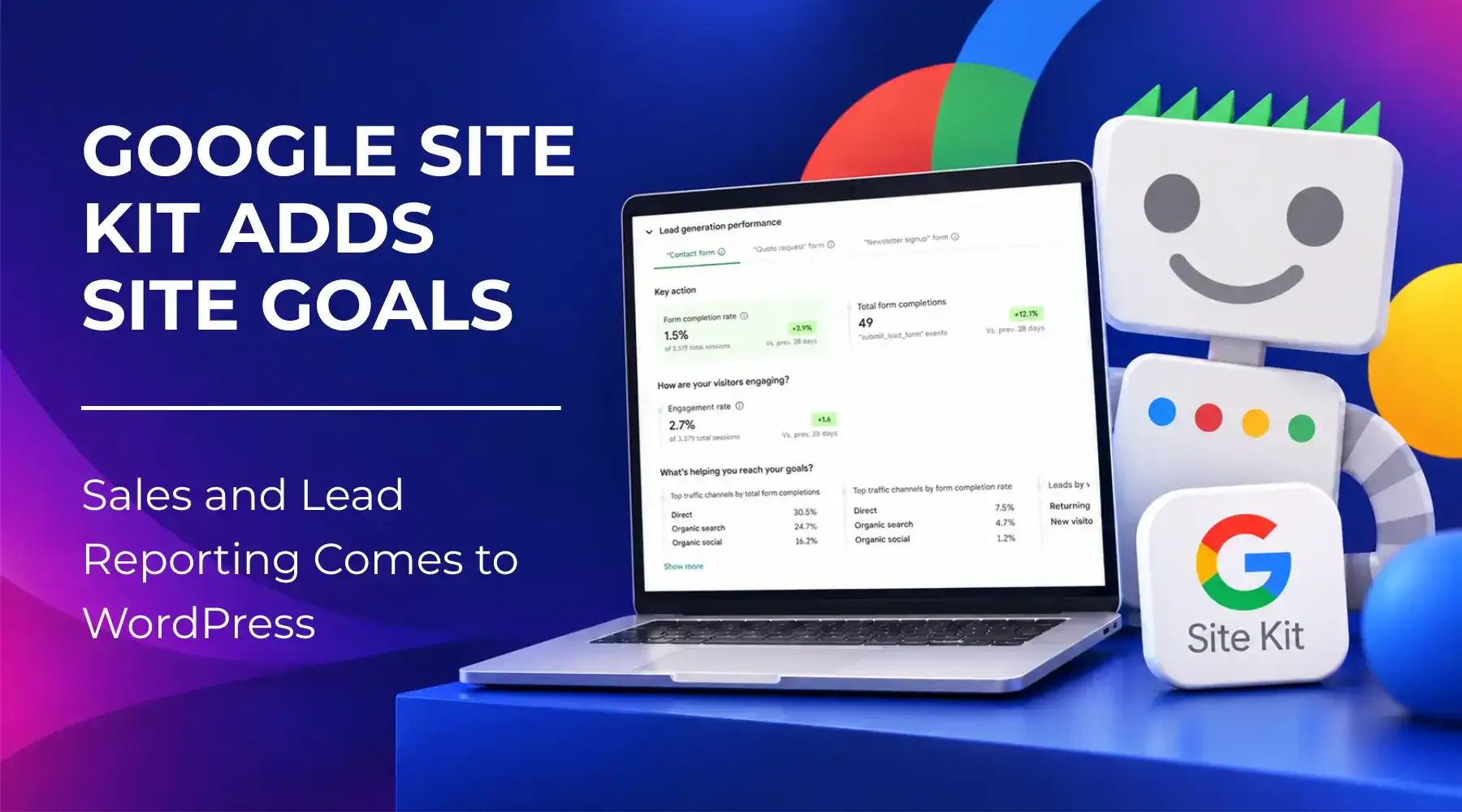
Google has launched Site Goals, a new section within its Site Kit plugin that allows WordPress users to monitor sales, form submissions and the sources contributing to those actions directly from their website dashboard. The feature automatically collects supported visitor events and sends them to Google Analytics, reducing the need for website owners to configure tags or add tracking code manually.
Google Site Goals: Key Takeaways
- Site Goals reports on ecommerce and lead-generation activity inside WordPress.
- Site Kit automatically detects supported plugins and collects relevant events.
- Reports can show which pages, authors and traffic channels contribute to sales or leads.
- Google Analytics and plugin conversion tracking must be enabled.
- Site Goals became fully available with Site Kit version 1.187.0.
How Site Goals Works
Site Kit is Google’s official WordPress plugin, bringing information from Search Console, Analytics, AdSense, and other Google services into the WordPress dashboard.
According to Google’s Site Goals documentation, the new feature adds a dedicated dashboard area built around important visitor actions. These can include purchases, products being added to carts and completed lead-generation forms.
Site Goals relies on Site Kit’s plugin conversion tracking, previously known as enhanced conversion tracking. Once enabled, Site Kit checks whether a supported third-party plugin is active and places JavaScript on the website to collect the corresponding events.
Those actions are then recorded in Google Analytics and, where applicable, Google Ads. The plugin conversion tracking setting applies to both services and can be managed through either the Analytics or Ads section of Site Kit.
Separate Reports for Sales and Lead Generation
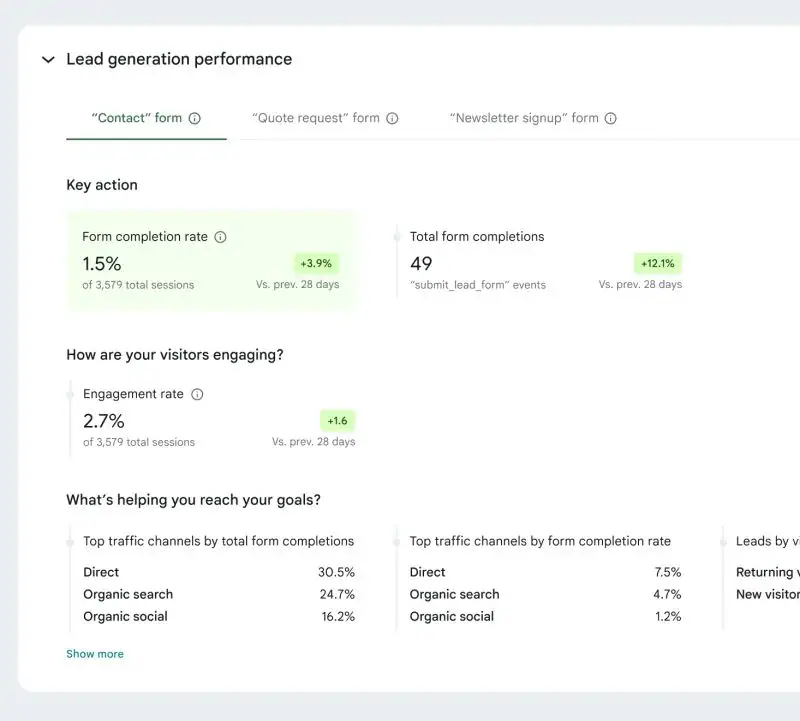
Site Goals organizes its reporting into two main areas: Online Store Performance and Lead Generation Performance.
Source: Google Search Central post.
The online store report can display:
- Sales rate
- Total sales
- Add-to-cart rate
- Products added to carts
- Engagement rate
The lead-generation report focuses on form completion rate, total form completions and engagement rate.
Which report appears depends on the plugins and events detected on the website. For example, the sales section can appear when Site Kit identifies a purchase or add-to-cart event, while the lead-generation section uses events including submit-lead-form, contact, and generate-lead.
Site Kit Identifies the Main Goal Drivers
Alongside overall conversion figures, WordPress users can select metrics showing what contributed to their results.
These include the top traffic channels, landing pages and authors driving sales or form completions. This can help teams compare whether sources such as organic search, referrals or traffic grouped within GA4’s AI Assistant channel are producing valuable actions. Results can also be divided by visitor type, device, country and city.
Up to six goal-driver metrics can be displayed at once. This allows an online retailer to prioritize sales information while a publisher or service-based business can focus on lead generation.
Sites using multiple supported plugins can enable advanced data breakdowns. This creates separate tabs for individual plugins and forms, making it possible to compare their contribution to overall results.
Google notes that these granular reports only begin collecting information after advanced breakdowns are activated. Historical data is not available for the individual plugin and form breakdowns.
Which WordPress Plugins Are Supported?
The current list of ecommerce plugins supported by Site Goals includes:
- WooCommerce
- Easy Digital Downloads
Lead-generation support is available for:
- Contact Form 7
- Mailchimp
- Ninja Forms
- OptinMonster
- Popup Maker
- WPForms
Google says support for other plugins may be added in future releases. Events from unsupported ecommerce or form plugins may still appear under an “Other sources” or “Other form completions” tab when they use recognized events.
Who Can Access Site Goals?
Site Goals became fully available through Site Kit version 1.187.0, according to the plugin’s official WordPress changelog. Site Kit currently has more than five million active installations.
To see the new section, users must connect Google Analytics and enable plugin conversion tracking, which Google says is typically enabled by default. Site Kit must also detect at least one supported sales or lead-generation event.
For affiliate and content teams operating WordPress websites, the update provides a more accessible view of how particular pages, authors and acquisition channels contribute to on-site business outcomes. It can form part of a broader affiliate data stack while keeping headline performance information available inside the CMS.
Everflow
Connect
Tradedoubler
Connect
1win Partners
Connect
PIN-UP Partners
Connect
Shopnomix, a Nomix Group Company
Connect
V.Partners
Connect
Huffson Group
Connect
Kawaii Partners
Connect
Share your expertise and expand your reach and become a content contributor with us today!
Contact Us To Find Out More