Google Wins Dismissal of Publisher Lawsuits Over AI Overviews
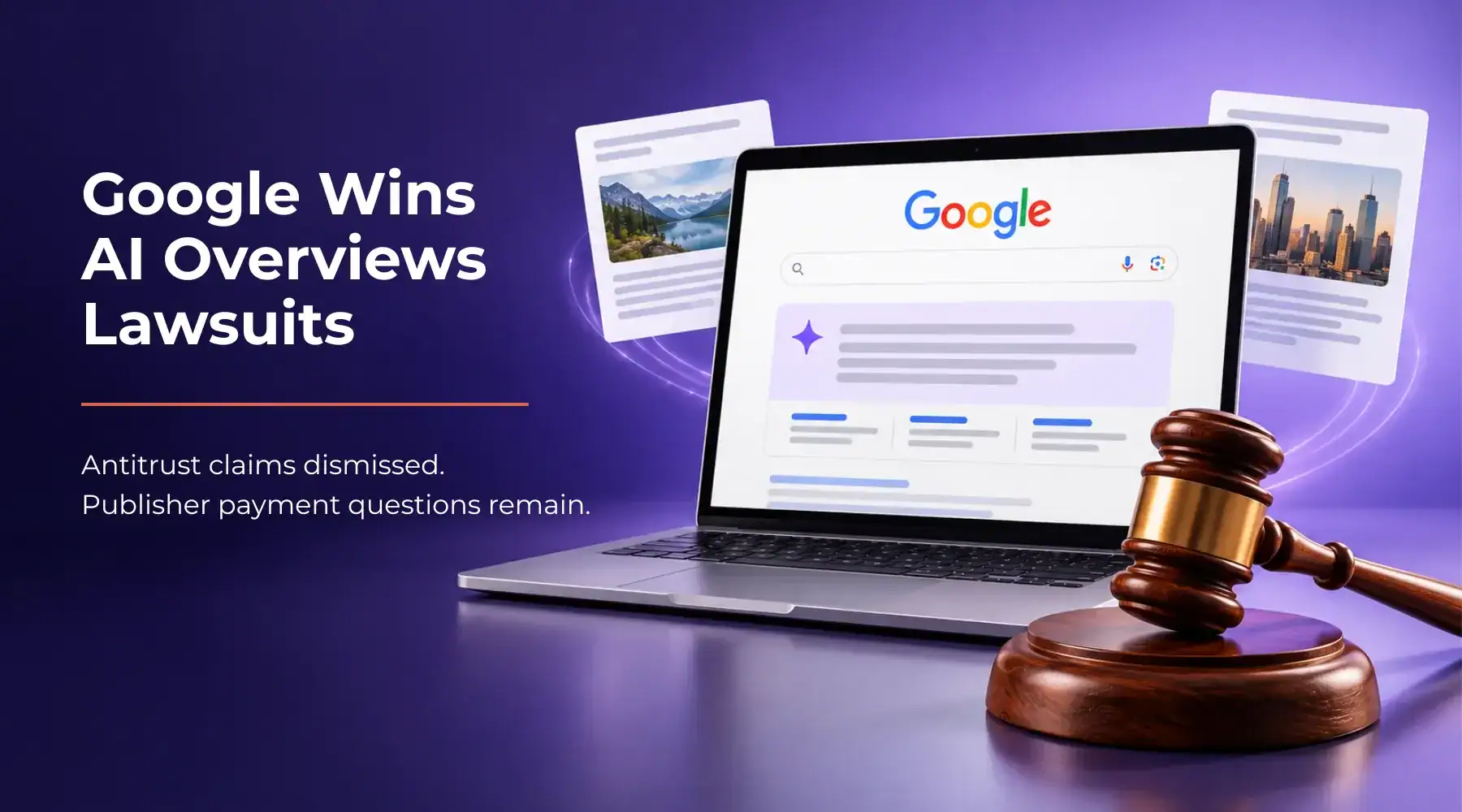
Google has won dismissal of federal antitrust claims brought by Chegg and Penske Media over AI Overviews. US District Judge Amit Mehta issued the decision on September 30, 2026. The ruling rejects the publishers’ legal arguments about Google’s use of their content, but it does not determine that AI answers cause no commercial harm or settle copyright, licensing, and compensation questions.
Key Takeaways: Google Defeats the Publisher Claims
- Mehta dismissed both publishers’ federal antitrust claims on September 30.
- Chegg and Penske alleged Google used its search dominance to obtain unpaid content and divert traffic.
- Expected search referrals did not establish a reciprocal-dealing agreement.
- Penske failed to establish Search and AI Overviews as separate products.
- Copyright, licensing, and fair compensation remain unresolved.
- Penske’s order is appealable; no appeal was confirmed in the sources reviewed.
Why the Antitrust Arguments Failed
The publishers described an exchange: they supplied content, and Google sent readers to their websites. They argued Google used its dominance to demand additional content for AI without payment while reducing the referrals supporting their businesses. They alleged lost traffic and revenue. Google has denied wrongdoing.
Their reciprocal-dealing argument depended on establishing that exchange as an agreement. Reciprocal dealing involves parties trading with each other, with one making a purchase conditional on a purchase in return.
Mehta found that expected referrals did not establish agreed terms, such as price or quantity. The court’s memorandum opinion also rejected the proposed publishing markets as insufficiently defined.
Search and AI Overviews Were Treated as One Product
Penske separately alleged unlawful tying: Google required users of its general search service to take AI Overviews alongside it.
The court found Penske had not plausibly established two separate products. Its analysis treated demand for answers through Google Search as encompassing different result formats.
That conclusion concerns the legal requirements of Penske’s claim. It does not establish that organic links and AI summaries deliver identical experiences or have the same commercial consequences for publishers.
The Ruling Does Not Settle Publisher Compensation
The decision leaves several business questions unanswered: how much traffic particular AI answers displace, whether specific content uses infringe copyright, and what publishers should receive when their work contributes to an answer. It grants no blanket permission to reuse publisher material.
The court also declined jurisdiction over the state-law unjust-enrichment claims. Those claims were dismissed without a decision on their merits.
Mehta acknowledged publishers’ economic concerns but said antitrust law could not substitute for legislative action addressing harm from technological change.
Meanwhile, Google is exploring payments through its AI contribution pilot for selected publishers. Google has confirmed experimental partnerships involving content that meaningfully contributes to grounding AI responses.
A voluntary payment experiment does not establish a general obligation to compensate publishers. It does, however, offer a possible commercial route alongside legal challenges. Publishers still need to assess whether any payment reflects the contribution of their work and potential changes in referral income.
EU Scrutiny Covers Publisher Control and AI Competition
The European publishers’ competition complaint raises related concerns about Google’s use of publisher content, consent and compensation. The US dismissal does not settle that complaint, which raises questions under EU competition rules.
Google’s AI Search opt-out addresses the question of publisher control. EU scrutiny of that control concerns whether it gives publishers a meaningful commercial choice. Excluding a site from Google’s generative AI Search features also means giving up impressions and referrals from those features. Publishers therefore need to weigh control over content use against the potential loss of visibility.
Separately, Google is appealing EU Search-data sharing rules intended to help rival search engines and AI assistants compete. That dispute concerns competitors’ access to search data rather than payments for publisher content. Greater competition could create more discovery opportunities, but it would not automatically guarantee referrals, citations or affiliate attribution.
What Affiliate Publishers Should Take From the Decision
For affiliates, the practical concern is the distance between contributing to a purchasing decision and receiving a paid referral. A review may inform an AI answer without producing a tracked visit, an issue explored in Affiverse’s coverage of the AI search attribution gap. Rankings alone cannot show whether AI visibility is protecting revenue.
Publishers should continue monitoring:
- AI citations and appearances alongside referral sessions.
- Search impressions against clicks through to their sites.
- Revenue changes on queries that trigger AI Overviews.
- Licensing opportunities and platform-payment terms.
- Results from email, social, video and direct audiences.
- Evidence that original reviews and comparisons inform purchases.
Penske’s separate dismissal order was issued without prejudice and described as final and appealable. No appeal was confirmed in the reporting reviewed as of October 5.
The ruling closes one legal route for the current complaints. It leaves the economic disagreement over publisher content, search traffic and payment unresolved.
Everflow
Connect
Tradedoubler
Connect
1win Partners
Connect
PIN-UP Partners
Connect
Shopnomix, a Nomix Group Company
Connect
V.Partners
Connect
Huffson Group
Connect
Kawaii Partners
Connect
Share your expertise and expand your reach and become a content contributor with us today!
Contact Us To Find Out More