ChatGPT Plans Visual Ad Tests as OpenAI Expands Conversion Measurement
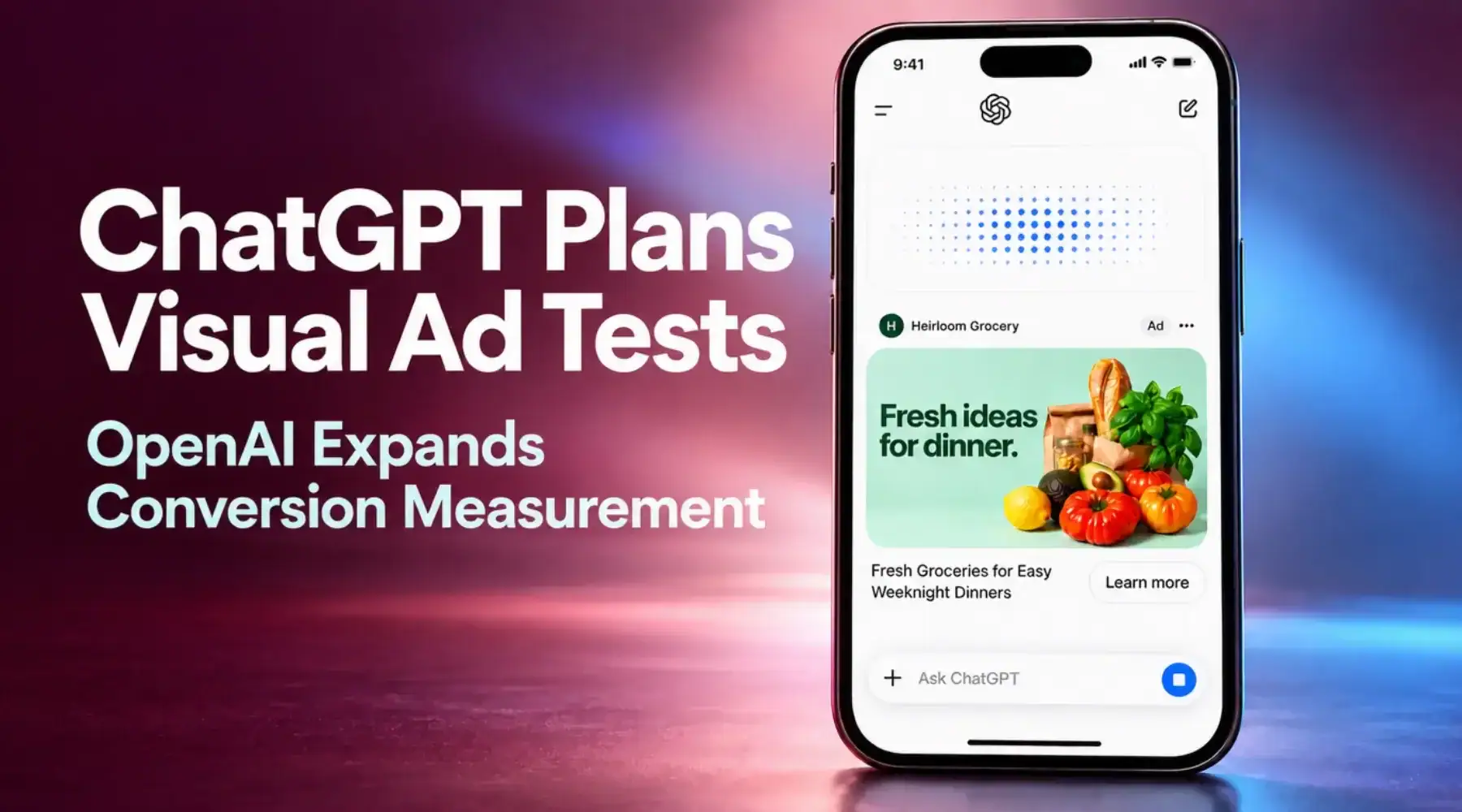
OpenAI plans to test visual ads during ChatGPT image generation later in October, starting with an initial group of US advertisers. Its October 5 announcement also expands conversion reporting and measurement partnerships. The update gives affiliate teams more ways to assess ChatGPT campaigns, but ad attribution still needs to be reconciled with partner referrals and evidence of sales caused by advertising.
Key Takeaways: Visual Ad Tests and Broader Measurement
- Visual ad testing will begin later in October in the US. Ads will remain labeled and separate from generated images.
- Expanded integrations support conversion data, attribution, and broader campaign measurement, with capabilities varying by partner.
- OpenAI describes view-through reporting and early work on geo-based incrementality experiments.
- DoubleVerify and Integral Ad Science are developing suitability evaluations in controlled tests without access to private user conversations.
- Early advertiser results measure different outcomes and should not become general ChatGPT Ads benchmarks.
Visual Ads Will Be Tested During Image Generation
According to OpenAI’s announcement, the new format will use images showing product inspiration, usage, or related experiences. The initial test will run during image generation with selected US advertisers later this month.
Ads will be labeled and separated from the image being created. OpenAI says advertising does not influence ChatGPT’s answers. The announcement does not provide an exact start date or a wider rollout schedule.
OpenAI is also testing Sponsored Agents, which let users start a business-sponsored conversation after an ad click.
Measurement Expands Beyond Ad Clicks
OpenAI’s measurement update lists Hightouch, Tealium, and LiveRamp for conversion-data connections. Attribution providers include AppsFlyer, Triple Whale, Adjust, and DV Rockerbox, with Fospha, Measured, and INCRMNTAL among its advanced measurement partners.
Integration capabilities and setup vary by provider. Teams should confirm which conversion events, reporting data, and attribution functions their chosen integration supports. Affiverse’s ChatGPT Ads guide covers campaign setup and tracking.
The update also describes a one-day view-through reporting window for conversions following an ad impression without a qualifying click. OpenAI says reporting-window settings affect attribution reports, rather than changing campaign optimization.
An attributed conversion follows measurement rules. Affiverse’s incrementality explainer examines the separate question of whether marketing caused additional sales. OpenAI is working with Haus, Measured, and WorkMagic on geo-based experiments while describing its incrementality work as early-stage.
Early Results Measure Different Outcomes
OpenAI’s advertiser examples report results from existing ChatGPT campaigns. They precede the planned visual-format test.
| Advertiser | Reporting partner | Reported result | What the figure measures |
|---|---|---|---|
| WeightWatchers | DV Rockerbox | Attributed CPA was 15.3% lower than its blended paid-search benchmark. | Attributed acquisition cost against that advertiser’s benchmark. |
| Dose | WorkMagic | 67% of incremental purchases came from net-new customers. | Customer composition within the incremental purchases reported. |
| Portland Leather | Triple Whale | 93% of visitors from ChatGPT Ads were new. | The share of visitors identified as new. |
These figures use different brands and measurement methods. Dose’s 67% figure is not a 67% sales lift, while Portland Leather’s visitor share does not establish conversion performance. Advertisers need their own baseline and comparable outcomes before drawing budget conclusions.
Suitability Evaluation Remains a Controlled Pilot
OpenAI’s announcement also says Negative Phrases are now available to qualifying advertisers for placement restrictions tied to a brand’s own policies.
DoubleVerify’s announcement distinguishes its launched attribution measurement from the brand-suitability pilot it is developing with OpenAI.
Mark Zagorski, CEO of DoubleVerify
Conversational environments are fundamentally different because context is dynamic.
OpenAI says the suitability partners assess how its safeguards operate in a controlled testing environment, without accessing private user conversations.
Advertisers should check which scenarios are evaluated and what the pilot reporting covers when assessing suitability for their own brand.
Affiliate Credit Still Requires Reconciliation
OpenAI’s conversion documentation explains how its oppref click reference connects eligible ad clicks with later conversions. It also recommends using the same event ID when a conversion is sent through both the Pixel and Conversions API, so duplicate events can be removed.
Tracking an ad interaction does not itself establish a publisher’s entitlement to commission. A shopper could read an affiliate review, later see a ChatGPT ad and buy. Both channels might claim the order under their own attribution rules.
Affiverse’s AI search attribution analysis examines the wider gap between publisher influence and recorded affiliate activity.
Before testing, affiliate teams should align conversion definitions and attribution windows, reconcile order IDs with partner records, and account for refunds and cancellations. A separate incrementality assessment can then help determine whether ChatGPT advertising adds sales, while commission decisions follow the agreed partner rules.
Everflow
Connect
Tradedoubler
Connect
1win Partners
Connect
PIN-UP Partners
Connect
Shopnomix, a Nomix Group Company
Connect
V.Partners
Connect
Huffson Group
Connect
Kawaii Partners
Connect
Share your expertise and expand your reach and become a content contributor with us today!
Contact Us To Find Out More