APMA Compliance Portal Gives Affiliate Industry New Reporting Route
The Affiliate & Partner Marketing Association has launched a new Compliance Reporting Portal, giving businesses and individuals across the affiliate industry a formal route for raising concerns about alleged misconduct, non-compliance and breaches of industry standards.
Launched on 6 July 2026, the portal is open to anyone involved in affiliate and partner marketing rather than APMA members alone. The association says reports will help it identify emerging risks, monitor recurring issues and build stronger evidence around the compliance challenges affecting the channel.
Key Takeaways from the APMA Compliance Portal
The portal creates a central reporting route for serious concerns across affiliate marketing, but it is not designed to replace programme-level dispute processes, regulatory complaints or legal action.
- Anyone working in affiliate and partner marketing can submit a report.
- Submissions should concern serious alleged misconduct or breaches of industry standards.
- Reports can help the APMA identify patterns and emerging compliance risks.
- The APMA does not act as a regulator or make formal findings of wrongdoing.
- Evidence and clear supporting information are expected as part of the reporting process.
What Can Be Reported Through the Portal?
The portal is intended for significant concerns that could affect programme integrity, advertiser budgets, publisher relationships or consumer trust.
Examples listed by the APMA include:
- Suspected attribution abuse.
- Undisclosed subnetwork activity.
- Misleading voucher-code practices.
- PPC or trademark violations.
- Bot traffic.
- Misleading content.
- Suspected fraud.
These are areas where individual incidents can be difficult to assess in isolation. A central reporting process could help show whether similar behaviour is affecting multiple businesses or appearing across several programmes.
The APMA says reports should include enough detail and evidence to allow the issue to be reviewed properly. Anonymous or unsupported allegations are therefore unlikely to provide the same value as submissions backed by screenshots, tracking records, communications or other relevant documentation.
The APMA Compliance Reporting Portal is available through the association’s website.
What the APMA Portal Does Not Cover
The reporting route is not intended for routine commercial disputes. This includes unpaid commissions, minor programme-management issues and concerns that should first be raised directly with an advertiser, network or platform. The portal also does not give the APMA regulatory or enforcement powers. A report being reviewed or recorded does not mean that the organisation or individual named has been found responsible for misconduct.
Instead, the portal is designed to collect evidence, identify recurring concerns and improve visibility across the industry. It does not operate as a court, regulator or formal arbitration service. Where a concern may involve unlawful conduct, consumer harm or a regulatory breach, businesses may still need to contact the appropriate authority alongside submitting a report to the APMA.
Reporting Portal Follows APMA Compliance Taskforce
The launch follows the creation of the APMA’s Compliance and Standards Taskforce on 18 February 2026. The group was established to examine areas including clearer reporting and escalation routes, PPC enforcement, subnetwork transparency, publisher onboarding and wider standards across the UK affiliate industry. The new portal provides one of the first practical systems linked to that work. The need for greater oversight was highlighted in the APMA’s Voice of the Affiliate Nation 2025 report. While overall confidence in affiliate traffic remained relatively high, only 11% of brands and 15% of agencies said they had complete confidence in it.
The most commonly identified concerns included:
- Subnetwork traffic transparency: 67% of brands and 76% of agencies.
- PPC brand bidding: 40% of brands and 48% of agencies.
- PPC ad hijacking: 35% of brands and 42% of agencies.
- Fake voucher codes: 30% of brands and 44% of agencies.
- Click injection and attribution manipulation: 29% of brands and 42% of agencies.
- Breaches of programme terms: 28% of brands and 37% of agencies.
These findings help explain why the APMA has focused on clearer reporting routes and stronger evidence gathering. Advertisers may work with large partner portfolios, subnetworks and technology providers, making it harder to maintain visibility over where traffic originates and how promotional activity is carried out. Regular partner reviews can help programme teams identify inactive accounts, unusual traffic patterns and compliance gaps before they develop into wider problems. A structured affiliate programme audit can also help teams review partner quality, tracking accuracy and compliance processes more consistently.
How to Prepare an APMA Compliance Report
The portal should not replace strong internal compliance processes or direct communication with advertisers, networks and platforms. Clear escalation routes, regular monitoring and effective affiliate fraud prevention remain essential. Before submitting a report, businesses should confirm that the concern involves serious alleged misconduct supported by credible evidence, rather than a routine commercial, payment or attribution dispute.
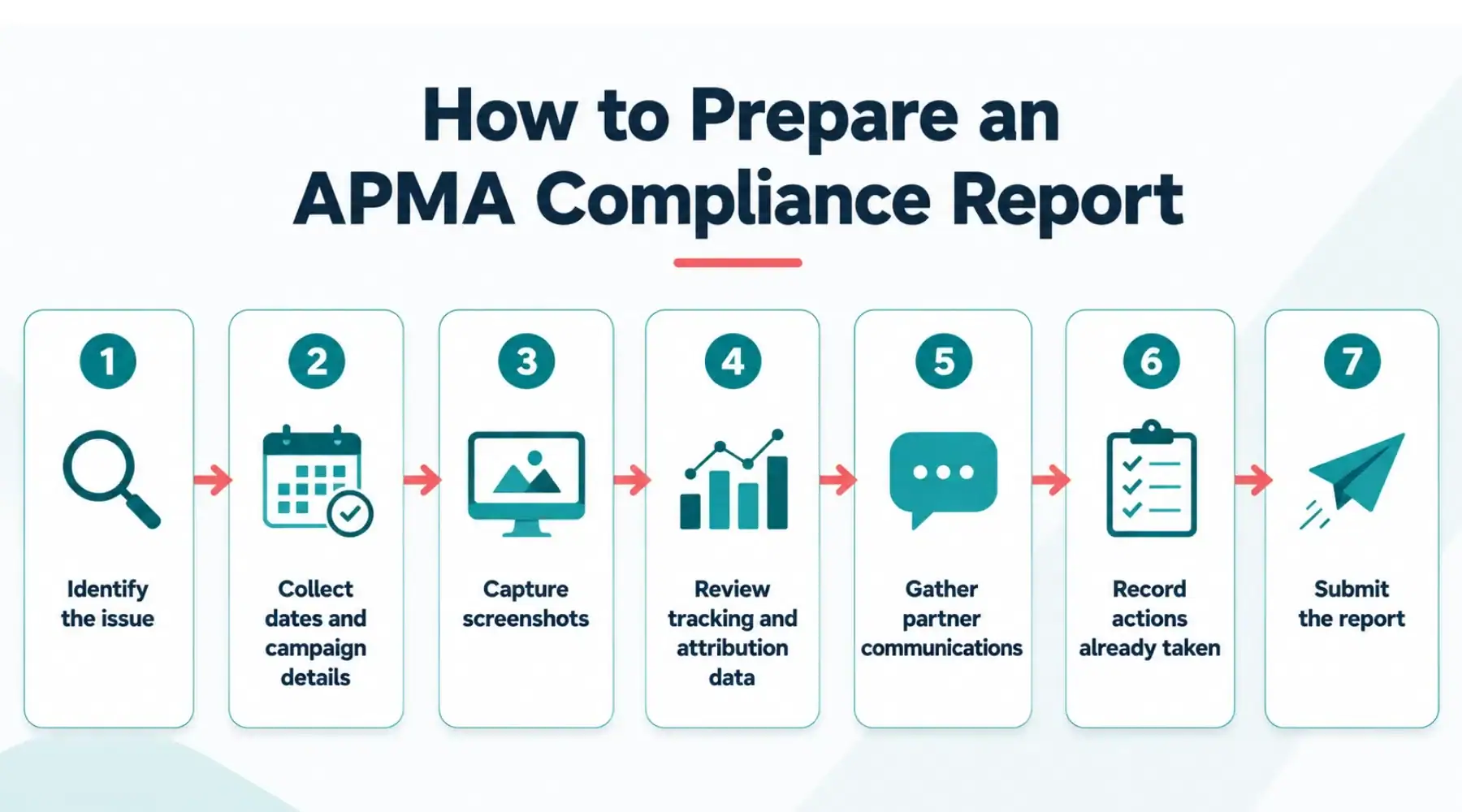
Reports should focus on verifiable facts rather than assumptions. Supporting evidence may include:
- Dates and timestamps.
- Campaign details and relevant URLs.
- Screenshots of the activity.
- Technical logs or tracking evidence.
- Copies of relevant communications.
- Correspondence with networks or platforms.
- Consumer complaints or other supporting documents.
Better Reporting Depends on Better Evidence
The APMA portal gives the affiliate industry a clearer way to surface serious concerns that may otherwise remain fragmented across individual programmes and private conversations. Its value, however, will depend on the quality of the reports submitted and how consistently businesses use it. Clear evidence, fair review processes and appropriate confidentiality will be essential if the portal is to strengthen standards without turning unverified allegations into assumed findings.
Everflow
Connect
Tradedoubler
Connect
1win Partners
Connect
Shopnomix, a Nomix Group Company
Connect
Huffson Group
Connect
Kawaii Partners
Connect
Trackdesk
Connect
Share your expertise and expand your reach and become a content contributor with us today!
Contact Us To Find Out More