Alberta Opens Regulated iGaming Market to Private Operators
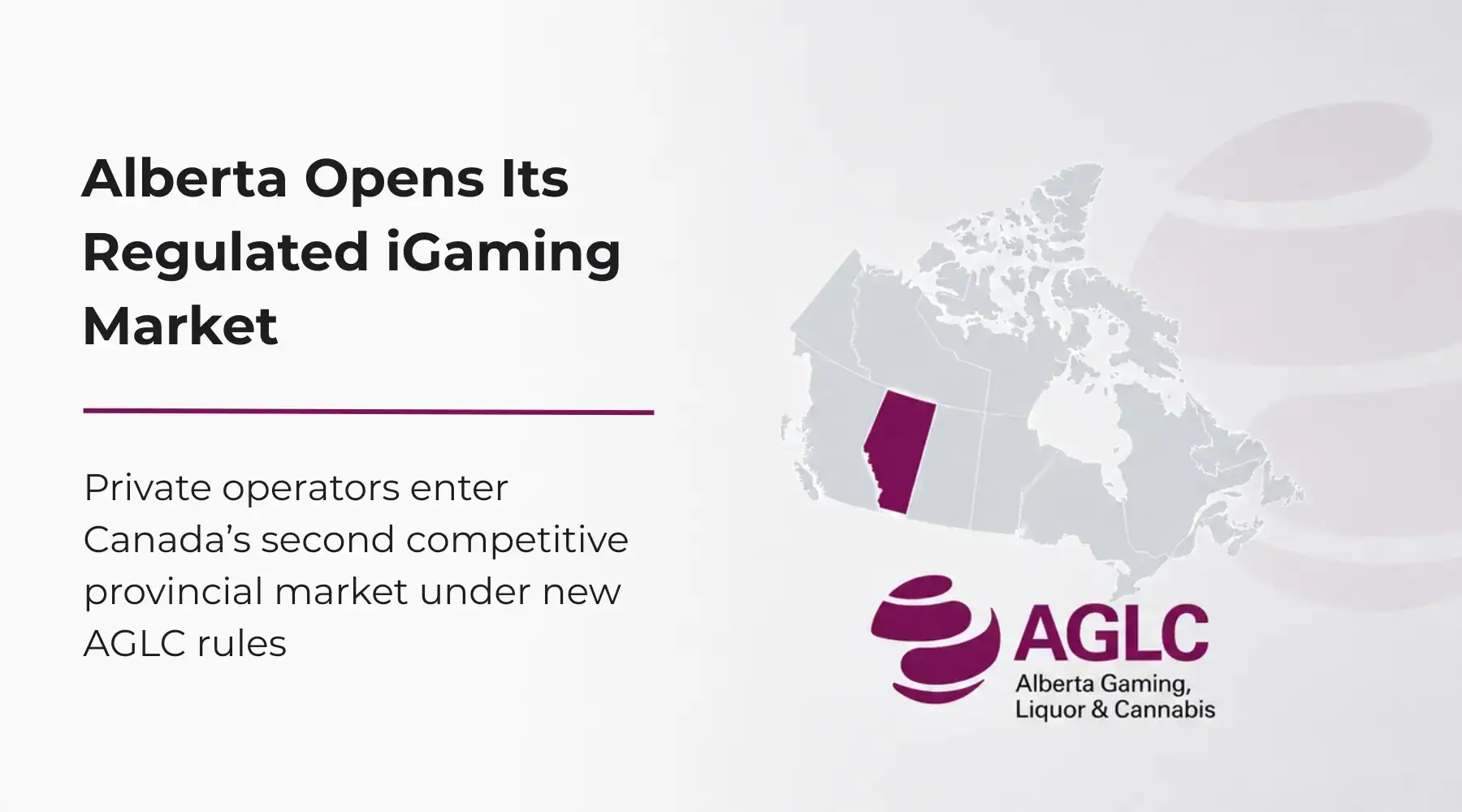
Alberta officially opened its regulated iGaming market on July 13, allowing approved private operators to offer online casino and sports betting products under provincial oversight. The launch makes Alberta the second Canadian province after Ontario to establish a competitive regulated model involving private operators.
The province is moving away from a system in which the government-operated platform was its only regulated online option. Operators entering the expanded market must be registered with Alberta Gaming, Liquor and Cannabis, or AGLC, and hold a commercial agreement with the Alberta iGaming Corporation, known as AiGC.
Key Takeaways From Alberta’s Regulated iGaming Market Launch
- Alberta became Canada’s second province to launch a competitive regulated iGaming market involving private operators.
- Operators must be registered with AGLC and complete a commercial agreement with the Alberta iGaming Corporation before going live.
- Public advertising of bonuses, inducements and gambling credits is restricted.
- Operators are responsible for ensuring that affiliates and referral partners comply with Alberta’s marketing standards.
- The first months of the market will show how effectively Alberta channels players toward regulated platforms.
Alberta’s New iGaming Framework Goes Live
Under the new structure, AGLC is responsible for registration, regulatory oversight and compliance. AiGC manages the commercial side of the market, including operating agreements, financial reporting, public complaints and anti-money laundering responsibilities. AGLC’s public register contained 50 entries in the iGaming operator category as of July 10. However, some companies hold separate registrations for individual sites or brands, and registration alone does not authorize an operator to begin accepting wagers. Operators must also satisfy technical and compliance requirements and complete an agreement with AiGC before going live.
Alberta’s government estimates that unregulated sites previously accounted for approximately 70% of the province’s iGaming activity. The regulated model is intended to move more of that activity toward approved platforms with stronger consumer protections and local oversight. The province will allocate 80% of net iGaming revenue to operators and retain 20%, after funding equal to 3% of gross gaming revenue is directed toward First Nations and social responsibility initiatives.
Further details about the model are available through the government’s Alberta iGaming Strategy.
Alberta Follows Ontario With a Competitive Market
Alberta is following the broad structure introduced by Ontario in April 2022, where private operators participate through a provincially managed framework. Ontario has since become a significant regulated market. Affiverse previously reported that the province generated CA$3.2 billion in online gambling revenue during the 2024–25 financial year, across 49 operators and 77 regulated sites.
Alberta’s system should not be treated as an exact copy. It has its own revenue arrangements, registration process and advertising standards, while a centralized self-exclusion system is being implemented as a core part of the market framework. Registered operators must integrate with that system and give users the option to exclude themselves from all regulated online gambling platforms, land-based casinos and racing entertainment centers, or both.
Strict Advertising Rules Apply to the New Market
Alberta’s marketing rules will be particularly important for affiliates, media buyers and other acquisition partners. Public advertising that communicates gambling inducements, bonuses or credits is prohibited. Such offers may only appear on an operator’s own site or through direct marketing after the user has provided express consent.
Advertising must also avoid:
- Targeting or primarily appealing to minors.
- Using misleading claims or presenting winning as probable.
- Encouraging excessive gambling or chasing financial losses.
- Targeting people identified as being at higher risk of gambling harm.
- Using active or retired athletes, except in campaigns exclusively promoting responsible gambling.
All advertising and marketing materials must include a responsible gambling message. AGLC can also require operators to amend or remove campaigns that do not meet its integrity or social responsibility expectations. The full requirements are available in AGLC’s Standards and Requirements for Internet Gaming. These restrictions are broadly consistent with the direction taken in Ontario, where affiliates had to reconsider how bonuses, promotions and inducements were presented. Affiverse examined those changes in its earlier analysis of how Ontario’s iGaming laws affected affiliates.
What the Alberta Launch Means for Affiliates
The launch creates a new regulated environment for affiliate partnerships, but participation will depend on more than producing localized content or signing commercial agreements. Alberta’s standards state that operators must not use compensated third-party marketing or player-referral partners that also promote sites accepting wagers from Alberta without an AGLC registration. This places responsibility on operators to understand where their partners send traffic and which businesses they represent.
AGLC’s public documents do not establish a blanket rule stating that every publisher or affiliate must obtain the same registration. The exact requirements will depend on the services provided and whether those activities fall within a registered supplier category. Affiliate businesses will therefore need to confirm their position with operator compliance teams rather than assuming that arrangements used in Ontario or other Canadian provinces can be transferred unchanged. This reflects a wider shift toward closer oversight of iGaming affiliate marketing across regulated markets.
Alberta Will Test Canada’s Second Open Market
Alberta’s launch gives the Canadian iGaming industry its second competitive provincial market and provides a new test of whether regulation can move users away from unregulated platforms. For affiliates, the initial opportunity is accompanied by clear limits. Public bonus promotion is restricted, operator oversight extends to compensated referral partners and marketing must be designed around responsible gambling standards. The first months will show how AGLC interprets these requirements in practice and how effectively the new market channels existing activity toward regulated operators.
Everflow
Connect
Tradedoubler
Connect
1win Partners
Connect
PIN-UP Partners
Connect
Shopnomix, a Nomix Group Company
Connect
V.Partners
Connect
Huffson Group
Connect
Kawaii Partners
Connect
Share your expertise and expand your reach and become a content contributor with us today!
Contact Us To Find Out More