Times Square Store Opens Permanent TikTok Shop Studio for Creators
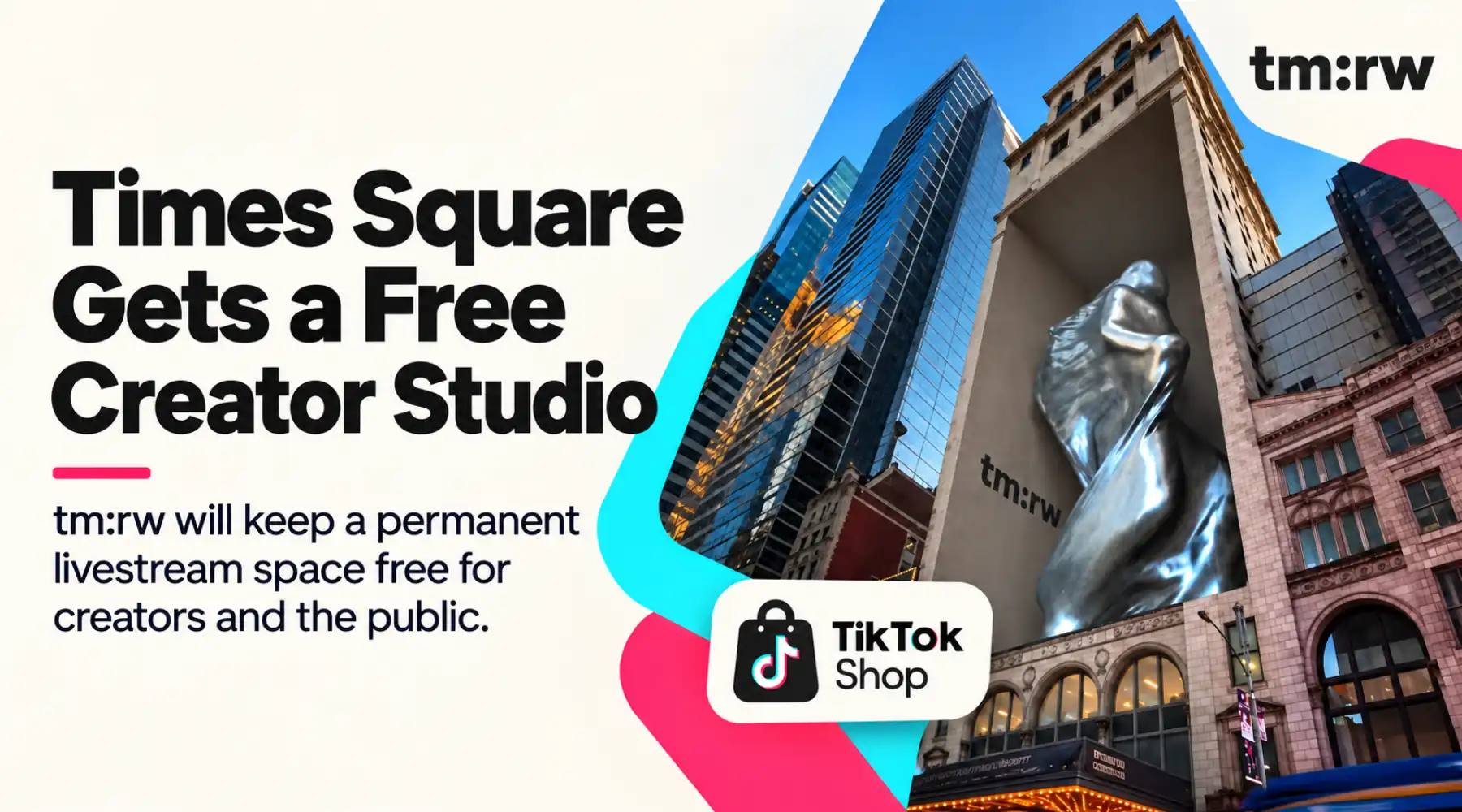
tm:rw plans to offer creators and the public free access to a permanent livestream studio at its Times Square flagship. The retailer launched tm:rw Studios on October 6, using nine branded spaces to connect product demonstrations with TikTok Shop purchases. Keeping one studio open could give creators without a suitable filming location a place to produce live shopping content.
Key Details From the tm:rw Studios Launch
- Location: tm:rw’s 22,000-square-foot Times Square flagship.
- Launch setup: Nine branded studios featuring eleven partner brands.
- Shopping: Viewers could purchase demonstrated products through TikTok Shop.
- Permanent space: One studio will remain free for creators and members of the public, according to tm:rw.
Nine Studios Turned the Store Into a Live Broadcast
The format described in tm:rw’s corrected announcement followed hosts and creators between studios in one continuous broadcast. Products appeared onscreen during demonstrations, with livestream-only offers, giveaways and deals. Participating brands included Whoop, HoverAir and Anker.
A working store could help creators show how a product is used and answer practical buying questions during a demonstration.
One Creator Studio Will Remain Open
Retaining the studio makes the offer relevant beyond the launch. Access to a regular venue could help creators plan repeat broadcasts, provided booking availability suits their schedules.
Nathalie Bernce, co-founder and CEO of tm:rw:
Commerce and content are now the same thing, and the proof is that a store can be a broadcast.
The usefulness of the space will also depend on what visitors can access. The company has not said whether products, equipment or production assistance are included.
Stores Are Becoming Creator-Commerce Infrastructure
An earlier example came from MAC’s decision to turn shop staff into TikTok affiliates. MAC installed mini studios in retail spaces and gave UK employees the option to earn commission on sales they generated through TikTok Shop.
tm:rw’s offer extends production space to outside creators and the public. Both approaches bring content production closer to products and demonstrations, but their commercial arrangements differ. MAC announced an employee commission scheme; tm:rw has not set out an equivalent earning model for studio users.
Commission and Attribution Details Remain Unclear
The announcement leaves several operating details unanswered: reservations, opening days, creator selection, eligible products, equipment and staffing. It also does not explain content ownership, affiliate commissions or how sales would be attributed between hosts, brands and tm:rw.
That matters when assessing the opportunity. As Affiverse’s TikTok creator monetization guide explains, Shop Affiliate commissions, Creator Rewards and direct brand deals have different payment arrangements. A creator’s appearance in a shoppable broadcast alone does not confirm how they are paid.
The wider measurement issue is explored in Affiverse’s analysis of TikTok Shop’s Amazon attribution gap. A viewer may discover a product in creator content and purchase elsewhere, leaving that influence outside TikTok Shop’s sales reporting.
The release provides no audience, sales, conversion or creator-earnings results. Those omissions limit what affiliate teams can conclude about the launch’s commercial performance.
What Affiliate Teams Can Take From the Model
A program could offer filming space or scheduled demonstration sessions alongside its commission terms and sample policy. The value of that support would depend on the creator’s needs and the content they intend to produce.
That focus on understanding the creator also features in Affiverse’s podcast with Joe Sbiti on building creator partnerships, which discusses tailored outreach, fair compensation and product fit.
Brands considering a similar service would need clear booking rules, content rights and disclosure instructions. They should specify approved product claims and explain any commission terms before creators commit time to a session.
Affiverse’s webinar on the new rules of commerce performance examines how creator influence can disappear when another touchpoint receives the sales credit. Teams testing studio support would need to distinguish sales attributed to a creator from evidence of wider product demand.
Tracking completed orders, returns, and settled commissions would help managers assess the direct results. Broader sales changes would need further investigation before being credited to studio activity or used to calculate creator payments.
Everflow
Connect
Tradedoubler
Connect
1win Partners
Connect
PIN-UP Partners
Connect
Shopnomix, a Nomix Group Company
Connect
V.Partners
Connect
Huffson Group
Connect
Kawaii Partners
Connect
Share your expertise and expand your reach and become a content contributor with us today!
Contact Us To Find Out More