Brazil Seeks to Block 5,209 Betting Domains as Affiliate Advertising Ban Takes Hold
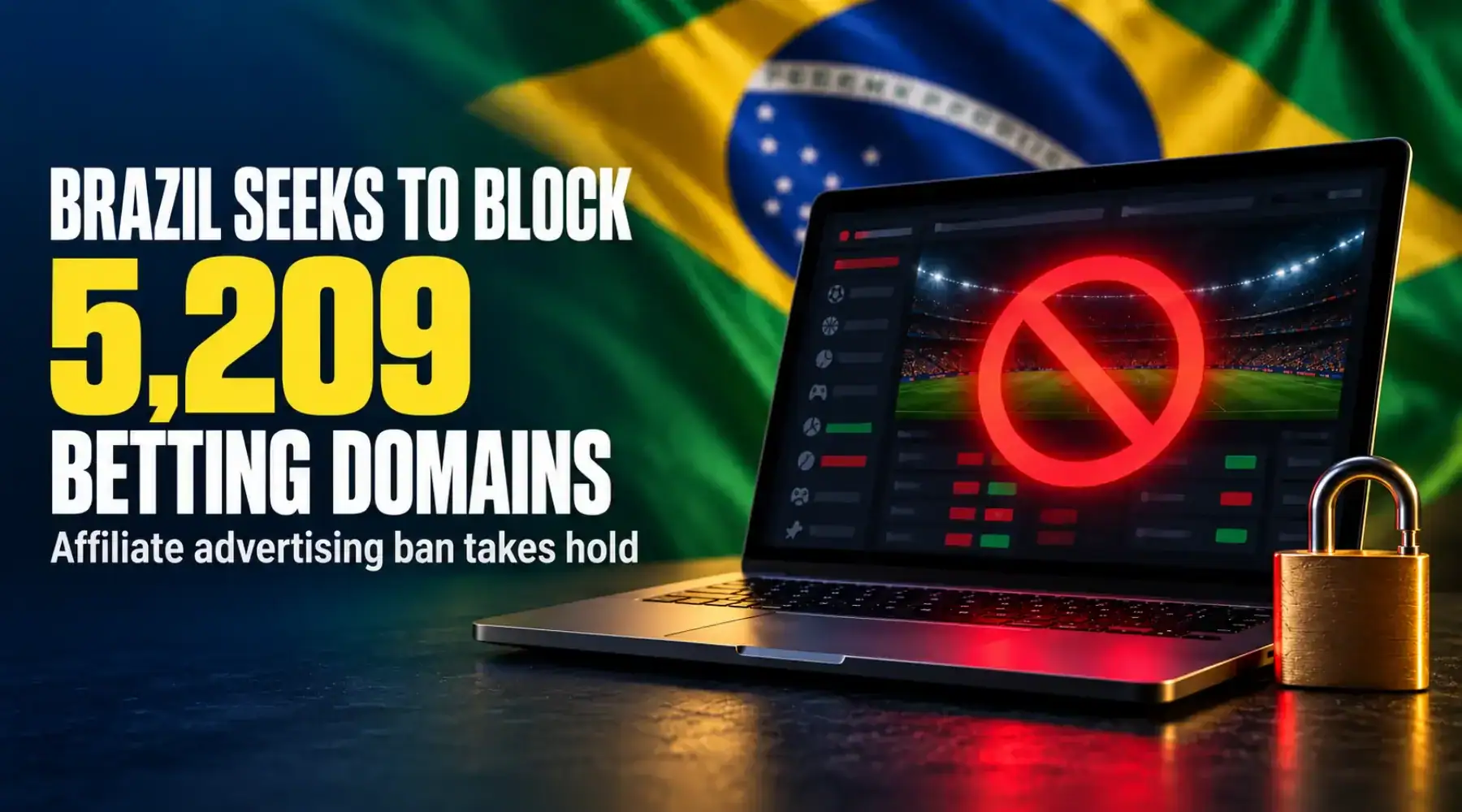
Brazilian authorities have requested the blocking of 5,209 betting domains as the country begins enforcing its new prohibition on fixed-odds betting.
The rules extend beyond operators and betting websites. Affiliate links, creator promotions, advertising campaigns, sponsorships, social accounts, apps, and payment services all fall within an enforcement system intended to remove access to betting across the Brazilian market.
Key Takeaways: Brazil’s Betting Ban Reaches the Acquisition Chain
- Authorities have requested the blocking of 5,209 betting domains.
- Betting websites and apps must become unavailable in Brazil from October 6, 2026.
- The prohibition covers operating, offering, facilitating and advertising fixed-odds betting.
- Promotional content aimed at Brazilian audiences is covered regardless of its format or whether the publisher was paid.
- Authorities have targeted 300 Facebook pages, 90 Instagram profiles and 186 apps.
- Affiliate and influencer content has been identified as part of the enforcement effort.
- The measure has immediate legal force but remains subject to congressional consideration and Supreme Court challenges.
Brazil Moves From Regulation to Prohibition
Brazil published Provisional Measure 1,394 on September 25, prohibiting the operation, offer, intermediation and promotion of fixed-odds betting.
Operators were immediately prevented from accepting new deposits. The measure gives them ten days to make their websites and apps unavailable, while existing licences expire 30 days after publication.
Open bets that cannot be settled within the transition period must be cancelled and refunded. Payment providers may only process transactions connected with winding down operations, paying valid winnings and returning customer funds.
The decision represents a sharp change for a country previously seen as one of the industry’s largest regulated growth markets. Brazil was included among the emerging iGaming markets to watch in 2026, but operators and partners must now respond to prohibition rather than market expansion.
Affiliate and Influencer Content Falls Within the Ban
Article 16 of the measure prohibits communication, advertising, promotion, marketing, and sponsorship connected with fixed-odds betting across physical and digital media.
The wording covers content that offers, promotes, publicizes, or facilitates access to betting when it is directed at people in Brazil. It applies regardless of the content format or whether the publisher receives payment.
That brings several common acquisition methods into scope, including:
- Affiliate reviews containing active betting links
- Operator comparison and bonus-code pages
- Creator videos promoting betting platforms
- Paid social and search advertising
- Tipster content that directs users toward an operator
- Sponsorship assets carrying betting branding
An early government enforcement report identified approximately 1,960 Google advertisements connected with seven betting domains between September 25 and 27. Its proposed platform actions specifically addressed content promoted by affiliates and influencers, as well as links designed to hide their final destination.
The measure includes a limited exception for content published before the ban when its reference to betting is merely incidental or secondary. That should not be treated as blanket protection for evergreen articles containing live affiliate links, promotional codes, or direct calls to register.
Publishers with Brazilian traffic will need local legal guidance when deciding whether individual pages qualify for the exception.
Platforms, Apps, and Payments Are Part of Enforcement
The Ministry of Justice and Public Security and the Ministry of Finance have now requested action against 5,209 domains.
Authorities have also sought the removal of 300 Facebook pages, 90 Instagram profiles, and 186 apps. Google, Meta, YouTube, X, Telegram, TikTok, Kwai, and Discord were among the platforms notified.
More than 21,000 telecommunications providers received blocking instructions, while banks and payment companies are prohibited from supporting new betting transactions.
This makes the Brazilian action broader than a change to operator licensing or advertising eligibility. Regulators are targeting the websites, promotional routes, and payment systems needed to acquire and serve customers.
What Affiliate Programs Should Do Now
Affiliate programs and publishers with exposure to Brazil should treat the measure as an immediate operational change.
They should:
- Pause Brazilian-facing betting links, campaigns, codes, and sponsored content.
- Audit current and archived pages for active calls to register or deposit.
- Confirm how operators and networks will handle tracked referrals, unpaid commissions, cancellations, and chargebacks.
- Preserve campaign terms, performance records, and partner communications in case reporting or payment disputes arise.
The measure explains how operators must handle customer funds and unresolved bets. It does not establish a dedicated process for settling outstanding affiliate commissions.
Programs should therefore communicate directly with partners rather than assume that existing payment schedules will continue unchanged.
Brazil’s Betting Ban Is Immediate but Not Yet Permanent
The prohibition has legal force while Provisional Measure 1,394 remains in effect. However, it has not yet become permanent legislation.
Congress can approve, amend, or reject the measure, while betting industry associations have asked the Supreme Federal Court to suspend it. Neither challenge currently removes the obligation to follow the advertising, payment, and shutdown deadlines.
The measure was published nine days before the first round of Brazil’s presidential election, giving the decision an unavoidable political dimension. A change of president would not automatically restore regulated betting, however. If Congress converts the measure into law, a future government would need a new legal act to reverse it.
Affiliate programs should therefore comply with the current restrictions while monitoring Congress and the courts. Brazil’s long-term betting framework remains unsettled.
Everflow
Connect
Tradedoubler
Connect
1win Partners
Connect
PIN-UP Partners
Connect
Shopnomix, a Nomix Group Company
Connect
V.Partners
Connect
Huffson Group
Connect
Kawaii Partners
Connect
Share your expertise and expand your reach and become a content contributor with us today!
Contact Us To Find Out More