Google Shopping Changes Could Push Retailers Back to Google, CSS Group Warns
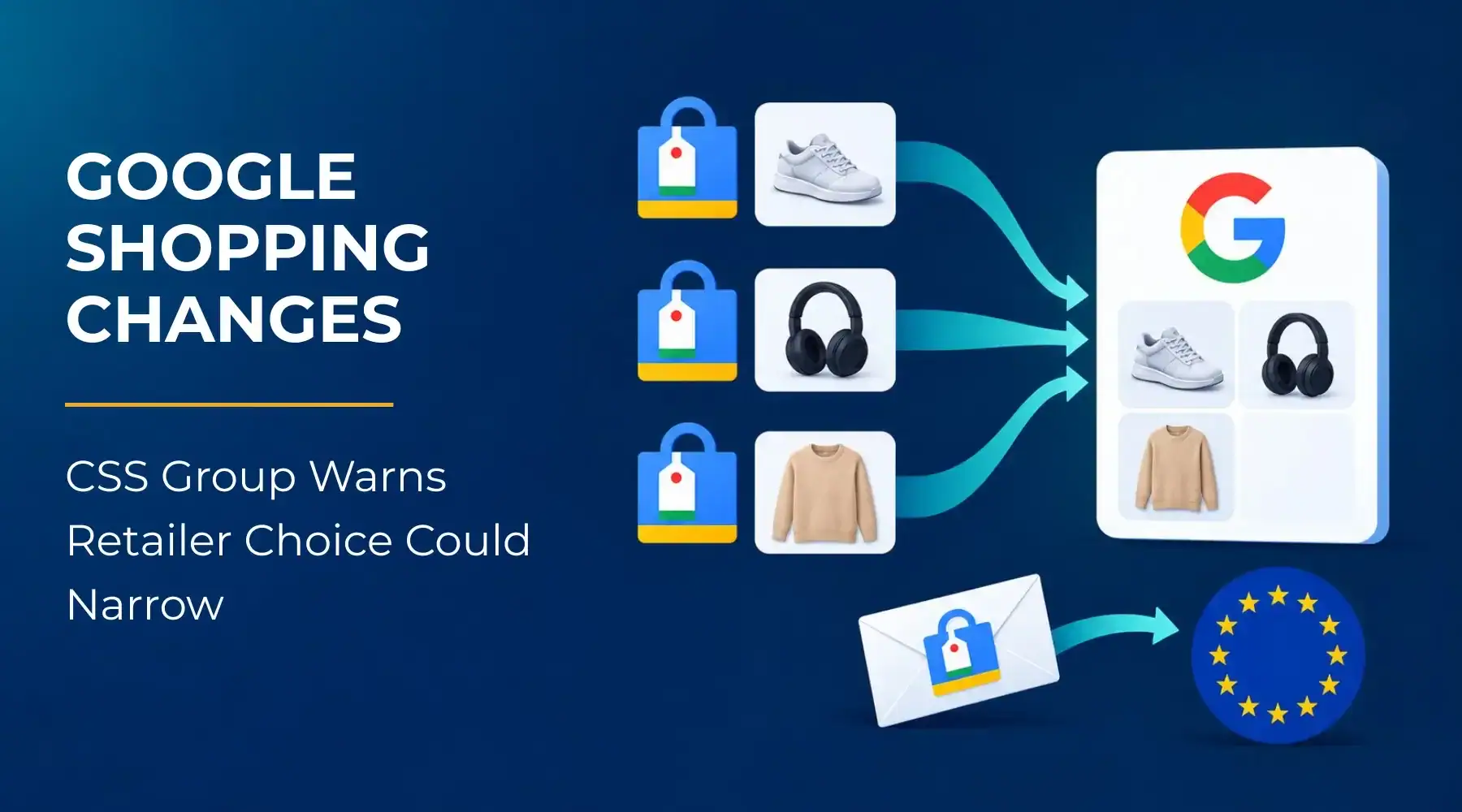
European comparison shopping services are warning that proposed changes to Google Search could unintentionally pressure retailers to move their product inventory back to Google Shopping.
The CSS Group has written to the European Commission ahead of Google’s September 25 compliance deadline. It argues that a poorly designed solution could reduce competition among shopping services, limit merchant visibility, and eventually affect how products appear within Google’s AI-powered shopping experiences.
Key Takeaways: CSS Providers Call for Testing and Equal Access
- Google must address a European Commission decision concerning the treatment of rival services in Search.
- Discussions reportedly include allowing comparison shopping services to compete for their own product boxes.
- CSS providers are concerned that Google’s box could become closed to inventory submitted through competing services.
- Retailers might then need to use Google Shopping directly to retain access to valuable placements.
- The coalition claims to represent more than 93,000 merchants.
- Its members account for an estimated 74% of third-party CSS clicks across the EEA and UK.
- The group wants live-market testing and transparent competition data before a permanent model is adopted.
- It says equivalent protections should cover AI Overviews, AI Mode and agentic shopping.
Why Google Shopping Is Facing Further Changes
The European Commission fined Google €460 million in July after finding that the company favored its own services across shopping, hotel, transport and sports results.
Google was given 60 days to provide a compliant approach or risk periodic penalty payments. According to the CSS signatories, that period ends on September 25.
Comparison shopping services already play an established role in European Shopping campaigns. Under Google’s current system, merchants must work with at least one CSS to place Shopping ads or free product listings in supported European markets. Google Shopping is one available service, while independent CSS providers can also upload retailer inventory and operate campaigns on a merchant’s behalf.
Google’s guidance for merchants working with comparison shopping services says retailers can use more than one provider at the same time and choose between different services and commercial models.
The European Commission’s decision means Google must now demonstrate that competing services receive fair treatment within the search results themselves.
The Coalition Fears a Closed Google Shopping Box
Discussions appear to be moving toward a model in which competing comparison services could display their own shopping boxes within Google Search.
The principle would give independent providers a more visible position. However, members of the coalition are concerned about what would happen to Google’s own product box under that model.
If product inventory supplied through third-party CSS providers became ineligible for the Google-controlled box, retailers could face a difficult choice. Continuing with an independent provider might limit their access to Google’s placement, while moving inventory directly to Google Shopping could offer broader visibility.
That outcome would potentially strengthen Google’s position despite the regulation being intended to increase competition.
“The details matter,” ShopForward’s Dirk Verzijden explained when outlining the coalition’s position. He said the group’s concern is that retailers could have “little practical choice” but to advertise through Google Shopping if competing CSS inventory were excluded from its box.
This remains a warning about a possible design rather than a confirmed feature. Google and the European Commission have not announced a final shopping-box model.
CSS Providers Ask for Live-Market Testing
The open letter to the European Commission calls for any proposed solution to be assessed through actual market behavior rather than its design alone.
The coalition wants:
- Fair access to shopping visibility for retailers and CSS providers.
- Live-market testing before a permanent system is introduced.
- Transparent data covering merchant visibility and competition.
- Continued industry involvement during development and testing.
- The same protections across conventional and AI-generated shopping results.
The coalition says its members represent more than 93,000 European merchants and approximately 74% of clicks generated by third-party CSS providers across the EEA and UK. These are estimates supplied by the group rather than independently verified market figures.
Google Says Its European Search Changes Reduce Quality
Google disputes the wider argument that its treatment of specialist search providers harms competition.
The company has begun introducing changes that give vertical search services greater prominence in some European results. Google told Reuters that the changes represent a major reduction in search quality and will increase costs for European businesses.
Its updated format can position one specialist search provider above two additional services, with some direct business listings appearing further down the page. Google says previous DMA-related changes have already reduced direct traffic to European businesses.
Those claims concern Google’s broader treatment of vertical search providers and do not confirm how the final Shopping implementation will work.
AI Shopping Could Become the Next Competition Question
The coalition also wants the market protections applied to Shopping results within AI Overviews, AI Mode and future agentic experiences.
This matters because Google is connecting product research and checkout more closely through the Universal Commerce Protocol and its expanding AI shopping tools. If independent shopping services gain access to conventional search placements but remain excluded from AI-generated recommendations, the competitive balance could simply move to a new interface.
Affiliate publishers face a related risk. Independent comparison content can inform an AI-generated answer without receiving the same visibility as retailer or platform-owned product data. That tension is already becoming clearer as retailer-owned content competes with affiliate publishers inside AI shopping journeys.
For affiliate and performance marketing businesses, the important outcome will not be the number of shopping boxes displayed. It will be whether competing providers retain meaningful access to inventory, traffic, and measurable customer activity across both paid search and AI-assisted product discovery.
The final design has not been announced. However, the coalition’s intervention shows why compliance cannot be judged only by how a new search page appears. The real test will be whether retailers can continue choosing between providers without sacrificing the placements that drive commercial results.
Everflow
Connect
Tradedoubler
Connect
1win Partners
Connect
PIN-UP Partners
Connect
Shopnomix, a Nomix Group Company
Connect
V.Partners
Connect
Huffson Group
Connect
Share your expertise and expand your reach and become a content contributor with us today!
Contact Us To Find Out More