YouTube Ends Paid Creator Music Licences as Revenue Sharing Takes Over
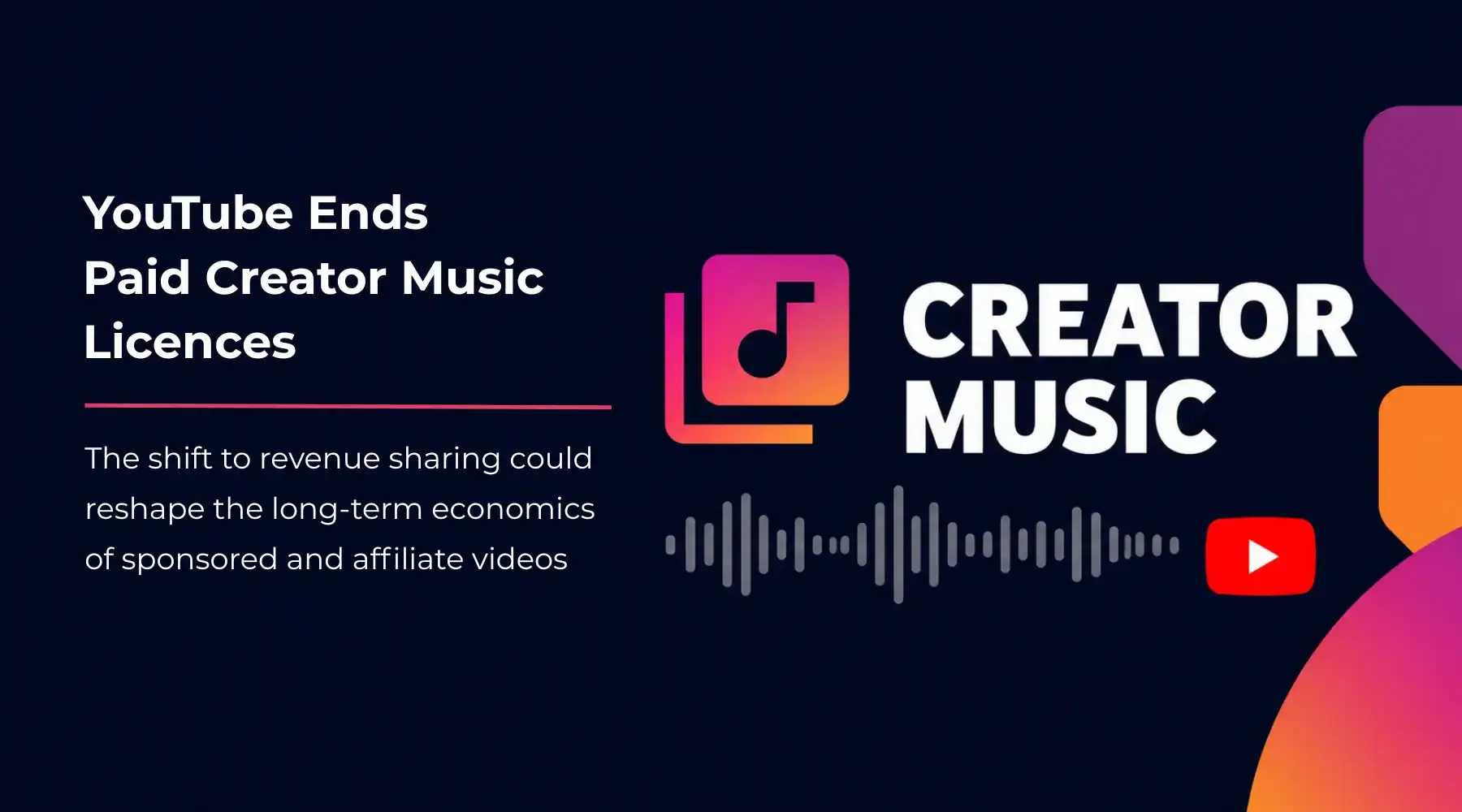
YouTube’s 10 August 2026 deadline for paid Creator Music licences has arrived, ending the option that allowed eligible creators to pay upfront for selected tracks and retain their usual share of video revenue.
Creator Music itself is not closing. According to YouTube’s updated Creator Music guidance, the catalogue will now focus on tracks available at no cost and music offered under revenue-sharing terms set by rights holders.
The change matters for creators producing long-form reviews, tutorials and sponsored videos. An upfront licence created a known production cost. Revenue sharing removes that initial payment, but can reduce the income generated by a video for as long as it continues attracting views.
Key Takeaway: What YouTube’s Creator Music Change Means
- Creators can no longer purchase or apply new paid Creator Music licences after 10 August 2026.
- Paid licences already applied to videos remain valid until they expire.
- Purchased licences that were not used by the deadline will be refunded automatically.
- Creator Music will continue with no-cost and revenue-sharing tracks.
- The service remains available to YouTube Partner Programme creators in the United States, with expansion outside the US still pending.
- Revenue sharing can materially reduce a creator’s share of advertising income from a long-form video.
What Is Ending on 10 August
YouTube introduced Creator Music as a way to simplify music rights for long-form video. Its paid-licence model gave creators access to selected tracks for a one-off fee. Once a licence was applied to a video, the creator could use the music and retain the same revenue share they would normally receive without it.
That paid option is now being phased out. YouTube says the decision is intended to align Creator Music more closely with the preferences of creators and music partners, but it has not published a more detailed explanation of what led to the change.
Existing licences are not being cancelled immediately. YouTube says paid licences already attached to videos will remain valid until the end of their agreed term. Its Creator Music FAQ explains that, when a licence expires, a track may move onto revenue-sharing terms if it is eligible. Otherwise, the video may face monetisation or visibility restrictions if the creator no longer has the necessary rights.
The deadline therefore creates two separate tasks. Creators need to make sure any licence bought before 10 August has been applied to the intended video, while channels with existing licensed content need to record when those agreements expire and what happens afterwards.
How Creator Music Revenue Sharing Works
The replacement is not a simple free-music model. Some tracks will be available at no cost under their stated licence terms, while others will require creators to divide video revenue with music rights holders.
For long-form videos without Creator Music revenue sharing, YouTube’s standard creator share is 55%. When an eligible revenue-sharing track is used, that percentage is adjusted according to the number of tracks and the cost of clearing additional music rights.
YouTube’s revenue-sharing guidance gives an example in which one revenue-sharing track reduces the creator’s share from 55% to 27.5%. A further 2.5% rights-clearance adjustment leaves the creator with 25% of total revenue. YouTube says these additional music-rights deductions can be as high as 5%.
That figure is an example rather than a fixed rate. The result depends on the music used, the number of eligible tracks and the relevant rights costs. However, it shows why creators will need to compare the creative benefit of a recognised track with its effect on the video’s long-term earnings.
Using more music can reduce the share further. In YouTube’s second example, a video using two revenue-sharing tracks and one licensed track leaves the creator with 16.33% of total revenue after the illustrated rights adjustment.
Why Affiliate Creators Should Pay Attention
Music is only one part of the income stack for an affiliate creator. A YouTube video may also earn advertising revenue, affiliate commission, a sponsorship fee and, increasingly, commission from products tagged through YouTube Shopping.
The recent UK launch of YouTube’s Shopping Affiliate Program makes that mix more important. Eligible creators can now tag products in long-form videos, Shorts and livestreams for participating retailers. A product review may therefore generate both platform advertising revenue and tracked sales commission.
Revenue-sharing music changes one part of that calculation. A creator may decide that giving up some advertising income is worthwhile if the track improves the video and helps it reach or retain a larger audience. For an evergreen tutorial or product review, however, the deduction can continue across months or years of views.
That long tail is one of YouTube’s commercial strengths. As the comparison of TikTok and YouTube creator payouts shows, YouTube content can keep generating discovery, advertising income and affiliate conversions long after publication. A recurring reduction in revenue therefore deserves more scrutiny than a one-off production expense.
Sponsored Content Budgets May Need to Change
The end of paid licences shifts some production decisions from a known cost towards an ongoing revenue trade-off. That could affect how creators price sponsored videos, particularly when the brand wants content to remain live and monetised for an extended period.
Brands and agencies should ask creators which music route they plan to use and check that the rights cover the intended format. Creator Music licences are limited to YouTube, and the service does not currently support licensing for livestreams. A campaign that will also run on a brand’s website, paid social channels or another platform may need separate music clearance.
Creators should also review each track’s usage details before publishing. Rights holders decide whether a track is available at no cost, eligible for revenue sharing or unavailable under either option. YouTube warns that using music without the required rights can lead to a Content ID claim or a copyright removal request.
The wider lesson is that platform monetisation features cannot be treated as fixed infrastructure. YouTube has expanded affiliate shopping while also tightening its rules around monetising repetitive and mass-produced content. The Creator Music change adds another variable to the economics of building a business on the platform.
What Creators Should Check Now
Creators using Creator Music should review five areas:
- Unused purchases: Confirm that any paid licence bought before the deadline has been attached to the intended video. YouTube says unused purchases will be refunded automatically.
- Expiry dates: Record when existing paid licences end and whether the relevant tracks can move to revenue sharing afterwards.
- Revenue impact: Compare the expected advertising income from a video with the share that will go to music rights holders.
- Campaign terms: Clarify whether a brand requires particular music and whether the creator’s fee accounts for reduced platform revenue.
- Cross-platform rights: Check whether separate permission is needed when the same content will appear outside YouTube.
What the End of Paid Creator Music Licences Means
YouTube is not removing music from creator monetisation. It is changing who absorbs the cost and when that cost is paid.
The paid-licence option turned music into a predictable production expense. Revenue sharing turns it into an ongoing claim on video income. That may be attractive for creators who want to avoid paying upfront, but it can be more expensive when a video performs well over time.
For affiliate creators, brands and managers, music selection now needs to be considered alongside sponsorship fees, platform revenue and sales commission. A track may strengthen the content, but its commercial effect will continue long after the video is uploaded.
Everflow
Connect
Tradedoubler
Connect
1win Partners
Connect
PIN-UP Partners
Connect
Shopnomix, a Nomix Group Company
Connect
V.Partners
Connect
Huffson Group
Connect
Kawaii Partners
Connect
Share your expertise and expand your reach and become a content contributor with us today!
Contact Us To Find Out More