APMA Sets Out AI Search Roadmap for Affiliate Marketing
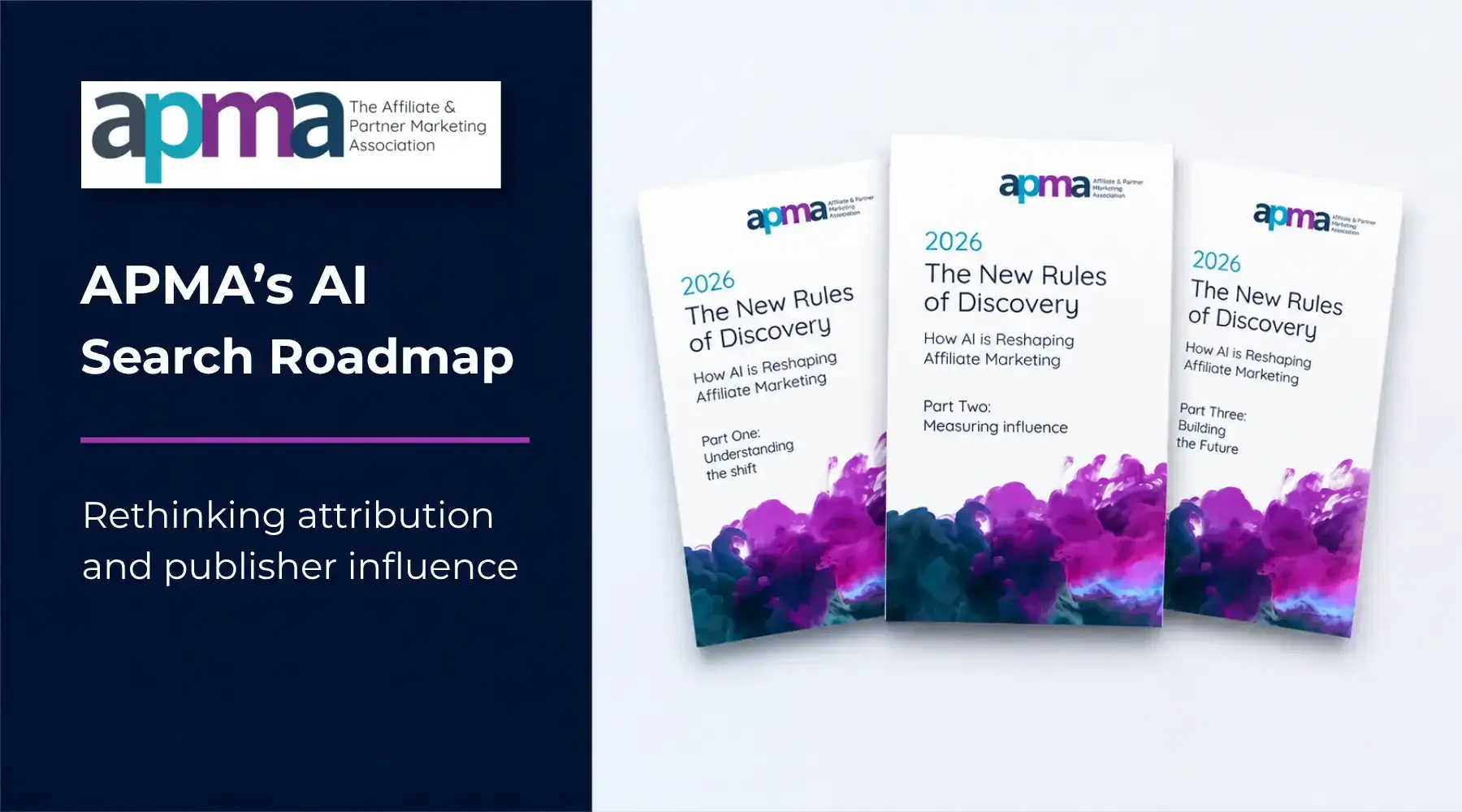
The Affiliate & Partner Marketing Association has published a new industry report examining how AI search could reshape publisher discovery, affiliate attribution and commercial agreements.
Titled The New Rules of Discovery: How AI is Reshaping Affiliate Marketing, the report argues that publisher content can influence AI-generated recommendations even when the customer never visits the original website or produces a trackable affiliate click. It also outlines how measurement and payment models may need to evolve as more product research moves into AI platforms.
Key Takeaways From the APMA AI Search Report
- AI-generated answers are placing pressure on publisher traffic, particularly during early product research.
- Publisher influence can become separated from the clicks and conversions recorded by affiliate tracking.
- The APMA proposes a three-layer framework covering content access, citations and downstream outcomes.
- Potential commercial models include fixed fees, licensing, visibility-based rewards and hybrid commissions.
- The association is calling for greater industry coordination around measurement standards, testing and regulation.
APMA Maps the Impact of AI Search on Affiliates
The full APMA report was produced by the association’s AI Taskforce and is divided into three parts, covering the shift towards AI-led discovery, the challenge of measuring publisher influence and the commercial models that could emerge in response.
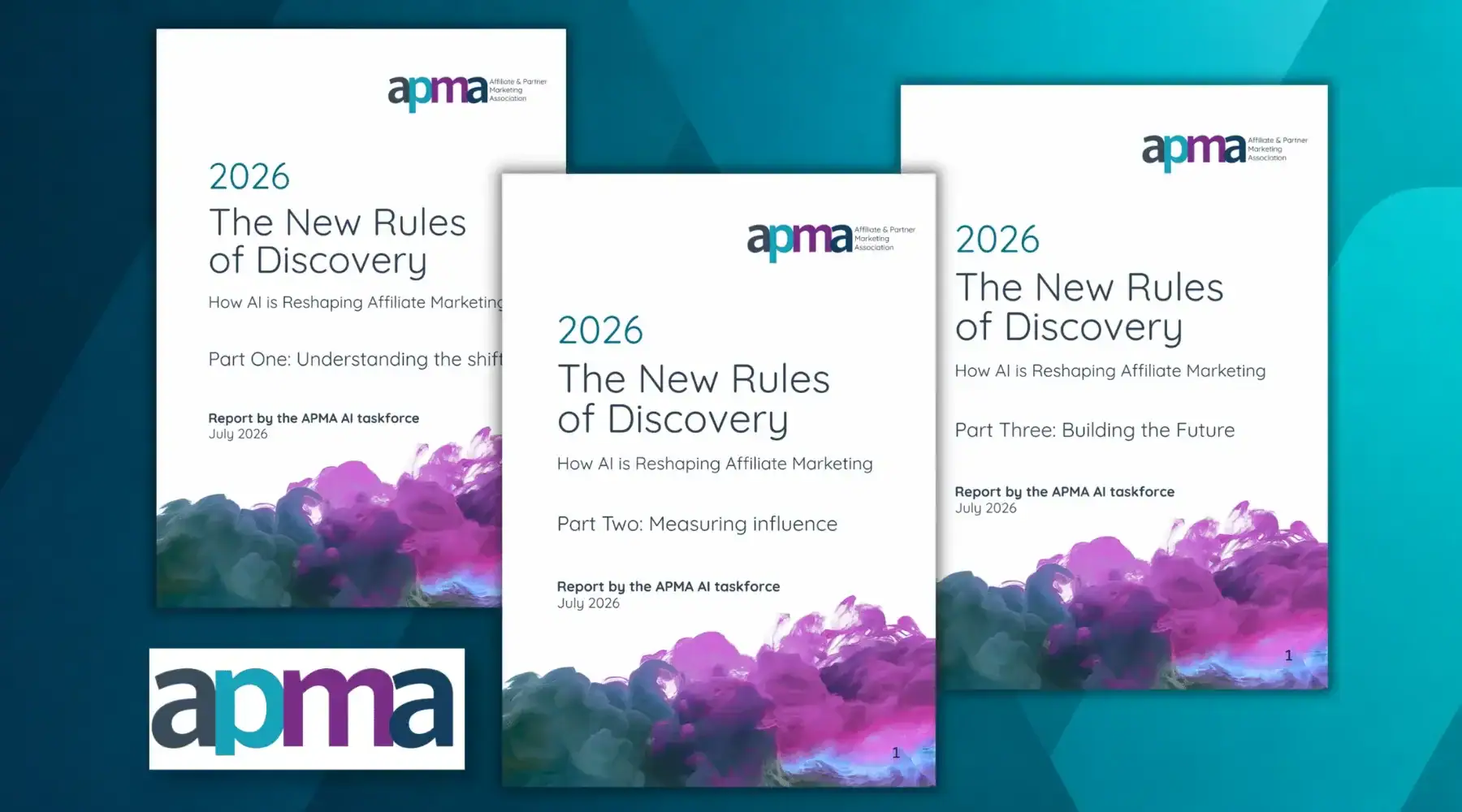
Part One: Understanding the Shift
The first part examines how AI search is changing discovery and consumer behaviour. AI-generated answers can summarise reviews, comparisons and buying guides without requiring users to visit the publishers that produced the original content.
This creates a growing disconnect between the information influencing a purchasing decision and the referral traffic recorded by publishers and affiliate platforms.
Part Two: Measuring Publisher Influence
The second part focuses on three layers within an AI-assisted affiliate journey: an AI system accessing publisher content, that content appearing within an answer and the answer contributing to a later website visit or sale.
Each layer can provide evidence of publisher influence, but there is currently no consistent way to connect the entire journey. A publisher may see that an AI crawler accessed its content or that its page was cited, while an advertiser records a later conversion without knowing whether that content helped influence the customer.
Part Three: Building the Future
The final part considers how the affiliate industry could respond through new measurement standards, technical infrastructure and commercial agreements.
It explores options including content licensing, citation-based rewards, fixed-fee partnerships and hybrid models that combine conventional commissions with additional payments for measurable publisher influence.
Publisher Influence Is Separating From the Click
This problem is particularly important for affiliate marketing because traditional payment models depend heavily on trackable referrals and completed actions. Publisher reviews and comparison pages may still help an AI system decide which brands or products to recommend. However, when the user continues researching inside the AI interface or visits the retailer through another route, the publisher can disappear from the recorded attribution chain.
Recent research covered by Affiverse found a similar gap between publisher influence within AI-generated answers and activity recorded through conventional affiliate tracking. The APMA report takes the discussion further by considering how the industry could measure and commercially reward that influence. The association also highlights agentic commerce as a longer-term challenge. AI assistants may increasingly combine research, comparison and purchasing into a shorter journey, removing several of the touchpoints currently used to identify affiliate involvement.
Could Affiliate Payment Models Change?
The APMA does not suggest that traditional commission payments will disappear. Instead, it argues that commission based only on measurable clicks and sales may not capture every form of publisher value.
The report explores several potential commercial models:
- Fixed-fee partnerships for publishers that consistently contribute trusted content or category expertise.
- Visibility-based rewards linked to measurable citations or appearances within AI-generated answers.
- Content licensing agreements that allow AI platforms or commercial partners to use publisher material under agreed terms.
- Retrieval tracking that records when publisher content is accessed and used by an AI system.
- Hybrid commissions combining conventional conversion payments with additional rewards for measurable influence.
These models remain developing concepts rather than settled industry standards. Citation volume alone may not show whether a publisher caused a purchase, while crawler access does not prove that the content appeared in a customer-facing answer.
Any new model would therefore need safeguards against manipulation, duplication and low-quality citations. It would also require cooperation between AI platforms, advertisers, affiliate networks, tracking providers and publishers.
Measurement Will Require Shared Standards
The report concludes that no single platform or tracking provider can fully solve the problem. Connecting AI retrieval, citations and commercial outcomes will require shared technical standards and more consistent access to data. One initiative already exploring this area is open attribution, which aims to let AI systems pass information about cited content into the wider tracking journey. An earlier Affiverse webinar examined how open attribution could restore publisher visibility within zero-click and AI-assisted purchases.
The APMA says its role will include coordinating further research, supporting industry testing, developing common principles and representing affiliate businesses in regulatory discussions. The report also includes appendices covering the association’s publisher survey and emerging measurement tools being developed by its members. This work sits alongside the association’s wider focus on industry standards. In June, the APMA introduced an affiliate compliance reporting portal for reporting suspected misconduct and serious breaches across the ch
What the APMA Roadmap Means for the Industry
The immediate challenge is not replacing the CPA model. It is identifying where publisher influence is being lost before a click is recorded and determining which signals are reliable enough to support commercial decisions.
Publishers may need better visibility into crawler activity and AI citations. Advertisers and affiliate managers may need to review whether declining referral traffic always indicates declining partner value. Networks and technology providers, meanwhile, will face pressure to connect signals that currently sit across separate systems.
The APMA report does not provide a finished attribution solution. It establishes a framework for how the industry can begin testing one while considering how publishers should be rewarded when their content influences a sale without producing a conventional affiliate click.
Everflow
Connect
Tradedoubler
Connect
1win Partners
Connect
Shopnomix, a Nomix Group Company
Connect
Huffson Group
Connect
Kawaii Partners
Connect
Trackdesk
Connect
Share your expertise and expand your reach and become a content contributor with us today!
Contact Us To Find Out More