Samsung Ads Brings Smart TV Home Screen Ads to Programmatic Buyers
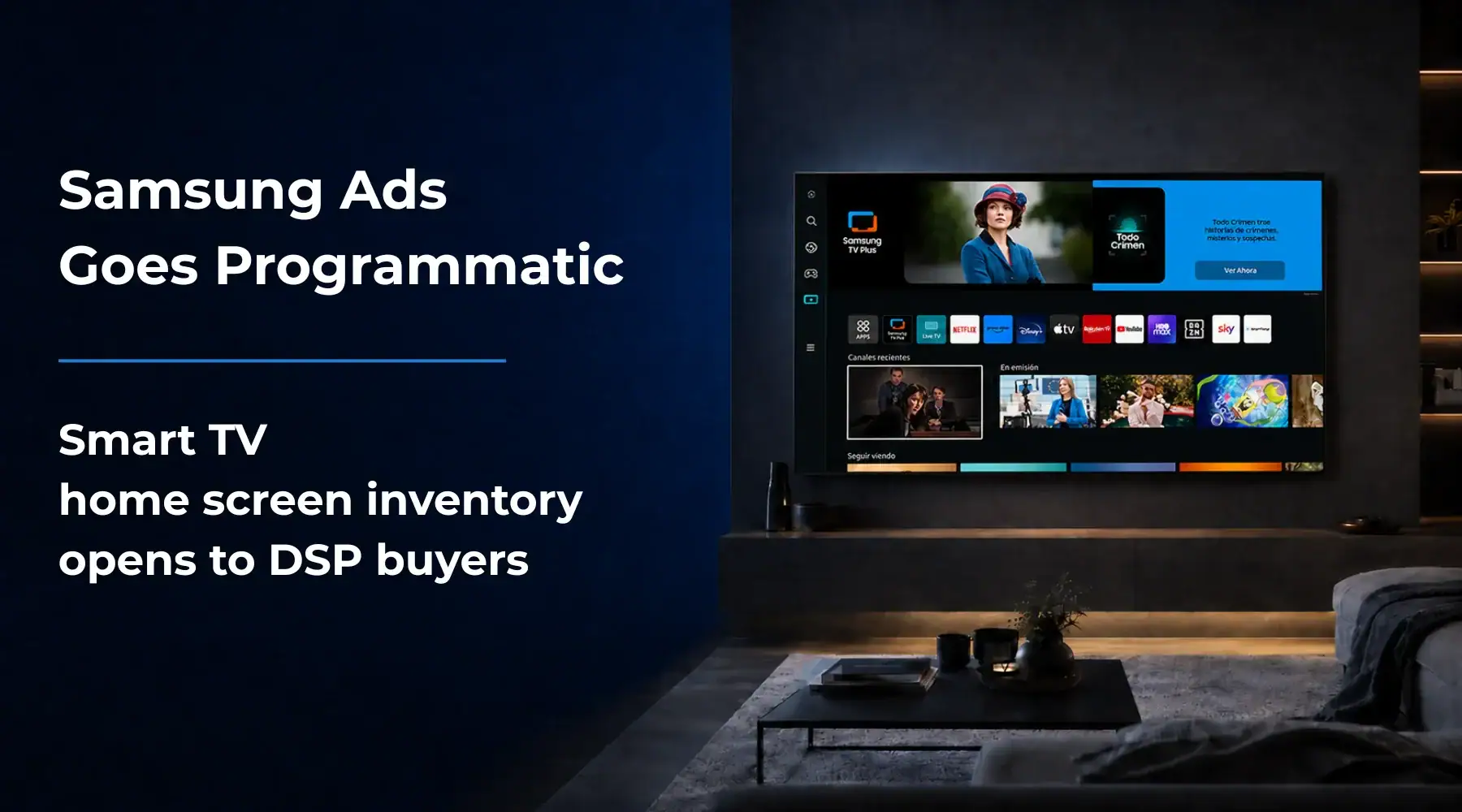
Samsung Ads has opened its Smart TV home screen inventory to programmatic buying, giving advertisers a new route into one of the most visible areas of the connected TV experience. The company said its high-impact home screen units will become available through integrations with The Trade Desk and Google Display & Video 360. Magnite’s SpringServe technology powers the setup, with global rollout expected from Q3 2026.
For advertisers already buying connected TV through demand-side platforms, the update removes some of the friction around Samsung’s home screen placements. Instead of planning that inventory through a separate direct route, buyers will be able to activate it inside platforms they already use for wider video, display and omnichannel campaigns.
Key Takeaways: What the Samsung Ads Update Means
- Samsung Ads will make Smart TV home screen inventory available programmatically through The Trade Desk and Google Display & Video 360.
- Magnite’s SpringServe technology will support the integration, with global rollout expected from Q3 2026.
- The update gives advertisers a clearer route to buy Samsung home screen placements through tools they already use for wider media campaigns.
- For performance marketers, the move adds another layer to CTV measurement, especially when exposure leads to later search, review visits, affiliate clicks or conversions.
- The story is relevant to affiliates because connected TV can influence brand discovery before the user reaches a comparison site, review page or search result.
What Samsung Ads Has Announced
Samsung Ads said advertisers will be able to buy Smart TV home screen placements programmatically through The Trade Desk and Google Display & Video 360.
The Samsung home screen is one of the most valuable ad units in streaming.
said Eldad Persky, Senior Vice President, Global Product, Engineering & Business Development for Samsung Electronics.
The company described the home screen as a premium surface within connected TV because viewers see it before they choose an app, streaming service or piece of content. That gives brands a placement at the start of the viewing session, rather than inside a specific streaming environment. The rollout will begin globally in Q3 2026. Samsung also said more platform partnerships will follow.
The Trade Desk confirmed it will rank among the first platforms to access the inventory programmatically. The integration uses Magnite’s SpringServe, which supports ad serving and programmatic access across connected TV inventory.
Why the Smart TV Home Screen Matters
The home screen holds a different role from standard streaming ad slots. A viewer doesn’t need to start a show first. The placement appears while they navigate the TV interface, select an app, or decide what to watch. Short window, high visibility.
That matters for brands trying to reach audiences before content choice happens. It also gives media buyers a way to place campaigns closer to the point of navigation, where viewers move between streaming apps, live TV services, gaming, music and other connected TV functions.
Samsung’s pitch centers on that access. The company wants advertisers to treat the home screen as part of connected TV planning, rather than a separate display surface sitting outside the normal campaign workflow.
What This Means for Programmatic Buyers
The update gives programmatic buyers easier access to Samsung’s home screen inventory through familiar tools. That matters because connected TV campaigns often sit across several buying paths. Some inventory runs through direct deals. Some run through private marketplaces. Some flows through open or curated programmatic channels. Each route adds planning work, reporting questions and extra coordination.
By opening home screen units through The Trade Desk and Google Display & Video 360, Samsung Ads gives brands and agencies a clearer route to include those placements in broader media plans. This connects with wider conversations around media buying and affiliate programs, especially as paid media teams try to connect awareness activity with performance-led channels.
It could also help buyers manage frequency and audience planning across more campaign touchpoints. That depends on the setup, the buyer’s data access, and how each advertiser measures outcomes. Still, the direction looks clear: premium connected TV inventory keeps moving into automated buying environments.
Why Affiliates and Performance Marketers Should Watch
This isn’t a direct affiliate marketing update. Affiliates won’t suddenly build campaigns around Samsung home screen ads because of one platform integration. But the story still matters because CTV buying keeps moving closer to the tools and workflows used by performance teams. That includes DSPs, audience segments, campaign dashboards and attribution discussions.
For affiliate and partner teams, there are three points to watch:
- More media overlap: Brands may test more upper-funnel and mid-funnel media alongside affiliate, creator, search and paid social activity.
- More attribution questions: If a consumer sees a CTV placement, searches for the brand later, reads a review, clicks an affiliate link and converts, where does the value sit?
- More discovery before the click: Connected TV can influence brand awareness before a search, review visit or comparison click takes place.
The update also fits into the wider growth of digital video advertising, as brands test video-led placements beyond social feeds and YouTube-style environments. For affiliates exploring alternative traffic channels, connected TV deserves attention for a simple reason: it can shape brand discovery before the user reaches a search result, review page or comparison site. That doesn’t make CTV an affiliate channel by default. It does make it part of the same customer journey.
Programmatic Access and AI-Assisted Buying
Samsung also linked the move to the rise of automated and AI-assisted media buying. That point needs careful handling. The main news here concerns programmatic access to Smart TV home screen inventory. The AI angle sits around where buying workflows may head next, as advertisers lean on automated planning and campaign optimization tools. Still, the link makes sense. As more premium inventory enters programmatic systems, buyers may depend more on automation to decide where ads run, how budgets shift and which audiences receive exposure.
That connects with wider industry moves around AI-assisted campaign management. The more platforms automate buying decisions, the more marketers need clear reporting on placement, spend and results. Affiliate teams should care about that. When media buying becomes more automated, partner teams need stronger context around how paid exposure affects branded search, direct traffic, review traffic and partner conversions.
Affiverse Take: Why Measurement Comes Next
Samsung Ads has done more than add another buying route. It has moved a high-visibility connected TV placement closer to the programmatic systems advertisers already use. That matters for performance teams because channel lines keep blurring. A home screen ad can create awareness, a search campaign can capture intent, a review site can influence trust, and an affiliate link can close the sale.
The hard part comes after the impression. Brands still need to understand how CTV exposure connects to later customer action. Without that, media teams may credit the last click while missing the earlier touchpoints that pushed the user there. Samsung’s home screen inventory will enter The Trade Desk and Google Display & Video 360 from Q3 2026. For partner marketers, the detail to watch isn’t just the placement. It’s how advertisers measure the value of every action that follows it.
Everflow
Connect
Tradedoubler
Connect
1win Partners
Connect
PIN-UP Partners
Connect
Shopnomix, a Nomix Group Company
Connect
V.Partners
Connect
Huffson Group
Connect
Share your expertise and expand your reach and become a content contributor with us today!
Contact Us To Find Out More