Creator Fatigue Is Pushing Brands Beyond Transactional Affiliate Partnerships
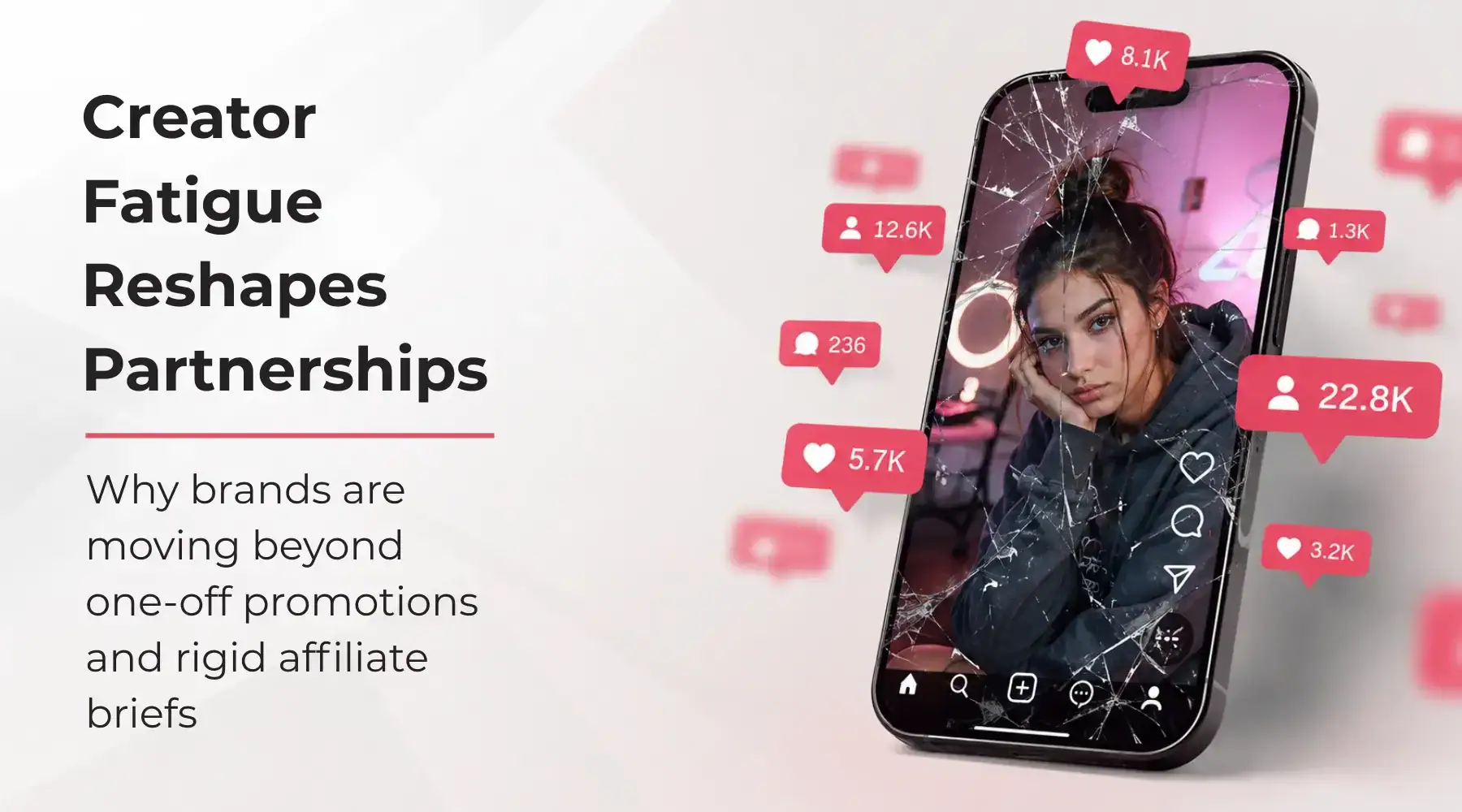
Consumer fatigue with heavily commercial creator content is forcing brands to reconsider how they work with influencers and affiliate partners, even as investment in the creator economy continues to rise. A new Vogue Business report published on August 3 describes a market in which audiences are becoming more selective while creators face growing pressure to produce polished content, demonstrate measurable value, and remain continuously visible. The result is a shift away from repetitive sponsored posts and tightly controlled campaigns.
What Creator Fatigue Means for Affiliate Partnerships
- US creator advertising spend is expected to reach $44 billion in 2026.
- CreatorIQ found that 77% of surveyed marketers believe creator content outperforms traditional branded advertising.
- The top 10% of creators received 62% of creator payments, while many others depend on several income sources.
- Brands are involving creators earlier in campaign development instead of treating them only as distribution channels.
Creator Investment Keeps Growing
The pressure on creator marketing is emerging during a period of significant spending growth. The Interactive Advertising Bureau expects US creator ad spend to reach $44 billion this year, up from $29.5 billion in 2024.
The CreatorIQ Creator-Powered Funnel report found that creator content represents an average of 44% of paid media creative among the companies surveyed. Of the 100 paid media marketers and executives included, 92% said their businesses use creator content in paid media, while more than eight in 10 reported achieving at least 2x return on investment.
Brands are therefore unlikely to retreat from creator partnerships. The more immediate question is how they can maintain performance without making every creator post feel like another conventional advertisement.
Audiences Are Becoming More Selective
Vogue Business cited Mintel research showing that consumers are more likely to trust creators who do not constantly try to sell to them. Relevant expertise and shared interests also influenced trust, while personal stories, reviews, and product recommendations remained among the most enjoyed formats.
Consumers are not turning away from creators themselves. They are rejecting content that feels generic, overly scripted, or disconnected from real life.
The comment, from Mintel analyst Haley Ferrini, presents creator fatigue as a quality and relevance problem rather than evidence that audiences no longer value recommendations.
That distinction matters for affiliate marketing. Creators can combine brand fees, platform payments, and sales commissions, but the commercial model still depends on audience confidence. Affiverse’s TikTok Creator Monetization Guide explains how Shop Affiliate, Creator Rewards, and brand deals compensate different actions.
Brands Give Creators More Influence Over Campaigns
A separate Digiday report published on August 3 found that brands are bringing creators into the marketing process earlier. PepsiCo-owned Bubly now provides an initial campaign idea that creators can develop around their existing style and audience. Other brands and agencies are using creators to review concepts, provide product feedback, and contribute to future campaign planning.
A creator is therefore no longer hired only to receive a finished brief and publish approved content. Their knowledge of the audience becomes part of campaign development.
Affiliate teams have been moving in a similar direction. Affiverse’s podcast on rethinking affiliate, creator and marketplace strategies examined why separating creator and affiliate activity into different teams, budgets, and measurement systems no longer reflects the customer journey.
Bringing the channels together does not require every creator partnership to become commission-only. A longer-term agreement could combine payment for creative work with incentives tied to attributed sales, qualified leads, or other agreed-upon outcomes. The structure should reflect the creator’s role and the parts of the customer journey that can be measured reliably.
Smaller, More Relevant Partnerships May Gain Value
The shift creates a stronger case for selecting creators based on relevance and community trust rather than follower count alone. Affiverse previously examined this issue when Target ended its dedicated creator affiliate program and moved toward smaller, more targeted influencer relationships. Large-scale programs can become difficult when recruitment grows faster than partner support, content oversight, and reliable attribution.
A large creator roster can produce reach, but repeated and interchangeable promotional content may offer limited influence. Smaller groups of creators with credible subject knowledge may give brands more control over quality while allowing partners to develop a recognizable relationship with the product.
Human Content Becomes a Commercial Differentiator
The growth of AI-generated creator content adds another layer to the discussion. Vogue Business points to an emerging “human premium,” where audiences place greater value on creators who appear recognizably personal and honest as synthetic content becomes more common. That trend is already visible in social commerce. Rare Beauty and SharkNinja have both pushed back against AI-generated TikTok Shop affiliate videos, raising questions about product testing, brand approval, and whether viewers can trust what they are seeing.
For affiliate managers, creator fatigue is less a warning to reduce creator investment than a reason to improve how partnerships are selected and managed. Brands may need fewer generic briefs, clearer creative boundaries, better performance measurement, and relationships that give creators time to understand the products they recommend. Creator marketing is still growing. The transactional model around it is what increasingly looks under pressure.
Everflow
Connect
Tradedoubler
Connect
1win Partners
Connect
PIN-UP Partners
Connect
Shopnomix, a Nomix Group Company
Connect
V.Partners
Connect
Huffson Group
Connect
Kawaii Partners
Connect
Share your expertise and expand your reach and become a content contributor with us today!
Contact Us To Find Out More