OpenAI IPO Filing Puts ChatGPT Monetization in the Spotlight
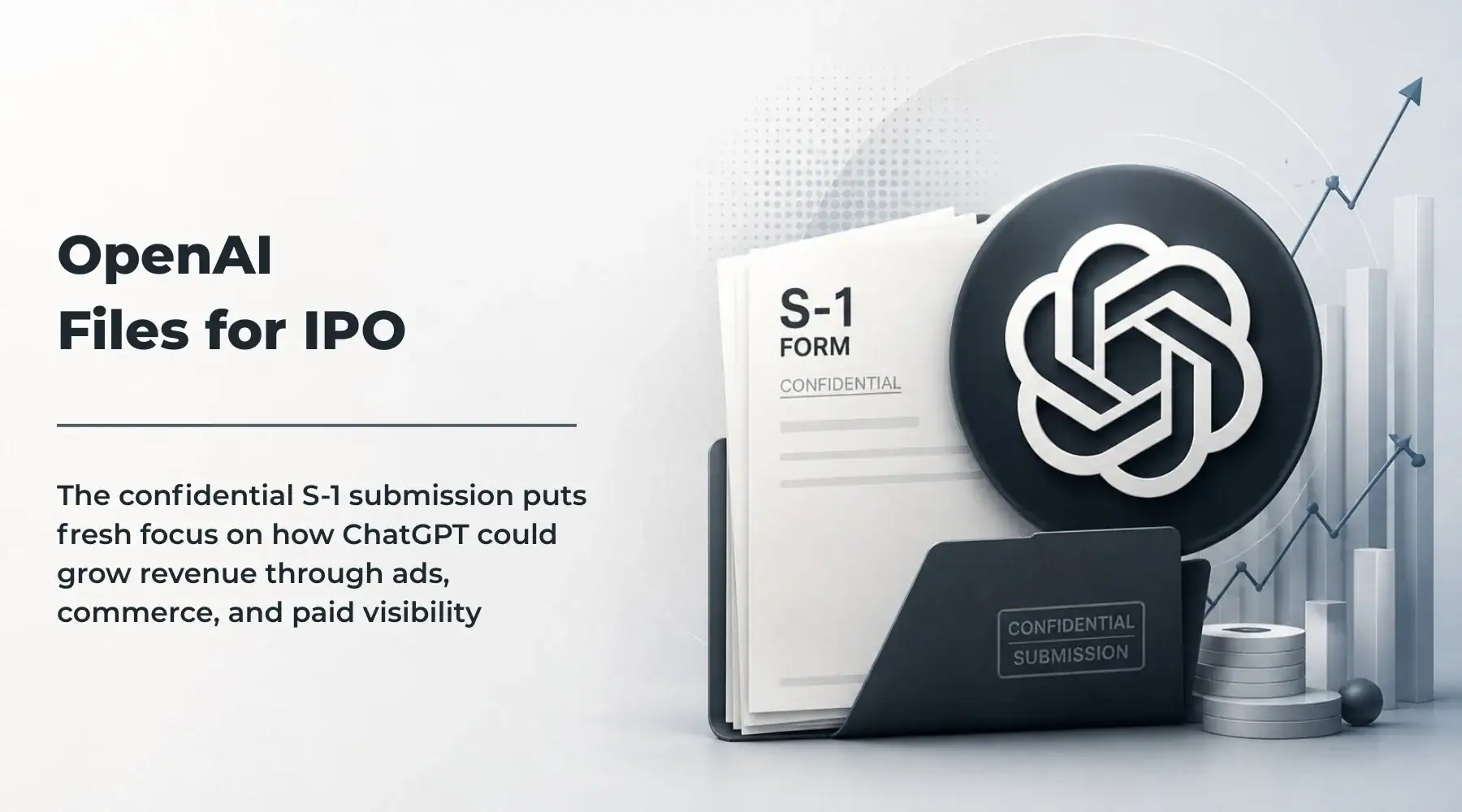
OpenAI has taken a formal step toward a possible public listing, and that move puts fresh attention on how ChatGPT could make money beyond subscriptions and enterprise deals.
The company confirmed in an official OpenAI announcement that it has submitted a confidential draft S-1 registration statement to the U.S. Securities and Exchange Commission. In the short company note, OpenAI said it has “not decided on timing yet” and added that a public listing “may be a while” because some work may prove easier while the company remains private.
OpenAI could target a valuation of up to $1 trillion, although the company has not confirmed the size, timing, or terms of any possible IPO.
The IPO filing matters less as a stock market story and more as a monetization signal. Affiverse has already covered ChatGPT’s monetisation shift as an affiliate issue, and the possible IPO gives that question a sharper commercial frame.
ChatGPT now sits close to search, research, product discovery, business workflows, and customer decision-making. If OpenAI moves deeper into advertising, sponsored answers, commerce, or paid discovery, marketers will need to understand how visibility works inside AI-led interfaces.
Key Takeaways: The Commercial Signals Behind OpenAI’s IPO Filing
- OpenAI has confidentially submitted a draft S-1 to the SEC, starting the formal path toward a possible IPO.
- The company says it hasn’t decided when it may go public.
- OpenAI could seek a valuation of up to $1 trillion.
- The filing draws more attention to how ChatGPT may generate revenue from advertising, commerce, and enterprise use.
- For affiliates and performance marketers, the bigger issue is how brands appear inside AI-generated answers, product comparisons, and recommendation flows.
OpenAI Keeps IPO Timing Open
OpenAI’s own statement avoids hype. The company confirmed the filing because it expected the news to leak, but it didn’t commit to a timeline. A confidential S-1 lets a company prepare for an IPO while keeping sensitive financial details out of public view for now. It doesn’t guarantee a listing. It gives OpenAI the option to move faster if market conditions, investor demand, and internal planning line up.
This can be seen as part of a wider race among large AI companies to reach public markets. Anthropic has also confidentially filed for a U.S. IPO, which puts two of the most closely watched AI firms on a similar path. OpenAI brings a different level of consumer awareness into that race.
ChatGPT has become one of the best-known AI products in the market, with usage that reaches consumers, students, developers, agencies, publishers, and large companies. That reach gives OpenAI several ways to grow revenue. Subscriptions already play a role. Enterprise deals do too. Advertising and commerce could become harder to ignore as the company faces investor pressure to explain how daily attention turns into long-term revenue.
Why ChatGPT Monetization Matters to Marketers
ChatGPT doesn’t behave like a classic search engine. Users ask questions, compare options, request recommendations, summarize research, draft emails, plan purchases, and test ideas inside a single interface. That creates a different kind of commercial space.
In traditional search, brands compete for rankings, paid placements, snippets, shopping units, and organic clicks. In AI assistants, the experience compresses. The user may see one answer, one shortlist, one recommended product category, or one set of next steps. That changes the marketing question. It’s no longer enough to ask whether a brand ranks for a keyword. Marketers also need to ask whether AI systems understand the brand, describe it accurately, compare it fairly, and include it when users ask buying-intent questions.
Affiverse has covered this same pressure in relation to Google’s 24/7 AI agents, where search starts to behave more like a background research layer than a static list of links. In that environment, visibility inside conversational search can matter as much as the ranking position itself. OpenAI’s IPO filing brings that same issue into the ChatGPT environment. If OpenAI builds more commercial inventory into ChatGPT, advertisers will want answers to basic performance questions: where did the placement appear, what prompted it, how did the user interact, and what counted as measurable value?
The Advertising Question Around ChatGPT
OpenAI’s IPO move comes as the company continues its ChatGPT ads expansion. That angle will interest agencies, affiliates, ecommerce teams, and SaaS brands watching AI tools turn into acquisition channels. Still, marketers should separate confirmed facts from likely direction.OpenAI has confirmed the confidential S-1 filing. OpenAI has not laid out a full public ad product roadmap in its S-1 announcement. That doesn’t make the ads angle weak. It just means the story needs careful wording.
ChatGPT already controls valuable attention. Users bring high-intent questions into the product, often phrased in natural language. Some of those questions sit close to purchase decisions: “Which tool should I use?”, “What’s the best option for my budget?”, “Compare these platforms,” or “Help me choose between these brands.”
That type of intent attracts advertisers. It also raises hard questions about trust. If an AI assistant recommends a product, users need to understand whether that answer came from organic retrieval, brand presence, a commercial placement, or some mix of signals. For publishers and affiliates, the same question hits revenue. If AI tools answer comparison queries directly, fewer users may click through to review pages, guides, and partner content. The zero-click attribution problem already shows how AI-led journeys can influence buying decisions without sending users through the normal click path.
What This Means for Affiliate and Partner Marketing
Affiliate marketers should watch OpenAI’s next commercial moves closely. AI assistants could create new paid placement models. They could also make existing content partnerships harder to track. A user might ask ChatGPT for product advice, visit a brand later, and convert without touching the affiliate page that helped train, inform, or validate the answer. That creates attribution tension.
Partner marketers need clearer data on AI visibility, citation behavior, referral paths, and branded answer presence. The first practical step is to track AI traffic in GA4, then compare those visits against organic search, referral, direct, and paid channels. They also need content that gives AI systems specific, verifiable context. Thin pages won’t help much when assistants compare brands on features, price, use cases, trust signals, and customer fit. That’s why Affiverse’s guide to Google’s AI search guidelines for affiliates remains relevant beyond Google. AI systems still need useful source material. Clear structure, accurate claims, expert context, and crawlable pages give brands and publishers a better chance of being understood.
OpenAI’s IPO filing doesn’t answer how ChatGPT advertising will work at scale. It does sharpen the commercial pressure around the product. Once a company prepares for public markets, revenue mix matters. Margins matter. Growth stories matter. For ChatGPT, that means marketers will keep watching for signs of how OpenAI turns attention, answers, and recommendations into paid media products.
The next question won’t just be whether ChatGPT has ads. It’ll be who gets seen when the answer appears.
Everflow
Connect
Tradedoubler
Connect
1win Partners
Connect
PIN-UP Partners
Connect
Shopnomix, a Nomix Group Company
Connect
V.Partners
Connect
Share your expertise and expand your reach and become a content contributor with us today!
Contact Us To Find Out More