TikTok US Deal Closes: ByteDance Retaining E-Commerce and Advertising Control
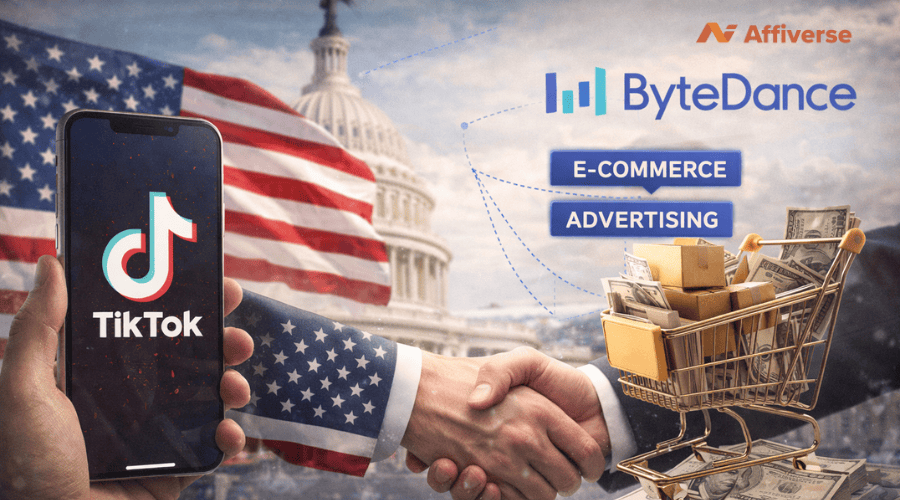
TikTok has officially closed its long-awaited joint venture deal, ending years of regulatory uncertainty and ensuring the platform’s 170 million US users can continue scrolling, shopping, and converting. The agreement, finalised on January 22, 2026, establishes TikTok USDS Joint Venture LLC under majority American ownership while keeping critical commercial operations firmly in ByteDance’s hands.
For affiliate marketers, the deal’s structure carries significant implications. While headlines focus on national security measures and data protection, the commercial reality tells a different story: ByteDance will continue controlling TikTok Shop, advertising, and marketing operations in the US market. This means the social commerce engine that drove $100 million in single-day Black Friday sales remains under the same management that built it.
The Ownership Structure Explained
The joint venture divides TikTok’s US operations into two distinct entities. The newly formed TikTok USDS Joint Venture LLC handles data protection, algorithm security, content moderation, and software assurance. Oracle, Silver Lake, and Abu Dhabi’s MGX investment firm each hold 15% of this entity, with existing ByteDance investor affiliates controlling 30.1% and ByteDance retaining a 19.9% stake.
Adam Presser, formerly TikTok’s head of operations and trust and safety, leads the new venture as CEO. A seven-member, majority-American board governs the entity, including TikTok CEO Shou Chew and executives from Oracle, Silver Lake, and MGX.
The second entity, wholly owned by ByteDance, manages what the company describes as “global product interoperability and certain commercial activities, including e-commerce, advertising, and marketing.” This division handles revenue generation while the joint venture receives a portion of revenue for its technology and data services.
Why ByteDance Retained Commercial Control
The deal structure reflects a practical compromise between national security concerns and commercial realities. US lawmakers worried primarily about data access and algorithmic influence, not advertising revenue. By ceding control of data handling and content moderation to American-governed entities while retaining commercial operations, ByteDance addressed regulatory concerns without dismantling its most profitable business functions.
For TikTok’s social commerce ecosystem, this continuity matters. The platform’s integration of entertainment and shopping depends on coordination between content algorithms and e-commerce infrastructure. Splitting these functions across hostile entities would likely degrade the seamless shopping experience that makes TikTok Shop competitive.
The algorithm itself receives a nuanced treatment. While the joint venture will “retrain, test, and update the content recommendation algorithm on US user data,” ByteDance licenses the underlying technology to the US entity. This arrangement preserves the recommendation engine’s effectiveness while adding American oversight to how it operates domestically.
What This Means for TikTok Shop and Creator Commissions
Affiliate marketers and creators working with TikTok Shop should expect operational continuity. Commission structures, ranging from 5% to 30% depending on product categories, remain unchanged. The affiliate program’s mechanics, including the 30-day commission protection period that locks in rates for creators, continue under the same management.
The platform’s affiliate ecosystem has matured significantly since TikTok Shop launched in the US in September 2023. CJ Affiliate’s integration with TikTok Shop expanded the platform’s reach beyond native creators to traditional affiliate publishers. This cross-platform approach allows affiliates to promote TikTok Shop products through established blogs, email newsletters, YouTube channels, and other content channels.
For brands operating TikTok Shops, the deal removes a significant uncertainty that has complicated long-term planning. The threat of a ban made multi-year partnership commitments risky. With that uncertainty resolved, expect brands to increase investment in creator partnerships and affiliate program development.
Algorithm Retraining and Potential Impacts
One element worth monitoring is the algorithm retraining process. The joint venture will retrain TikTok’s recommendation engine on US user data, with Oracle overseeing the process. This change aims to ensure “the content feed is free from outside manipulation.”
Algorithm changes historically affect content distribution and, by extension, affiliate conversion rates. While the retraining focuses on security rather than commercial optimisation, any modification to recommendation systems carries potential downstream effects. Creators and affiliates should monitor their performance metrics over the coming months for unexpected shifts in reach or engagement.
The trends reshaping affiliate marketing in 2026 include social commerce’s continued growth and compressed conversion funnels where discovery and purchase happen within seconds. TikTok’s algorithm drives both phenomena. Even well-intentioned changes could disrupt established patterns, though ByteDance’s continued control of commercial operations suggests the company will work to minimise disruption.
CapCut and Lemon8 Also Covered
The joint venture’s safeguards extend beyond TikTok to include CapCut and Lemon8, plus “a portfolio of other apps and websites in the US.” This matters for creators who use CapCut for video editing, as the tool has become integral to TikTok content production workflows.
Lemon8, ByteDance’s lifestyle content platform, gained users during TikTok’s brief January 2025 shutdown. The app saw significant download spikes as users sought alternatives, though traffic returned to TikTok once service resumed. Including both platforms under the joint venture’s umbrella provides regulatory consistency across ByteDance’s US consumer applications.
The Valuation Question
Official deal valuations remain murky. Vice President JD Vance indicated the entity is worth approximately $14 billion, though independent estimates for TikTok’s US business have ranged from $35 billion to $50 billion. ByteDance’s global valuation stands around $480 billion in private markets.
The $14 billion figure likely represents the joint venture specifically, not TikTok’s broader US commercial value. Since ByteDance retains control of revenue-generating operations and receives payments from the joint venture for technology services, the actual commercial value flowing through TikTok’s US operations likely exceeds the joint venture’s stated worth.
Strategic Implications for Affiliate Programs
The deal’s resolution should prompt affiliate program managers to reconsider their social commerce strategies. TikTok’s regulatory uncertainty previously made it a risky channel for significant program investment. That risk has diminished substantially.
Consider these strategic adjustments:
Increased TikTok Shop Investment: With the platform’s future secured, allocate resources to creator recruitment, product onboarding, and TikTok-specific content strategies. The window for establishing strong creator relationships before competition intensifies is narrowing.
Cross-Platform Integration: Following CJ Affiliate’s model, integrate TikTok Shop products into broader affiliate strategies. Publishers can promote TikTok Shop offerings through established content channels, extending reach beyond TikTok’s native audience.
Live Commerce Development: Livestream shopping continues growing on TikTok, with the format combining entertainment, social proof, and immediate purchase opportunity. Programs supporting live commerce capabilities will capture value in this expanding channel.
Creator Relationship Building: As TikTok expands affiliate marketing opportunities and invests in creator education through initiatives like its Creator Academy, the pool of skilled affiliate creators grows. Early relationship building with emerging creators offers favorable economics compared to competing for established influencers.
Platform Diversification Still Matters
While the deal removes TikTok’s existential regulatory risk, platform diversification remains essential for affiliate marketers. The Booking.com affiliate partnership terminations, Cashrewards collapse, and various network consolidations throughout 2025 demonstrated that platform-specific risks extend well beyond government intervention.
ByteDance’s retained control of commercial operations means business decisions, commission rate changes, and program modifications remain subject to a single company’s strategic priorities. The regulatory deal protects against a ban, not against commercial policy changes that could affect affiliate economics.
Smart affiliate marketers should view TikTok as one component of a diversified partner portfolio rather than a primary revenue channel. Build direct creator relationships that transcend any single platform, maintain presence across multiple affiliate networks, and develop owned audiences through email lists and communities.
Questions That Remain
Several aspects of the deal lack clarity. The precise relationship between ByteDance’s commercial entity and the joint venture’s data operations requires ongoing coordination that could create friction. How disputes between these entities would be resolved remains unclear.
The Chinese government has not officially commented on the agreement, though Trump administration officials indicated both governments signed off on the deal. Export control regulations governing algorithm licensing could create future complications, particularly if US-China relations deteriorate.
Additionally, some legal experts question whether the deal’s structure fully satisfies the 2024 law’s requirements, which prohibited any operational relationship between ByteDance and TikTok’s US entity. The arrangement’s reliance on licensing and service agreements rather than complete separation may face future legal challenges.
The Bottom Line
TikTok’s US future is secured, and the commercial engine that matters most to affiliate marketers, specifically TikTok Shop, advertising, and creator partnerships, continues under ByteDance’s management. For programs that hesitated to invest heavily in TikTok due to regulatory uncertainty, that barrier has been removed.
The deal demonstrates that social commerce platforms can navigate geopolitical tensions while preserving their commercial value propositions. For affiliate marketers, the resolution creates stability for planning and investment while reinforcing the importance of understanding how platform ownership structures affect their businesses.
TikTok Shop’s trajectory toward becoming a dominant social commerce channel continues. The battle between TikTok and Amazon for affiliate marketing dominance remains undecided, but TikTok’s survival ensures the competition continues. Programs that position themselves effectively across both platforms, and maintain the diversification to weather future disruptions, will capture the most value from social commerce’s continued growth.
Everflow
Connect
Tradedoubler
Connect
1win Partners
Connect
PIN-UP Partners
Connect
Shopnomix, a Nomix Group Company
Connect
V.Partners
Connect
Huffson Group
Connect
Kawaii Partners
Connect
Share your expertise and expand your reach and become a content contributor with us today!
Contact Us To Find Out More