ShopMy Uses Affiliate Sales to Select Creator Ads for Meta and TikTok
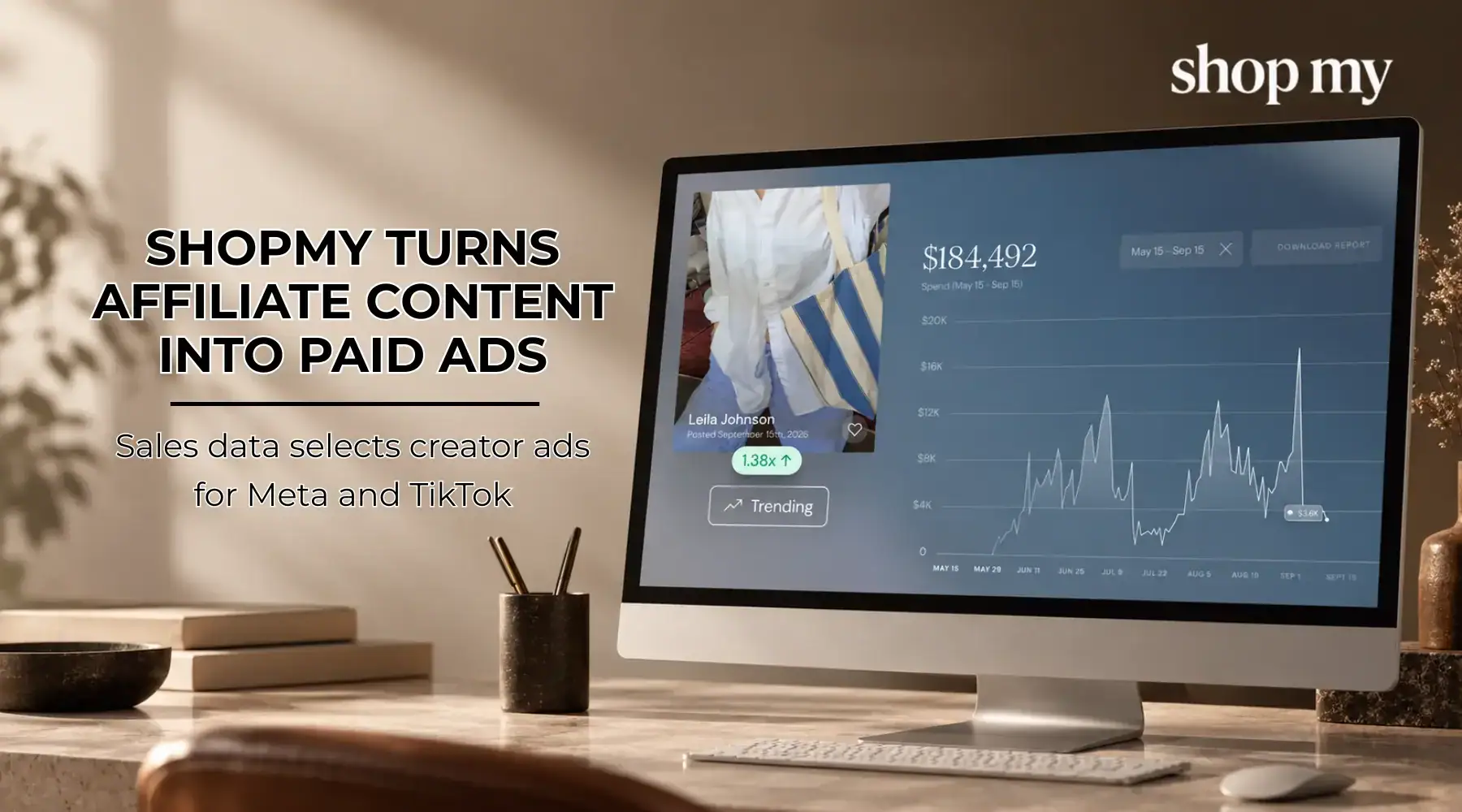
ShopMy has launched Spotlights, a product that turns creator posts already generating affiliate sales into paid ads on Meta and TikTok.
Brands can use performance data to identify content, secure creator approval, and run it as a Meta Partnership Ad or TikTok Spark Ad. Creators receive their existing affiliate commission rather than an upfront production or usage fee, placing conversion performance and more of the financial risk at the center of the arrangement.
Key Takeaways: ShopMy Links Affiliate Data With Paid Social
- Spotlights uses tracked affiliate sales to identify creator content for paid amplification.
- Ads run as Meta Partnership Ads or TikTok Spark Ads under the creator’s handle.
- ShopMy is the first affiliate platform to integrate TikTok’s Content Suite API.
- Creators receive their existing ShopMy commission but no separate usage fee.
- Spotlight-specific commission rates cannot currently be negotiated.
- Creators can approve requests manually, pre-authorize them or pause active ads.
- Each Spotlight receives a separate tracking link to distinguish paid and organic affiliate sales.
- ShopMy’s early performance figures are company-supplied and should not be treated as general benchmarks.
Affiliate Sales Decide Which Content Gets Paid Reach
Traditional creator advertising often starts with a brand brief, a negotiated fee and new content. Spotlights reverses that order.
A creator publishes content organically and attaches a ShopMy affiliate link. If the post generates sales, a brand can request permission to use it as paid advertising.
According to ShopMy’s official Spotlights announcement, brands can organize campaigns around specific products, markets or funnel stages. The ad continues to display the creator’s handle, original content and existing engagement rather than appearing as brand-produced creative.
On TikTok, the system connects with the TikTok One Content Suite API. TikTok says ShopMy is the first affiliate platform to integrate the API, which helps brands discover content, predict its potential ad performance and obtain authorization for Spark Ads.
Harry Rein, co-founder and CEO of ShopMy, said:
The secret to paid performance on social channels right now is creative diversification, running more content from more creators, and learning fast from what converts.
Spotlights is available to all ShopMy brand partners.
Creators Trade Upfront Fees for Commission
Spotlights does not provide a separate production or usage payment. Instead, creators earn the commission rate attached to the original ShopMy link.
An existing custom or elevated rate carries over, but creators cannot currently negotiate a different rate for an individual Spotlight. ShopMy says it may introduce Spotlight-specific rates in the future.
Each ad uses a duplicate of the creator’s original affiliate link. This allows sales and commission generated through paid amplification to appear separately from the link’s organic results.
ShopMy’s creator-facing Spotlights guidance presents this as an uncapped alternative to a fixed fee. A creator could earn more if an advertisement continues converting, but they receive no direct payment if it produces no attributable sales.
That shifts part of the commercial risk from the advertiser to the creator. The brand pays for distribution but does not guarantee compensation for the content itself.
Creators can review requests individually or activate Instant Spotlights, which automatically approves eligible requests. They can also pause an active campaign. On TikTok, the brand cannot alter the original post, while Meta advertisers can mute its audio before launch.
Early Results Need More Context
ShopMy reported that skincare brand MUTHA increased its live partnership ads to more than 100 during one month after testing Spotlights.
The company said MUTHA’s gross merchandise value rose 140% above its pre-Spotlights monthly average, while Meta return on ad spend increased by 55%. The number of creators earning through the brand reportedly grew by approximately 62%.
These results were supplied by ShopMy and MUTHA. The announcement does not disclose the advertising budget, attribution window, product margins, return rate or complete test methodology, so the figures should not be treated as expected outcomes for other advertisers.
What Affiliate Teams Should Set Before Scaling
Spotlights shows affiliate data being used for more than calculating commission. It now helps determine which creators and posts receive paid-media investment.
That creates new operational questions. Advertisers should define whether commission rates remain fixed for the full campaign, how returns and cancellations affect earnings, how long content can run, and whether creators face any category or brand conflicts.
Affiliate terms should also distinguish brand-funded amplification from unauthorized paid advertising by a partner. A creator allowing a brand to run a Spark Ad is not the same as that creator buying traffic independently.
Separate Spotlight links provide a clearer distinction between organic and paid ShopMy sales. However, they do not resolve every attribution conflict. As Affiverse’s earlier analysis of ShopMy and cross-network deduplication showed, several systems can record or claim the same transaction when they cannot compare the complete customer journey.
The launch also follows Meta’s Creator Marketing Hub, which brings creator discovery, permissions, and paid amplification into one workflow. ShopMy adds an affiliate layer by using recorded sales to select content and determine creator compensation.
For brands, the model offers a faster route from proven creator content to paid distribution. For creators, its value will depend on commission rates, attribution, campaign reach, and whether performance-based earnings fairly compensate them for content used as advertising.
Everflow
Connect
Tradedoubler
Connect
1win Partners
Connect
PIN-UP Partners
Connect
Shopnomix, a Nomix Group Company
Connect
V.Partners
Connect
Huffson Group
Connect
Kawaii Partners
Connect
Share your expertise and expand your reach and become a content contributor with us today!
Contact Us To Find Out More