TikTok Shop UK Update Sets Out Separate Carousel Commission Rates
TikTok Shop’s latest UK product update sets out separate commission rates for shoppable carousels, giving photo-based affiliate content its own earnings terms. Sellers can set a dedicated rate, while creators get clearer order labels and guidance on sample obligations. For affiliate teams, the update makes the content format another factor to check when agreeing compensation and measuring results.
Key Takeaways: Carousel Earnings and Sample Rules
- Carousel commission rates can differ from those for video, LIVE, and other affiliate formats.
- Eligible carousel sales can count toward earning a refundable sample’s refund.
- Carousel posts promoting free samples do not count toward free-sample fulfillment.
- Order tags identify sales generated by carousel content.
Commission Rates Depend on the Content Format
TikTok lists the changes in its UK Product Pulse roundup, dated October 12. They also appear in a linked creator guide dated September 23, so the roundup should not be treated as confirmation that the rules first launched this week.
According to TikTok’s carousel guidance, sellers set the rate, and creators can check estimated earnings before posting. Already-earned commission is protected, while Tiered Commission and Commission Boost retain their existing rules.
For creators, that makes the displayed rate part of the production decision. A photo post may take less time to prepare, but the expected commission still needs to justify the work involved. A product that pays well through video may offer different economics through a carousel.
Affiverse’s TikTok creator monetization guide explains how Shop commissions, Creator Rewards, and brand deals use different payment triggers. Carousel-specific rates add another detail to check within the Shop affiliate model.
How to Create a Shoppable Carousel
Creators with access can publish a carousel through TikTok’s photo-posting flow:
- Tap + in TikTok and choose Photo.
- Pick two or more images from your camera roll.
- On the publishing screen, choose Add link and attach up to 10 TikTok Shop products.
- Check the estimated carousel commission and write a caption.
- Publish the post.
TikTok says carousels may appear in the For You feed, Search, the Shop tab, and the creator’s profile. A product link is required for the post to be shoppable and eligible to earn commission.
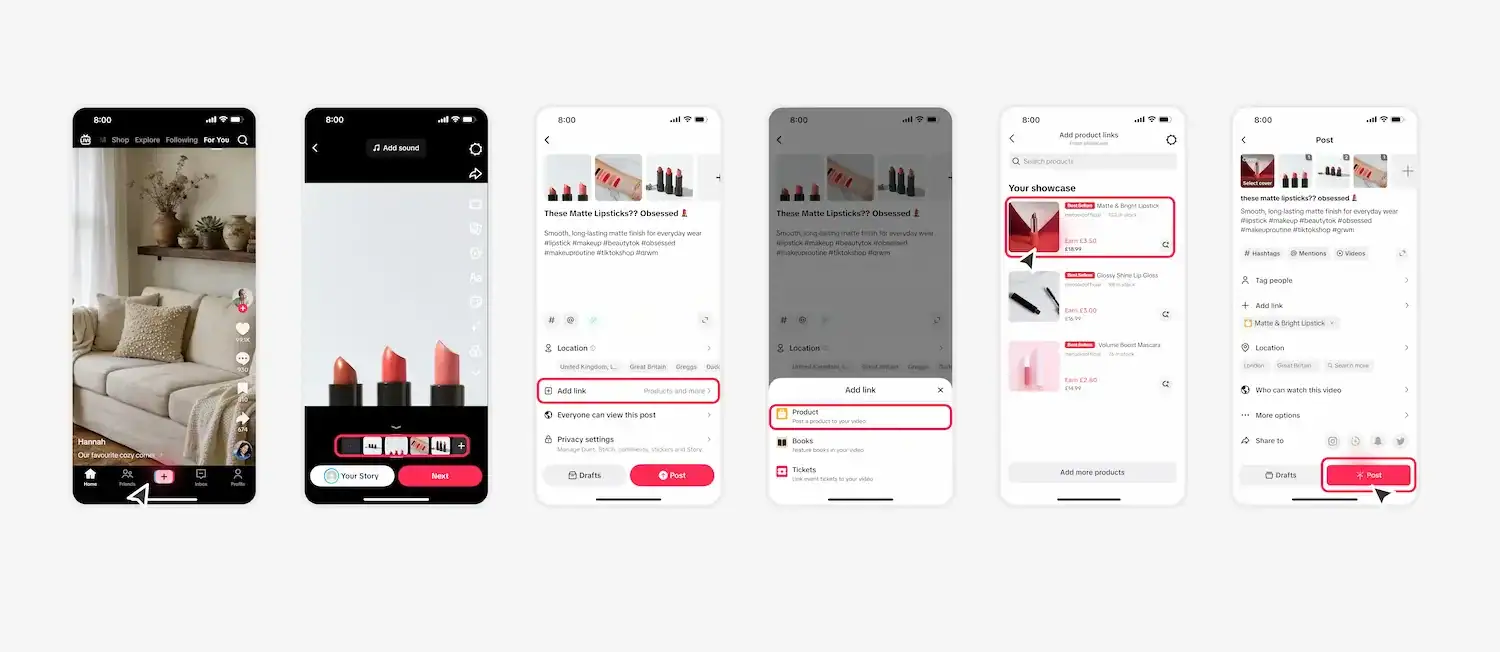
Source: TikTok Shoppable Carousel page.
Refundable and Free Samples Follow Different Rules
The sample distinction is straightforward: qualifying carousel sales can contribute toward a refundable sample’s refund, but a carousel promoting a free sample does not fulfill the free-sample content requirement.
For affiliate managers, that suggests sample terms should identify the required format before a product is dispatched. A creator receiving stock for a video should know whether a separate photo post is part of the agreement and what work remains outstanding.
Our recent coverage of TikTok Shop research on creator activity and shopper trust examines why sampling needs follow-up. Teams need a record of delivered products, published content, and sales outcomes to assess what their sampling budget produces.
Order Tags Give Teams a Way to Compare Formats
TikTok says carousel orders carry identifying tags in seller affiliate reporting and Creator Orders. The linked creator guide still describes the format as being in beta, so availability should be checked within the account.
The labels give affiliate teams a starting point for comparing photo-led content with video. A useful test would record the product, creator, commission rate, selling price, advertising support, and order outcome.
Those details matter because a stronger result may reflect a better offer or more paid distribution. Comparing similar products and campaign conditions makes it easier to decide which format deserves further investment.
Production costs belong in that assessment too. A carousel that generates fewer sales could still justify its cost if it takes substantially less time to produce. Creators and brands need their own results to establish that balance.
UK Retail Programs Need Clear Format Briefs
The update arrives as retailers build more structured TikTok Shop operations. Currys’ recent UK trial, for example, combines creator partnerships with affiliate management and weekly LIVE shopping.
For a program using several formats, briefs should specify the product, deliverable, applicable commission, sample conditions, and person responsible for resolving questions. Reporting should preserve those distinctions so the team can assess each arrangement.
The immediate task is to review the terms attached to planned carousel posts. Clear agreements give creators a firmer basis for deciding what to publish and help brands understand what they are paying for.
Everflow
Connect
Tradedoubler
Connect
1win Partners
Connect
PIN-UP Partners
Connect
Shopnomix, a Nomix Group Company
Connect
V.Partners
Connect
Huffson Group
Connect
Kawaii Partners
Connect
Share your expertise and expand your reach and become a content contributor with us today!
Contact Us To Find Out More