SPUR’s AI Content Rights Coalition: What It Is and Who’s Involved
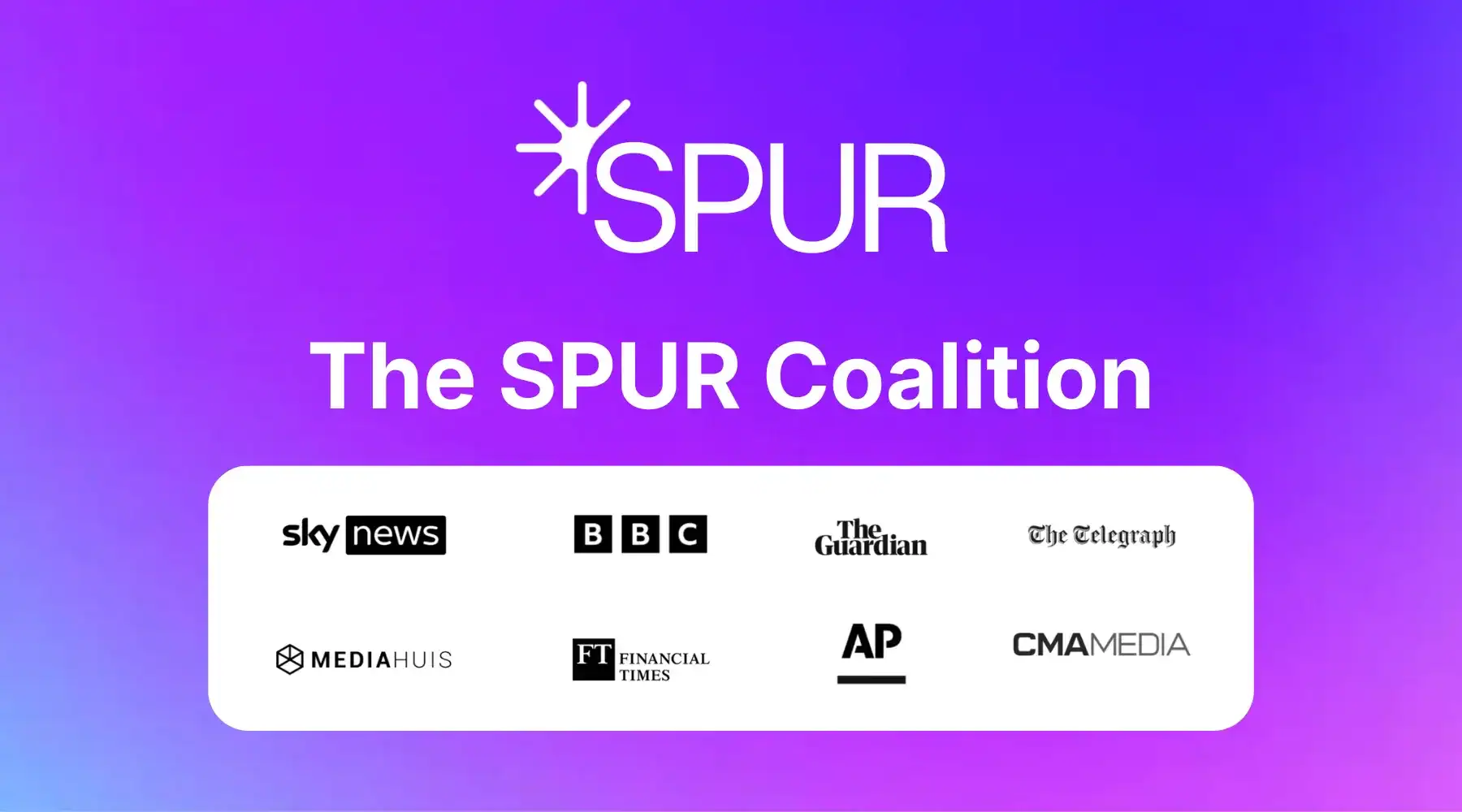
SPUR is a publisher coalition developing standards to help content owners control and monitor how AI systems use their work. Its October 13 announcement added more than 40 members, taking the total above 80 across over 20 countries. MoneySavingExpert and Which? appear among the latest additions, alongside The New York Times, Agence France-Presse, The Economist, and The Atlantic.
Key Takeaways: SPUR’s Role and Latest Expansion
- SPUR develops technical standards and commercial practices for AI use of publisher content.
- Its October expansion brought membership to more than 80 organizations across over 20 countries.
- A Content Telemetry Standard provides a framework for reporting how AI systems use content.
- Publishers retain control over their licensing agreements and commercial relationships.
What Is SPUR?
SPUR stands for Standards for Publisher Usage Rights. It is a nonprofit coalition funded by its members, with a current focus on journalistic content.
According to its official page, the coalition aims to give publishers greater control over content use in generative AI and more visibility into what happens after that content is accessed.
Its work covers the technical and commercial arrangements needed for licensing, including information publishers can use to assess whether content use falls within agreed permissions.
Who Is Involved?
SPUR’s founding members are the BBC, Financial Times, Guardian Media Group, Mediahuis, Sky News, Telegraph Media Group, Associated Press, and CMA Media.
The October 13 membership announcement names The New York Times, AFP, The Atlantic, The Observer, and The Economist among the new participants.
Other additions include MoneySavingExpert, Which?, ITV News, The Canadian Press, DPG Media, and Hong Kong Free Press. The expansion also includes industry organizations from Brazil, Mexico, Argentina, and Japan.
MoneySavingExpert and Which? bring consumer information and advice into a membership that includes individual publishers, news agencies, and representative bodies.
What Does Its Content Telemetry Standard Do?
SPUR published its Content Telemetry Standard version 1 announcement on October 2, following an earlier draft and public consultation.
Telemetry means reporting events. Here, the framework is intended to give AI agents and model builders a common way to report when publisher content is retrieved, used as evidence for an answer, cited, displayed, or engaged with.
Those activities represent different uses of a publisher’s work. Recording them separately could help content owners understand the use covered by a licensing agreement and compare it with the reporting they receive.
SPUR says it is working with industry partners on implementation, proofs of concept, and tools that could help AI companies adopt the protocol. It has also announced a Licensing Advisory Board intended to involve organizations that provide infrastructure or license journalistic content.
Publication of the standard establishes a reporting framework. Its practical reach will depend on implementation by participating services.
How Does Membership Relate to Licensing?
SPUR is not a collective licensing organization. Members retain autonomy over their commercial relationships.
That means a publisher’s membership should be distinguished from any separate agreement allowing an AI company to use its content. The coalition develops recommended standards and practices; each publisher controls its own terms and deals.
Its current membership framework covers organizations primarily engaged in original journalism, with affiliate membership available to trade bodies. Here, affiliate membership refers to a membership category for those organizations.
Why Is It Relevant to Affiliate Publishers?
Reviews, comparisons, and buying guides can inform an AI-generated recommendation even when the reader does not visit the original page. This creates questions about content permissions, usage reporting, and the publisher’s contribution to a later purchase.
Affiverse’s analysis of machine-readable content and AI citations examines how publishers are making their material easier for AI systems to interpret. Clearer formatting and permission to use that material remain separate considerations.
Our Open Attribution podcast with Alex Springer and Leanna Klyne explores how content influence can become invisible in AI-assisted shopping journeys. SPUR’s work addresses the related need for records of content use that can support publishers’ licensing decisions.
The October announcement expands participation in that work. SPUR says its working groups will refine the standard and examine how it can apply to existing and emerging AI uses.
Everflow
Connect
Tradedoubler
Connect
1win Partners
Connect
PIN-UP Partners
Connect
Shopnomix, a Nomix Group Company
Connect
V.Partners
Connect
Huffson Group
Connect
Kawaii Partners
Connect
Share your expertise and expand your reach and become a content contributor with us today!
Contact Us To Find Out More